

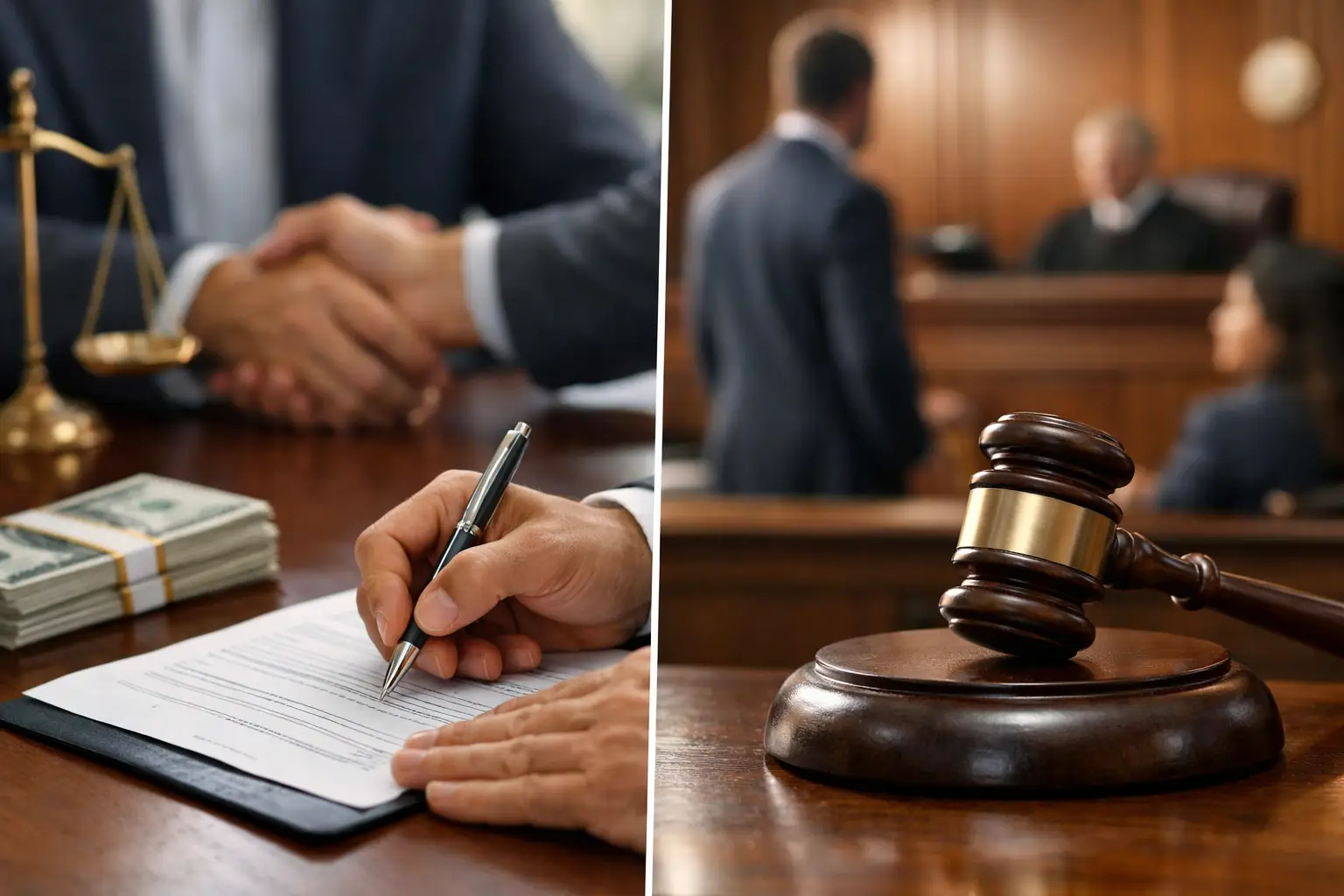
Settlement vs Trial Injury Case Options
A settlement vs trial injury case decision can shape how soon you receive compensation, how much uncertainty you face, and how much control you retain over the outcome. After a serious collision or fall, an insurance company may push for a quick resolution while medical expenses and missed income keep mounting. You do not have to accept an offer just because it arrives early.
The right path depends on the strength of the evidence, the full impact of your injuries, available insurance coverage, and whether the other side is willing to deal fairly. For many injured Texans, a settlement provides needed closure. In other situations, taking the case to trial may be the clearest way to pursue justice when an insurer refuses to recognize the true value of the harm done.
Settlement vs Trial Injury Case: The Core Difference
A settlement is an agreement between the injured person and the responsible party or insurer. In exchange for compensation, the injured person generally agrees to resolve the claim and not pursue further recovery for that accident. Most personal injury matters resolve this way, often after negotiations supported by medical records, accident evidence, witness accounts, and proof of financial losses.
A trial occurs when the parties cannot reach a fair agreement. Each side presents evidence to a judge or jury, which then decides whether the other party is responsible and, if so, what compensation should be awarded. A trial is not automatically better because it can create the possibility of a higher result. It also brings more time, expense, stress, and uncertainty.
Neither option should be treated as a one-size-fits-all answer. A fair settlement can be a strong result. An unfair offer should not become acceptable simply because the insurer describes it as final.
When a Settlement May Make Sense
A settlement may be the right choice when the offer accounts for the real losses caused by the accident. Those losses can include past and anticipated medical expenses, income lost while you could not work, damage to your daily life, physical pain, and emotional suffering. The goal is not to pick a number that merely pays the bills currently on the table. It is to consider the full consequences of an injury before giving up the right to seek additional compensation.
Settlement can offer meaningful advantages. It usually gives the injured person more certainty, avoids the delay of a courtroom dispute, and allows compensation to be received sooner than a trial verdict might allow. That can matter greatly for a family dealing with financial pressure after a crash caused by a negligent driver.
A settlement also gives both sides greater control. At trial, the outcome is placed in the hands of a judge or jury. With a negotiated agreement, you know the amount and terms before deciding whether to accept.
Still, speed should never be confused with fairness. Early offers often arrive before the full extent of an injury is known. A person may initially believe recovery is going well, only to learn later that pain, limitations, or additional care will continue. Once a settlement is finalized, reopening the matter is usually not possible.
When Taking an Injury Case to Trial May Be Necessary
A trial may become necessary when the insurance company denies responsibility, tries to blame the injured person unfairly, disputes the severity of injuries, or refuses to offer compensation that reflects the evidence. This can happen in car and truck accidents, pedestrian collisions, motorcycle crashes, slip and fall incidents, and wrongful death matters.
Trials can be especially important when the dispute is not just about money, but accountability. If a company or insurer refuses to take a well-supported claim seriously, preparing the case for trial shows that the injured person is prepared to fight for a fair result rather than accept pressure tactics.
That preparation matters even when a case eventually settles. Insurance companies assess risk. When the evidence is organized, the damages are fully documented, and the legal team is ready to present the matter in court, the other side may become more willing to negotiate reasonably.
However, a trial carries risk. A jury may see the facts differently than expected, and even a strong case has no guaranteed verdict. The process can take longer and may require the injured person to revisit difficult details of the accident. A trustworthy attorney should explain these realities plainly, not promise a particular outcome.
What Determines Whether an Offer Is Fair?
The value of an injury claim is not based on one factor. It comes from the entire picture: who caused the accident, the available evidence, the nature and duration of injuries, the effect on your ability to earn income, and the insurance policies involved. The credibility of witnesses and the consistency of records can also affect negotiations and trial strategy.
Texas follows a shared-responsibility system. If the other side claims you contributed to the accident, that argument can affect the compensation available. Insurers often use this issue to reduce what they pay, even when their own policyholder was primarily at fault. Evidence gathered early can make a significant difference in answering those claims.
For instance, footage, photographs, vehicle data, witness information, incident reports, and medical documentation can help establish what happened and show how the injury changed your life. Strong evidence does not mean an insurer will immediately make a fair offer, but it puts your side in a far better position to demand one.
Do Not Let the Insurance Company Set the Timeline
Insurers know that injured people may feel overwhelmed. They may contact you before you understand the full value of the claim, request a recorded statement, or present an offer that sounds helpful in a difficult moment. Their financial interest is usually to resolve the matter for as little as possible.
You can take time to understand your situation. Before agreeing to a settlement, consider whether your condition has stabilized, whether all losses have been identified, and whether the offer reflects both economic and non-economic harm. A quick payment may solve an immediate problem while leaving substantial future costs uncovered.
There are also deadlines that can affect your right to pursue compensation, so waiting indefinitely is not a solution either. The best approach is prompt action combined with careful evaluation. Preserve evidence, follow through with appropriate care, and obtain legal guidance before signing away important rights.
How an Injury Attorney Helps With the Decision
The settlement-or-trial question is not usually decided at the first meeting. It develops as the evidence becomes clearer and the insurer reveals its position. An experienced personal injury attorney can investigate the accident, calculate losses, manage insurer communications, and assess whether an offer matches the strength and value of the case.
A lawyer should also prepare every viable case as though it could go before a jury. That does not mean every client should want a trial. It means the insurer cannot assume it can avoid accountability by delaying, denying, or offering less than the case deserves.
At Feizy Law Office, injured people and families receive direct guidance through the difficult decisions that follow an accident. You should understand the choices in front of you, the risks of each path, and why a proposed settlement may or may not protect your future.
If an insurer has made an offer, do not let urgency make the decision for you. A careful review of the facts and your losses can provide the clarity needed to choose a path that protects you and the people who depend on you.


About Post Author
