

Can Passengers Make Injury Claims in Texas?
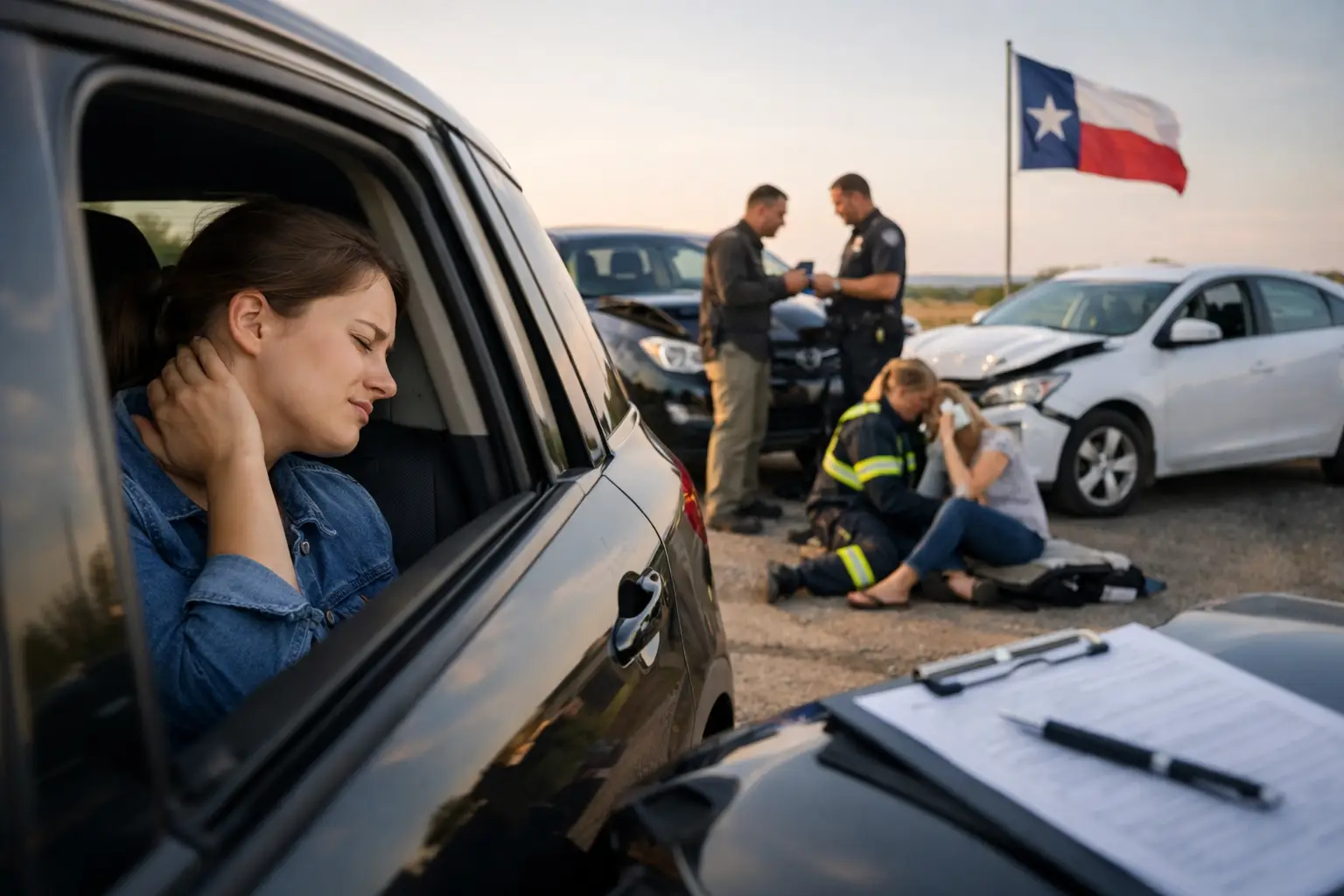
A passenger has no control over the steering wheel, speed, or driving decisions. Yet passengers can be left with serious injuries, mounting bills, missed income, and an insurance company looking for reasons to pay less. So, can passengers make injury claims after a Texas collision? In many situations, yes. A passenger may have a strong right to seek compensation from the driver or party whose negligence caused the crash.
The difficult part is rarely whether a passenger was hurt. It is identifying every responsible party, finding available coverage, preserving proof, and refusing to accept a settlement that does not account for the full impact of the injury. That is where experienced legal guidance can make a meaningful difference.
Can Passengers Make Injury Claims Against a Driver?
Passengers may bring an injury claim against the driver of the vehicle they were riding in if that driver caused or contributed to the collision. This can feel uncomfortable when the driver is a friend, relative, or coworker. But the claim is generally directed at the driver’s insurance coverage, not at a personal relationship.
A passenger may also have a claim against the driver of another vehicle. In a multi-vehicle crash, more than one driver may share responsibility. A distracted driver, a driver who failed to yield, a speeding driver, or a commercial vehicle company may each become part of the investigation, depending on what happened.
Texas law does not require passengers to choose loyalty over their financial recovery. If another person’s careless conduct caused your injuries, you should not be expected to carry the costs alone.
Who May Be Responsible for a Passenger’s Injuries?
Every collision has its own facts. Sometimes fault is clear from the beginning. Other times, drivers blame each other while the passenger is caught in the middle. A careful investigation can identify whether responsibility rests with one driver, several drivers, or another party connected to the crash.
For instance, a passenger injured when their driver runs a red light may pursue a claim involving that driver’s coverage. If another driver makes an unsafe turn and causes a chain-reaction collision, that driver may be responsible. When a truck collision is involved, the trucking company, vehicle owner, maintenance provider, or cargo-related company could also require scrutiny.
The police report can be useful, but it is not the final word. Photos, vehicle damage, witness accounts, roadway video, phone records, and other evidence may reveal details that were not available at the scene. Strong claims are built on evidence, not assumptions.
What if Both Drivers Share Fault?
A passenger may still pursue recovery when both drivers contributed to the crash. This is common in intersection crashes, lane-change collisions, and pileups. The available coverage and each party’s share of responsibility can affect how the claim is handled.
Because passengers are usually not driving, they often are not blamed for causing the collision. There are limited exceptions. An insurer may argue, for example, that a passenger knowingly rode with an impaired driver or failed to use an available seat belt. Those arguments are fact-specific and should not discourage an injured passenger from learning their options.
Compensation Available to Injured Passengers
A passenger injury claim can seek compensation for losses caused by the collision. The value depends on the severity of the injuries, the length of recovery, available insurance coverage, and the proof supporting each loss.
Compensation may include the cost of medical care, income lost while unable to work, reduced future earning ability, property losses, and out-of-pocket expenses related to the crash. It may also include compensation for physical pain, mental anguish, and the ways an injury changes daily life, family responsibilities, sleep, mobility, and independence.
Insurance companies often focus on the earliest bills and overlook what comes later. A quick offer may arrive before the full extent of an injury is known. Accepting it can close the door on further recovery, even if complications, ongoing limitations, or additional expenses arise afterward.
This does not mean every case should become a lengthy dispute. It means a settlement should be evaluated with the complete picture in view. The right approach depends on the evidence, the injuries, the coverage involved, and whether the insurer is treating the passenger fairly.
Insurance Coverage Can Be Complicated
Passenger claims may involve more than one insurance policy. The at-fault driver’s liability coverage is often the first source of recovery. If that coverage is not enough, other policies may apply, including coverage connected to the vehicle the passenger occupied or the passenger’s own household vehicle policy.
Uninsured and underinsured motorist coverage can matter when the responsible driver has no coverage or not enough coverage to pay for the harm caused. Personal injury protection or medical payments coverage may also help with certain expenses, depending on the policy and circumstances.
Insurers do not always volunteer every possible source of coverage. They may also attempt to shift responsibility to another driver or contend that an injury was unrelated to the collision. Before giving a recorded statement or agreeing to a settlement, passengers should understand what is at stake and what coverage may be available.
Steps to Take After a Passenger Injury
Your health and safety come first. Seek appropriate medical attention, follow the care plan you receive, and keep records of the effects the injury has on your life. Prompt care also creates a clearer record connecting your injuries to the crash.
If possible, preserve photographs of the vehicles, the scene, visible injuries, and anything else that may help show how the collision occurred. Save contact information for witnesses and keep copies of documents you receive. Avoid posting details about the crash or your condition on social media while the claim is pending, since insurers may take statements out of context.
You should also be cautious about early insurance calls. An adjuster may sound sympathetic while asking questions designed to limit the claim. You are not required to guess about fault, minimize symptoms, or accept an offer simply because it is presented quickly.
Do Not Wait Too Long to Get Answers
Texas places deadlines on injury claims, and missing a deadline can end your ability to seek compensation. Evidence can also disappear quickly. Video may be erased, vehicles may be repaired, and witnesses may become difficult to locate.
Speaking with a personal injury attorney early gives you a chance to protect evidence while you focus on healing. It also allows someone to handle insurer communications, assess coverage, calculate losses, and push back when an insurer undervalues what you have been through.
How a Texas Passenger Injury Attorney Can Help
An attorney can investigate the collision beyond the initial account, identify all potentially responsible parties, gather available evidence, and calculate the real cost of the injuries. Just as importantly, an attorney can take over the stressful back-and-forth with insurers so you are not pressured into making decisions before you are ready.
At Feizy Law Office, injured Texans receive direct, determined advocacy from a team focused on holding negligent drivers and insurance companies accountable. Whether the crash happened in Dallas, Frisco, Plano, Irving, Flower Mound, or another North Texas community, the goal is the same: pursue the compensation needed to move forward with greater security.
Being a passenger does not make your injuries less real or your rights less valuable. If a collision has disrupted your health, finances, or family life, get clear answers before an insurance company decides what your claim is worth. A timely consultation can help protect your options and put the focus back where it belongs – on your recovery.


About Post Author
