

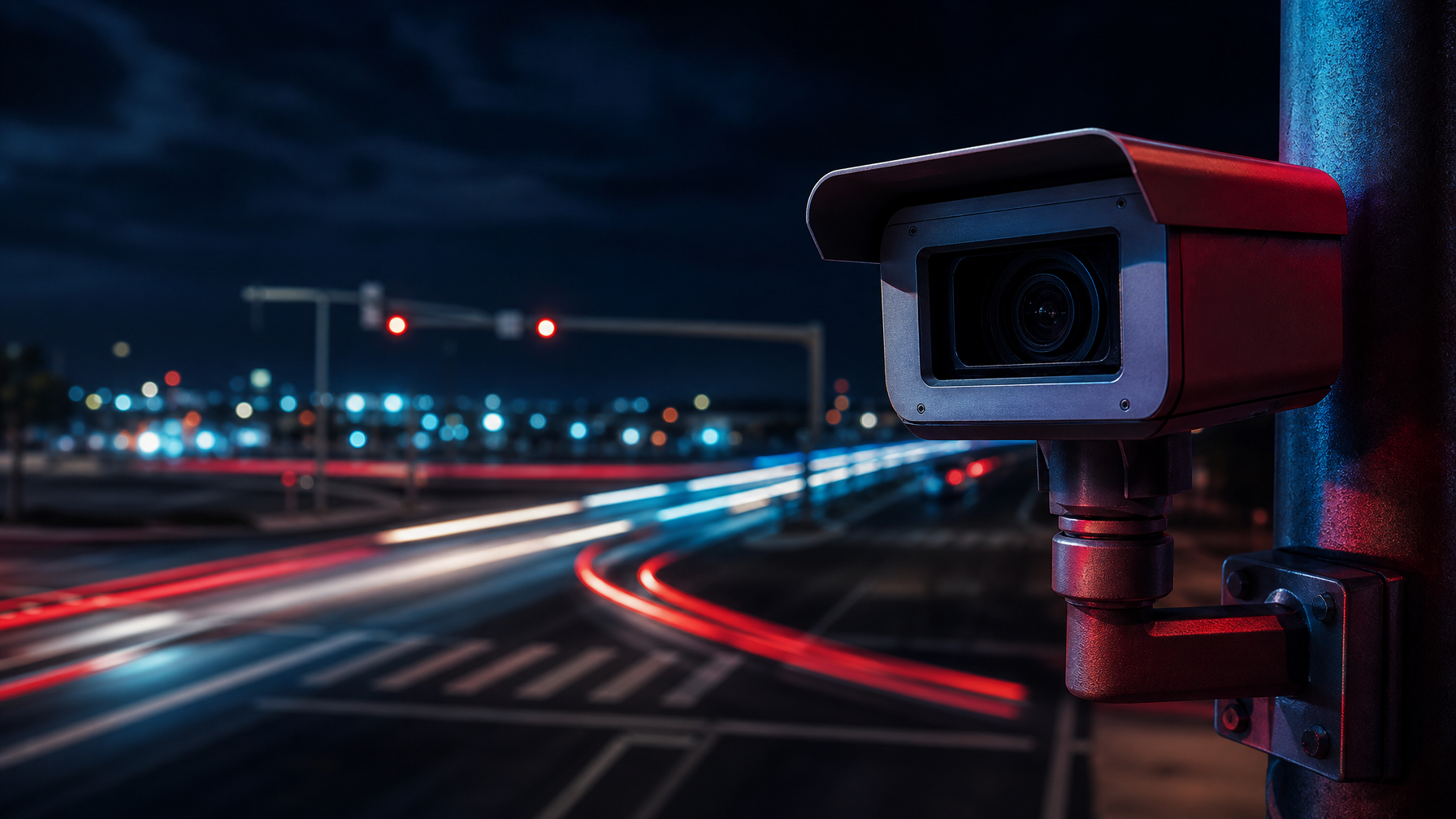
How to Get Traffic Camera Footage After a Car Accident in Texas
Description
A step-by-step guide for Texas accident victims on how to get traffic camera footage after a car crash, who owns the cameras, how long footage is saved, and why acting fast is critical to protecting your injury claim.
How to Get Traffic Camera Footage After a Car Accident in Texas
TLDR
Traffic camera footage can make or break a car accident claim in Texas — but most footage is overwritten within 24 to 72 hours. You need to act immediately after a crash to preserve it. This guide explains who owns Texas traffic cameras, how to request footage, what other video sources exist, and why hiring a Frisco personal injury attorney puts you in the best position to secure this critical evidence.
Table of Contents
- Do Intersection Cameras in Texas Actually Record?
- Who Owns Traffic Cameras in Texas?
- How Long Is Traffic Camera Footage Stored Before It Gets Deleted?
- How to Request Traffic Camera Footage in Texas
- Can Traffic Camera Footage Be Used as Evidence in a Texas Car Accident Case?
- Other Video Sources That Can Help Your Texas Car Accident Case
- Do You Need a Lawyer to Get Traffic Camera Footage?
- Contact Feizy Law Office for a Free Consultation
You were in a car accident. You know what happened, but proving it to an insurance company or jury is another matter. One of the most powerful pieces of evidence available in modern Texas crash cases is video — specifically, footage captured by traffic and intersection cameras that operate 24 hours a day across the Dallas-Fort Worth metroplex.
The problem: that footage disappears fast.
If you or a loved one has been injured in a crash in Frisco, Dallas, Plano, or anywhere in the DFW area, getting traffic camera footage could be the difference between a full recovery and a denied claim. Here is exactly what you need to know.
Do Intersection Cameras in Texas Actually Record?
Yes — but not all of them save footage the same way, and this distinction matters enormously.
Texas uses two main types of roadway cameras:
TxDOT CCTV Cameras — The Texas Department of Transportation operates hundreds of Closed-Circuit Television (CCTV) cameras on state highways, interstates, and major corridors throughout the DFW area. These cameras feed live video to the TxDOT Traffic Management Center and are primarily used for monitoring traffic flow, not for recording accidents. Many TxDOT cameras do not retain recordings at all — they stream live and the feed is not stored.
City and Municipal Cameras — Cities like Dallas, Frisco, Plano, and McKinney operate their own traffic cameras at intersections, often linked to their police departments and traffic operations centers. These cameras are far more likely to retain recorded footage, though retention periods vary by city.
Red-Light Cameras — Texas banned red-light cameras statewide in 2019 under Senate Bill 1108. Any red-light camera footage from before that date is no longer a factor, and those cameras are no longer operational.
The bottom line: intersection cameras in Texas may or may not record your accident depending on who owns them and where they are located. This is exactly why an attorney who knows how to quickly identify and request the right footage is so valuable.
Who Owns Traffic Cameras in Texas?
Camera ownership determines where you send your records request. In Texas, traffic cameras are typically owned by one of the following:
- Texas Department of Transportation (TxDOT): Operates cameras on state highways, U.S. routes, and interstates. The Dallas District TxDOT office manages cameras throughout the DFW region.
- City Traffic Engineering Departments: Cities like Dallas, Frisco, and Plano operate cameras at municipal intersections. The city's traffic operations or engineering department is your point of contact.
- County Sheriff and Police Departments: Law enforcement agencies sometimes operate cameras at high-risk intersections.
- NTTA (North Texas Tollway Authority): Manages cameras along the Dallas North Tollway, Sam Rayburn Tollway (121), and other toll roads in Collin and Denton counties — the exact highways many Frisco residents use daily.
Your attorney's first task after an accident is identifying which entity owns the camera nearest to your crash site and sending a preservation letter immediately.
How Long Is Traffic Camera Footage Stored Before It Gets Deleted?
This is the most urgent issue accident victims face: most traffic camera footage in Texas is overwritten within 24 to 72 hours.
Some systems retain footage for up to 30 days, but many government traffic cameras operate on rolling storage that automatically deletes older footage to make room for new recordings. Once that footage is gone, it is gone permanently.
What this means for you:
- You need to act the same day or within 24 hours of your accident.
- Waiting to "see how things go" with the insurance company before seeking legal help is one of the most costly mistakes accident victims make.
- An attorney can send a formal litigation hold letter (also called a preservation letter) demanding that the camera owner preserve and not destroy the footage pending your claim or lawsuit.
Private businesses — gas stations, restaurants, retail stores, parking lots — typically retain surveillance footage for 30 to 90 days, which is a longer window, but still limited.
How to Request Traffic Camera Footage in Texas
Traffic cameras owned by government agencies in Texas are subject to the Texas Public Information Act (Chapter 552 of the Texas Government Code). This law gives you the right to request records held by state and local government bodies. Here is the general process:
Step 1: Identify the Camera Owner
Determine which agency or city operates the cameras at or near your crash location. Your attorney can do this quickly using TxDOT's ITS (Intelligent Transportation Systems) database and municipal traffic engineering contacts.
Step 2: Submit a Written Public Records Request
Send a written request to the relevant agency's public information officer. Be specific: include the date, time, and location of the accident, and request all video recordings from any cameras in the area within a defined time window (e.g., 30 minutes before and after the crash).
For TxDOT footage, submit your request through the TxDOT Open Records portal. For city cameras, contact the city's public information officer directly.
Step 3: Send a Preservation Letter
Before the agency even processes your formal request, your attorney should send a preservation letter notifying the agency that the footage is relevant to anticipated litigation. This creates a legal duty to preserve the footage rather than allowing it to be overwritten on schedule.
Step 4: Issue a Subpoena if Necessary
If the footage is held by a private party (a business, for example) or if the government agency is uncooperative, your attorney can subpoena the footage as part of formal legal proceedings. Courts in Texas routinely allow subpoenas for video evidence in personal injury cases.
Step 5: Hire an Expert if Needed
In complex cases, accident reconstruction experts can analyze the footage alongside physical evidence to establish exactly what happened and who was at fault.
Can Traffic Camera Footage Be Used as Evidence in a Texas Car Accident Case?
Absolutely. Video footage is among the strongest forms of evidence in any car accident case, and Texas courts admit properly obtained footage as evidence. Here is what traffic camera footage can establish:
- Fault and negligence: The footage shows which driver ran a red light, failed to yield, or changed lanes unsafely.
- Speed: Frame-by-frame analysis can estimate how fast each vehicle was traveling.
- Point of impact: Footage makes it nearly impossible for the other driver to dispute where and how the collision occurred.
- Contradicting false statements: If the at-fault driver or their insurance company tells a different story, footage cuts through the lies directly.
- Pre-accident behavior: Cameras may capture the other driver texting, speeding, or behaving recklessly before impact.
In DFW, where the dense network of cameras along the Dallas North Tollway, US-380, and Sam Rayburn Tollway (121) covers some of the busiest roads in the state, there is a real chance a camera caught your accident. An experienced Frisco personal injury attorney knows how to find it.
Other Video Sources That Can Help Your Texas Car Accident Case
Traffic cameras are just one source. A thorough investigation also looks for:
Dashcam Footage
Texas drivers increasingly use dashcams. The other driver may have footage they are legally obligated to preserve once put on notice of a claim. Nearby vehicles that witnessed the crash may also have dashcam recordings.
Business Surveillance Cameras
Gas stations, convenience stores, restaurants, and retail parking lots near your crash site often capture the road and intersection in their camera's field of view. Your attorney can send preservation letters to nearby businesses within hours of the accident.
Residential Doorbell and Security Cameras
Ring cameras, Nest cameras, and other home security systems increasingly capture street activity. If your accident occurred near a residential neighborhood, a neighbor's camera may hold critical footage.
Police Dashcam and Body Camera Footage
The responding officer's dashcam and body camera footage is public record in Texas and is obtainable through a public records request to the relevant law enforcement agency.
NTTA Tollway Cameras
If your accident occurred on a toll road in the DFW area, NTTA cameras are dense and the footage is often higher quality. Your attorney can contact NTTA directly or through formal legal channels.
Do You Need a Lawyer to Get Traffic Camera Footage?
You do not legally need an attorney to submit a public records request. But as a practical matter, accident victims who try to handle this on their own almost always face two serious problems:
The footage is already gone. By the time most people decide to request footage, the 24-to-72-hour window has passed. An attorney acts immediately.
The request is denied or ignored. Government agencies sometimes claim footage does not exist, was not retained, or falls under an exemption. Attorneys know how to challenge these denials, escalate to the Texas Attorney General's Office, and pursue subpoenas when necessary.
Beyond footage retrieval, your attorney handles everything: documenting your injuries, negotiating with insurance adjusters who are trained to minimize your payout, and building a complete case for full compensation including medical bills, lost wages, pain and suffering, and future care costs.
If the other driver's insurance company is already calling you, do not give a recorded statement before speaking with an attorney. Anything you say can be used to reduce or deny your claim.
Contact Feizy Law Office for a Free Consultation
Attorney Nick Feizy has represented accident victims across the Frisco and Dallas-Fort Worth area since 2000. When you are injured through someone else's negligence, time is your most limited resource. The longer you wait, the more evidence disappears — including traffic camera footage that could prove your case.
At Feizy Law Office, we move fast. The moment you call us, we begin the evidence preservation process — sending preservation letters, identifying cameras, and building the documentation that protects your claim from day one.
Call us now for a free consultation: (214) 651-8686
We handle car accidents, truck accidents, motorcycle crashes, pedestrian accidents, slip and fall injuries, wrongful death, and insurance claims throughout the DFW metro area. There are no fees unless we win your case.
Do not wait. If there is a camera that captured your accident, the footage may already be at risk of deletion. Call Feizy Law Office today at (214) 651-8686 or visit feizylaw.com to schedule your free consultation.
Feizy Law Office serves clients in Frisco, Dallas, Plano, McKinney, Allen, The Colony, Little Elm, Denton, and throughout the DFW metroplex.


About Post Author
