

Car Accident Evidence Collection Guide
The first few minutes after a crash can shape the entire insurance claim that follows. A strong car accident evidence collection guide is not about turning you into an investigator. It is about protecting the truth before the scene changes, memories fade, and an insurer starts looking for reasons to reduce what your case is worth.
If you are hurt, your health comes first. Call 911, accept emergency help if you need it, and move to safety if you can do so without making things worse. But if you are physically able, the evidence you gather right away can make a real difference later, especially when fault is disputed or your injuries take time to fully show up.
Why evidence matters so much after a crash
Insurance companies do not evaluate claims based on sympathy. They look for proof. They want to know how the crash happened, who caused it, how serious the injuries are, and whether the losses being claimed are supported by records.
That means good evidence does two things at once. It helps establish liability, and it ties your injuries and financial losses to the collision. Without that connection, even a legitimate claim can become harder to resolve fairly.
This is where many people get blindsided. They assume the police report or the visible damage will tell the whole story. Sometimes it helps a lot. Sometimes it does not. A report may leave out key details. Vehicle damage can look limited even when the person inside suffered serious harm. That is why early documentation matters.
Car accident evidence collection guide at the scene
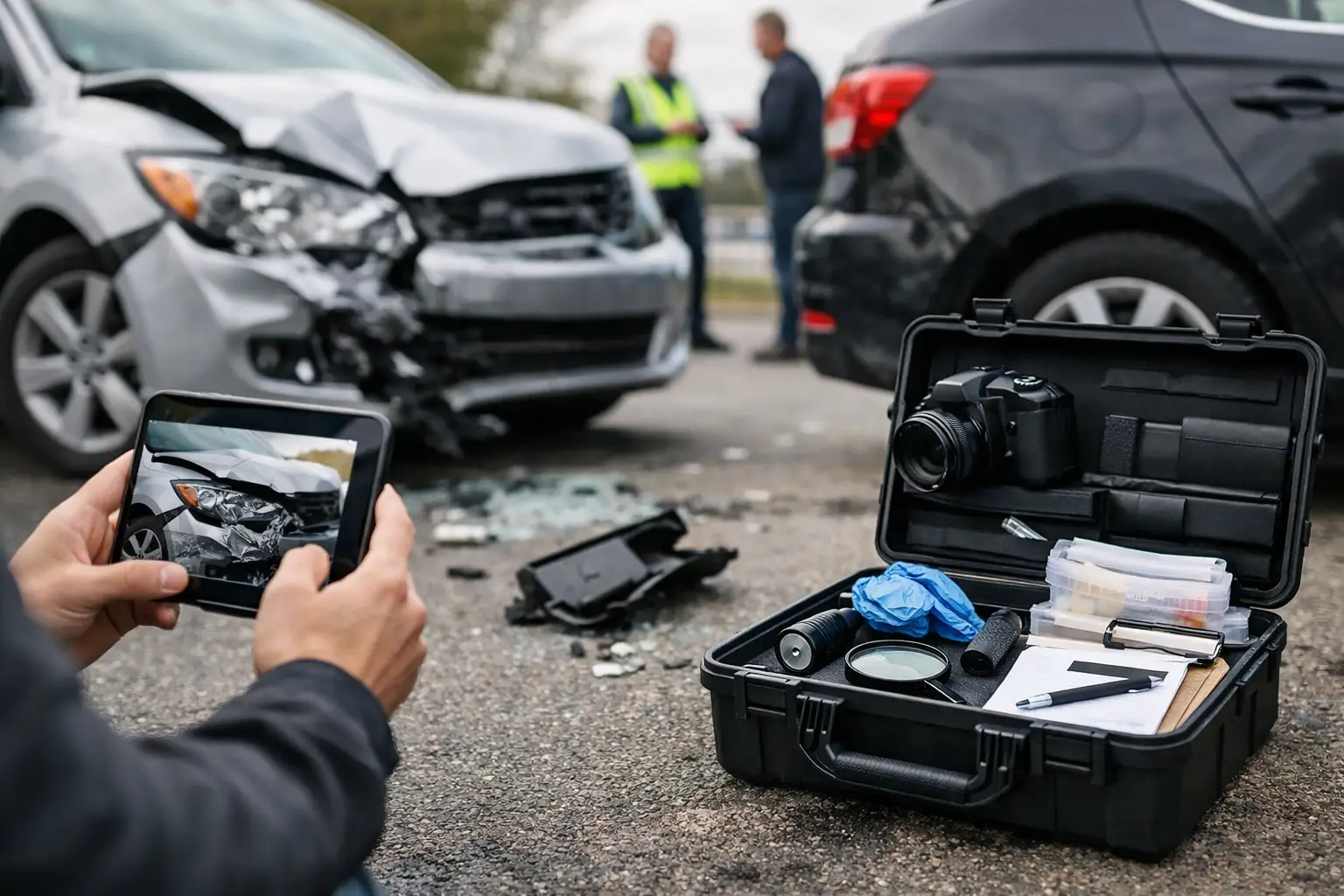
Start with the basics, but be thorough. If it is safe, use your phone to photograph the full scene before cars are moved. Take wide shots that show lane positions, intersections, traffic signals, skid marks, debris, and weather or road conditions. Then take closer photos of each vehicle, including damage from multiple angles, license plates, and anything inside the vehicle that helps explain impact.
Do not rely on a few rushed pictures. The better approach is to document the scene as if someone reviewing it later has never been there and never will be. Context matters.
You should also exchange information with the other driver, including name, contact information, license plate number, and insurance details. If there are witnesses nearby, ask for their names and phone numbers. Independent witnesses can be extremely valuable because they often have no stake in the outcome.
If law enforcement responds, note the responding agency and the officer’s name if possible. A formal report can become an important piece of the file, even if it is not the final word on fault.
What your phone should capture
A phone can preserve evidence quickly, but only if you use it with purpose. Good documentation usually includes scene photos, short video of the roadway and traffic flow, visible injuries, damage to personal property inside the vehicle, and audio notes if you are too shaken to type.
If you remember something important, record it immediately. The light was red. The other driver was looking down. Your car spun after impact. Small details can disappear fast once adrenaline wears off.
What not to say or do
Be polite, but do not guess about what happened. Do not apologize in a way that sounds like you are accepting blame. Do not argue with the other driver, and do not post about the collision on social media.
There is also a practical trade-off here. People often want to explain themselves because the situation feels tense. But early statements made under stress are often incomplete or inaccurate, and insurers may try to use them against you later.
The evidence to keep after you leave the scene
A car accident claim is rarely won or lost on scene photos alone. The strongest cases are built over time with consistent documentation.
Medical records matter because they show what injuries were diagnosed, what symptoms you reported, and what care was recommended. Keep discharge paperwork, visit summaries, imaging results, prescriptions, and any written restrictions affecting work or daily activity. If pain worsens or new symptoms appear, report them promptly so your records stay accurate.
You should also keep every bill and out-of-pocket receipt tied to the crash. That may include medications, transportation costs related to treatment, and replacement of damaged personal items. Lost income should be documented too, using pay records or written confirmation of missed work.
One of the most overlooked pieces of evidence is your own daily experience. A simple journal can help track pain levels, mobility problems, sleep disruption, emotional strain, and activities you can no longer do normally. This is especially useful when an injury affects your life in ways that are real but harder to measure on paper.
How to preserve evidence before it disappears
Some of the best evidence in a crash case is temporary. Nearby businesses may have surveillance footage. Traffic cameras may capture part of the event. Vehicle data may show speed, braking, or other information. Modern cars, commercial vehicles, and even phone records can become important depending on the facts.
The problem is timing. Video may be overwritten in days. Electronic records may not be preserved unless someone moves quickly. That is one reason many injured people decide to speak with an attorney early. A lawyer can identify what evidence may exist and take steps to preserve it before it is gone.
This part of the process depends on the crash. A two-vehicle intersection collision may call for witness outreach and scene documentation. A truck wreck may involve additional records and a more aggressive preservation effort. The right approach depends on what happened, who was involved, and how serious the injuries are.
Common mistakes that weaken a claim
The biggest mistake is waiting too long. People often focus on getting the car dealt with and assume the rest can be sorted out later. Meanwhile, photos get deleted, witnesses become hard to find, and details become less clear.
Another common problem is incomplete treatment history. If you delay care for too long or stop following recommendations without explanation, the insurance company may argue that you were not seriously hurt or that something else caused your condition.
There is also the issue of recorded statements. Insurers may sound helpful early on, but their goal is to protect their bottom line. If you are seriously injured, it is wise to be careful before giving detailed statements or signing broad authorizations.
When a lawyer can make the evidence stronger
Good legal representation is not just about paperwork. It is about building a clear, supported claim while taking pressure off the injured person. That can include gathering records, locating witnesses, reviewing the crash report, preserving digital evidence, organizing proof of damages, and dealing with insurer tactics designed to minimize the case.
For many people, the value is not only in what a lawyer collects, but in what a lawyer prevents. Missed evidence, careless statements, and low early offers can all affect the outcome. Having someone step in early can protect the claim while you focus on recovery.
Feizy Law Office helps injured Texans take control of that process by identifying the evidence that matters, preserving it, and using it to pursue the compensation the case truly deserves.
A practical car accident evidence collection guide for families
If the injured person cannot handle documentation, a spouse, adult child, or other trusted family member can help keep things organized. That may mean saving photos, creating a folder for bills and records, tracking missed work, and writing down what the injured person is going through week to week.
This kind of support can be especially important in serious cases where the person injured is overwhelmed, hospitalized, or simply not in a position to manage details. A well-kept record can fill in gaps and keep the claim on solid ground.
Not every crash turns into a fight, but many do once the cost of the injuries becomes clear. The strongest position is to act early, document carefully, and avoid assuming someone else will preserve the proof for you. The truth is easier to defend when you protect it from the start.


About Post Author
