

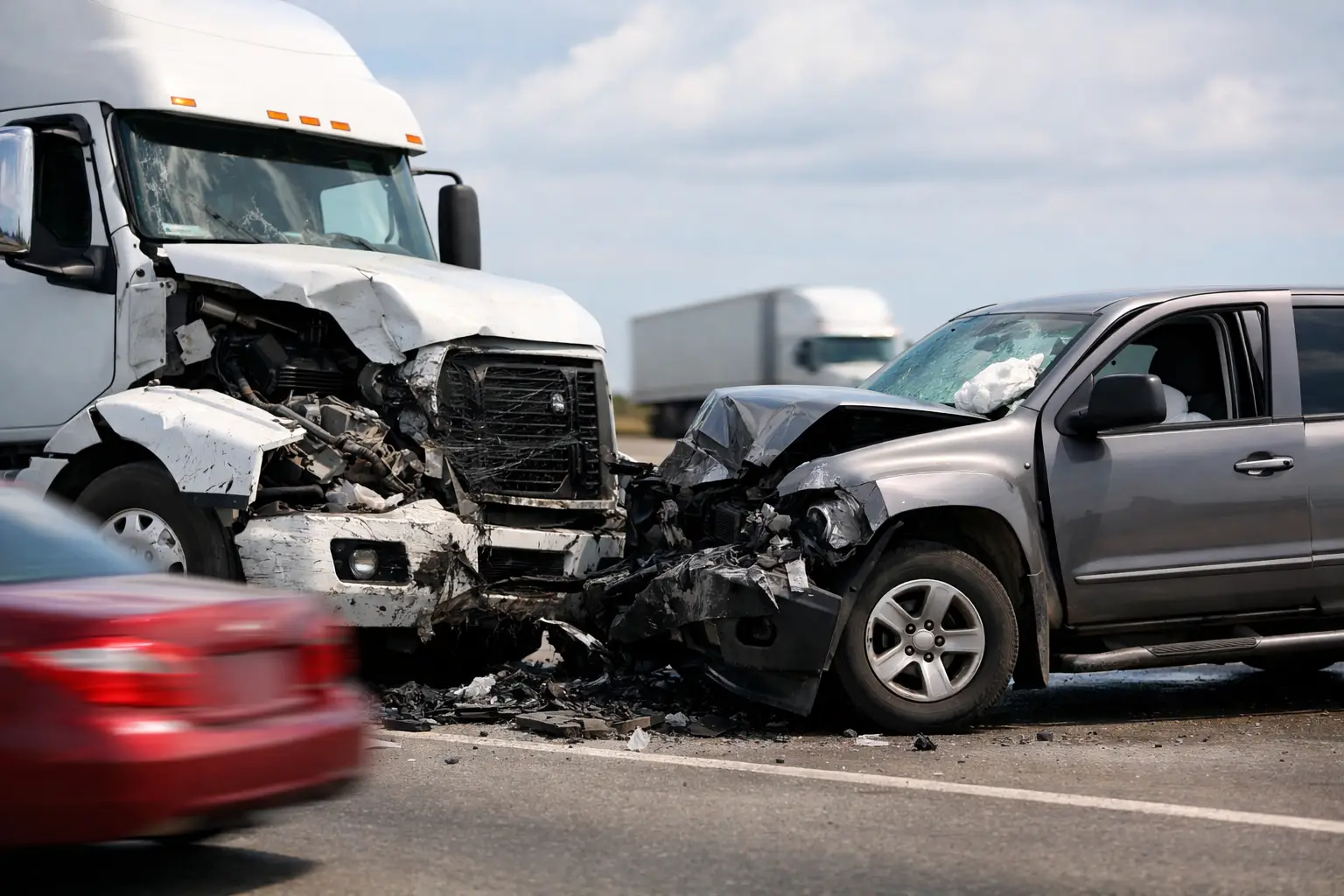
Top Causes of Truck Collisions Explained
A fully loaded truck does not need much room for a mistake to turn catastrophic. When a tractor-trailer drifts across a lane, follows too closely, or fails to stop in time, the people in smaller vehicles usually suffer the worst of it. Understanding the top causes of truck collisions matters because these crashes are rarely random. They often trace back to preventable decisions made by drivers, trucking companies, maintenance providers, or cargo handlers.
Why truck crashes are often more serious
Truck collisions tend to cause severe injuries for one simple reason – size and force. A passenger vehicle hit by an 18-wheeler absorbs far more impact than it would in a crash with another car. The outcome can include traumatic injuries, long hospital stays, lost income, and months or years of disruption for a family.
These cases are also different because more than one party may be responsible. The driver may have made an unsafe choice, but the company behind the truck may have pushed unrealistic schedules, skipped inspections, or failed to address known safety issues. That is why identifying the cause of the crash is not just about curiosity. It can shape what evidence matters and who should be held accountable.
Top causes of truck collisions on Texas roads
The top causes of truck collisions usually involve a mix of human error, company pressure, mechanical problems, and road conditions. In many cases, more than one factor is at work.
Driver fatigue
Fatigue is one of the most dangerous issues in the trucking industry. A tired driver may have slower reaction time, poor judgment, and reduced awareness of traffic changes ahead. Fatigue can look a lot like impairment. A truck driver who has been on the road too long may drift, miss brake lights, or fail to react to stopped traffic until it is too late.
This issue becomes especially serious on long highway routes where monotony and overnight driving increase the risk of drowsiness. Even when a driver technically spent time off duty, poor sleep quality or pressure to stay on schedule can still make the driver unsafe behind the wheel.
Speeding and driving too fast for conditions
A large truck needs much more distance to stop than a car. When a truck is speeding, the problem grows quickly. Even if the posted speed limit allows a certain pace, weather, congestion, construction zones, and traffic slowdowns may require a truck driver to go much slower.
Driving too fast for conditions is a common factor in rear-end crashes, jackknife collisions, and rollover accidents. A truck moving at an unsafe speed may also lose stability on curves or exit ramps. The point is not just whether the truck broke the speed limit. It is whether the speed was safe for the moment.
Distracted driving
Distraction behind the wheel is dangerous in any vehicle, but in a commercial truck it can be devastating. Looking at a phone, entering route information, eating, reaching for an item, or paying attention to something outside the cab can all take a driver’s focus off the road.
A few seconds of distraction in a passenger car is bad enough. In a tractor-trailer, those same seconds can cover a long distance and leave almost no chance to avoid a crash. When a truck driver fails to notice slowing traffic, lane changes, or road hazards, the damage can be severe.
Improper maintenance and equipment failure
Not every truck crash starts with a driver mistake. Some begin with equipment that should never have been on the road in unsafe condition. Worn brakes, tire blowouts, steering problems, broken lights, and trailer issues can all contribute to major collisions.
Maintenance cases often raise bigger questions. Was the truck inspected properly? Were known issues ignored to keep the vehicle in service? Did a company delay repairs to avoid downtime? Those details matter because a mechanical failure may point to negligence beyond the driver alone.
Overloaded or improperly loaded cargo
Cargo affects how a truck handles, brakes, and turns. When cargo is overloaded, unevenly distributed, or not secured correctly, the truck can become unstable. That instability can lead to rollovers, lost loads, shifting trailers, and loss of control during braking or evasive maneuvers.
Cargo problems are especially dangerous because they may not be obvious to people sharing the road. A driver in the next lane has no way to know whether freight is balanced correctly. Yet one bad load can create a sudden and violent hazard for everyone nearby.
Unsafe lane changes and blind spots
Large trucks have substantial blind spots on both sides, behind the trailer, and in front of the cab. Those blind spots do not excuse unsafe driving. Truck drivers are still expected to check carefully before merging or changing lanes.
Many serious crashes happen when a truck moves into a lane without enough clearance or turns without accounting for nearby traffic. In heavy traffic, one rushed lane change can force a smaller vehicle off the road or into another collision. Sometimes the issue is inattention. Sometimes it is impatience. Either way, the result can be life-changing.
Following too closely
Tailgating is dangerous for any driver, but it is especially risky for commercial trucks. Because of their weight, trucks need more stopping distance. When a truck follows another vehicle too closely, there may be no room to avoid a rear-end crash if traffic suddenly slows.
This problem often appears in congested traffic, work zones, and highway bottlenecks. It can also happen when a truck driver is trying to make up time. Tight following distances leave no margin for error, and the people in smaller vehicles usually pay the price.
Poor training or negligent supervision
Some truck crashes happen because a driver was not adequately prepared for the job. Handling a commercial truck safely requires skill, judgment, and familiarity with the vehicle. A driver who lacks training in braking, turning, backing, cargo awareness, or hazard response creates danger for everyone on the road.
The problem may also extend to the company. If a business puts an unprepared driver on the road, ignores safety concerns, or fails to enforce proper standards, that can become part of the case. A crash is not always just about one bad moment. Sometimes it reflects a larger safety failure.
Impaired driving
Alcohol, drugs, and certain medications can affect coordination, judgment, and reaction time. Impairment in a commercial truck is a serious threat because the size of the vehicle magnifies the consequences of every delayed response and unsafe choice.
Not every impairment case involves alcohol. Some involve prescription or over-the-counter substances that cause drowsiness or reduced alertness. The core issue is whether the driver was in a condition to operate the truck safely.
It is not always just the driver
One of the most misunderstood parts of truck accident cases is the idea that fault begins and ends with the person behind the wheel. Sometimes that is true. Often it is not. A trucking company may pressure drivers to keep unrealistic schedules. A maintenance provider may miss a dangerous defect. A cargo company may create a loading hazard. In some crashes, multiple failures line up at once.
That is why evidence matters early. Electronic data, inspection records, driver logs, maintenance history, dash footage, scene photographs, and witness statements can all help show what really happened. Without a prompt investigation, critical information may disappear or become harder to recover.
What injured victims should know after a truck crash
If you were hurt in a truck collision, the immediate aftermath can feel overwhelming. Medical concerns come first, but the legal and insurance issues start fast. Trucking cases are often more aggressive than ordinary car wreck claims because the stakes are higher and the evidence can be complex.
It helps to know that a serious truck crash claim is usually built on details, not assumptions. The exact cause matters. So does the extent of your injuries, the impact on your income, and the long-term effect on your daily life. A strong claim should account for more than the first round of bills. It should reflect the full harm caused by the crash.
For injured Texans, this is where experienced legal help can make a real difference. A firm like Feizy Law Office can step in to investigate the cause of the collision, identify responsible parties, preserve key evidence, and deal with insurers while you focus on recovery.
Why cause matters in a truck accident case
The cause of the crash is not just a technical detail. It helps explain why the collision happened, who may be responsible, and what evidence can prove negligence. A fatigue case may require a close look at driving records and schedules. A maintenance case may turn on inspection and repair history. A cargo case may involve shipping and loading records.
That is also why quick conclusions can be misleading. At first glance, a wreck may look like simple driver error. A deeper investigation may show brake problems, unsafe company practices, or several contributing factors at once. The truth usually lives in the records.
When a truck crash changes your health, finances, and peace of mind, you deserve more than a surface-level explanation. You deserve answers backed by evidence and a legal team ready to fight for the full compensation your case demands.


About Post Author
