

Truck Wreck Injury Case Study After a Texas Crash
A fully loaded commercial truck does not need much space to turn an ordinary drive into a life-changing collision. This truck wreck injury case study shows why the hours and days after a serious Texas crash can shape the strength of an injury claim long before an insurer makes its first offer.
The facts below reflect the kind of issues that can arise after a tractor-trailer collision. Every situation is different, and a result in one matter does not guarantee the outcome of another. But the central lesson is consistent: truck wreck cases demand fast action, careful investigation, and a legal strategy built around the full impact of a victim’s losses.
The Collision: A Routine Drive Turns Serious
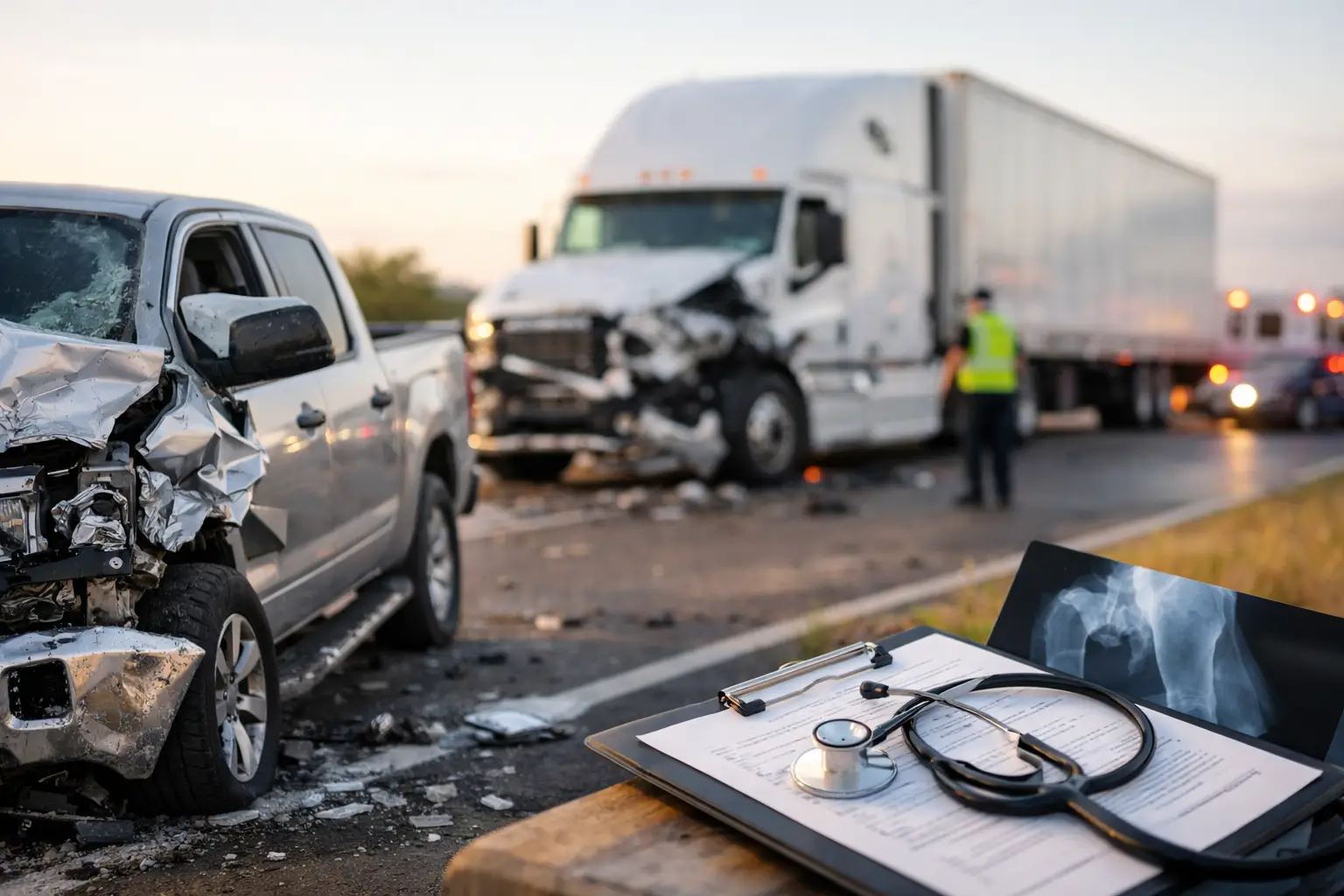
A driver was traveling through a busy North Texas corridor when traffic slowed ahead. A commercial truck approached from behind and failed to stop in time. The force of the impact pushed the driver’s vehicle forward and caused substantial damage.
At the scene, the truck operator claimed traffic had stopped suddenly. That statement mattered, but it was not the end of the investigation. A rear-end truck collision can involve far more than one driver’s account. The distance between vehicles, the truck’s speed, road conditions, visibility, dispatch communications, vehicle maintenance, and company safety practices may all help explain what happened.
The injured driver sought medical care and soon faced problems that were harder to see from photographs of the vehicles: persistent pain, limited daily activity, missed income, mounting bills, and uncertainty about how long recovery would take. Meanwhile, the trucking company’s insurer began looking for information that could limit what it had to pay.
That is the point where many people feel pressured to accept a quick offer. It may sound like relief when bills are arriving, but an early offer often comes before the full scope of an injury is clear. Once a claim is resolved, pursuing additional compensation for later-discovered losses can become far more difficult.
Why a Truck Wreck Injury Case Study Requires More Evidence
A collision involving a commercial truck is not simply a larger car crash. The parties who may share responsibility can include the truck operator, the trucking company, a maintenance provider, a cargo-related party, or another motorist. The available evidence can also disappear quickly unless someone acts to preserve it.
Evidence can tell the story the scene could not
In this scenario, the legal investigation focused on evidence beyond the crash report. That included photographs, witness statements, roadway footage when available, vehicle damage, dispatch-related records, inspection and maintenance information, and electronic data connected to the truck’s operation.
Commercial vehicles may generate data that helps establish speed, braking activity, and other movement before impact. That information can be critical when the insurer argues that the injured driver caused or contributed to the wreck. It can also expose a gap between what was said after the crash and what the records show.
Timing is crucial. Footage may be overwritten. Witness memories fade. A damaged vehicle can be altered or disposed of. A law firm handling a serious truck claim can move quickly to request preservation of key materials and begin building a clear account of the collision.
The trucking company’s conduct may matter
The truck operator’s actions are only one part of the picture. A thorough investigation asks whether the company took reasonable steps to keep an unsafe truck off the road and to follow applicable safety requirements.
For instance, the condition of brakes, tires, lights, and other equipment may matter. So may the company’s inspection history, communication with the operator, and practices surrounding safe operation. The answer depends on the facts. Not every truck wreck is caused by poor maintenance or company conduct, but those questions should not be ignored simply because an insurer wants the case framed as a split-second mistake.
Connecting the Wreck to the Victim’s Real Losses
Proving fault is only part of the work. An injury claim must also show how the collision changed the person’s life. In a serious wreck, that impact may include the cost of medical care, future care needs, lost income, reduced ability to work, physical pain, emotional suffering, and damage to normal daily activities.
In this case, treatment records helped establish the progression of the driver’s injuries and the care required after the collision. The records were important, but they were not the whole story. The victim’s own account of disrupted sleep, difficulty driving, missed family activities, and the strain of financial uncertainty gave necessary context to the numbers.
Insurance companies often focus on narrow questions: Was there a prior condition? Did the victim wait before seeking care? Could the person have returned to normal activity sooner? Those issues may be relevant, but they do not automatically defeat a claim. A prior condition does not give a negligent driver or company permission to make someone worse. The right response is a careful review of records and facts, not an assumption that the insurer’s position is final.
The Insurance Company’s First Position Was Not the Final Word
The insurer in this scenario argued that the injured driver stopped too abruptly and suggested that the driver’s condition was unrelated or overstated. This is a familiar strategy. When the potential value of a truck wreck claim is significant, insurers may search for ways to shift blame or minimize injuries.
Texas follows a shared-fault approach. A person may still pursue compensation when another party is partly responsible, though the amount can be affected by the person’s share of responsibility. If an injured person is found more than 50 percent responsible, recovery may be barred. That makes evidence especially important when an insurer tries to turn a straightforward collision into a blame dispute.
A strong response does not rely on anger or broad accusations. It relies on proof. The investigation compared the available physical evidence, witness information, truck-related records, and the timeline of the injured driver’s care. It also documented losses in a way that made the human impact difficult to dismiss.
Negotiation became more productive once the insurer had to address the actual evidence rather than a limited version of the crash. That does not mean every case should settle quickly, and it does not mean every case must go to trial. The right path depends on the strength of liability evidence, the nature of the injuries, available coverage, and whether the insurer makes a fair offer.
What Injured Texans Can Take From This Case Study
The most valuable step after a truck collision is protecting your health and protecting the information that supports your claim. Follow the care plan provided by your medical team, keep records related to bills and time away from work, avoid casual statements about fault, and be cautious with insurer requests before you understand what is being asked.
You should also avoid posting details of the wreck or your activities on social media while a claim is pending. Insurers may take a single image or comment out of context and use it to question the severity of injuries.
You do not have to manage the evidence, insurer calls, paperwork, and financial pressure alone. A plaintiff-side attorney can take over communications, investigate the crash, identify responsible parties, and pursue compensation that reflects the full harm caused.
Focused Help After a Serious Truck Crash
A truck wreck can leave a family facing questions that cannot wait. Who will pay the bills? What happens if recovery takes longer than expected? Can the trucking company or insurer be trusted to do the right thing without pressure?
Feizy Law Office helps injured Texans confront those questions with direct, determined advocacy. The firm can assess the facts, protect critical evidence, and handle the fight with insurers while you focus on recovery. If a truck crash has disrupted your life or harmed someone you love, a prompt consultation can give you a clearer path forward.


About Post Author
