

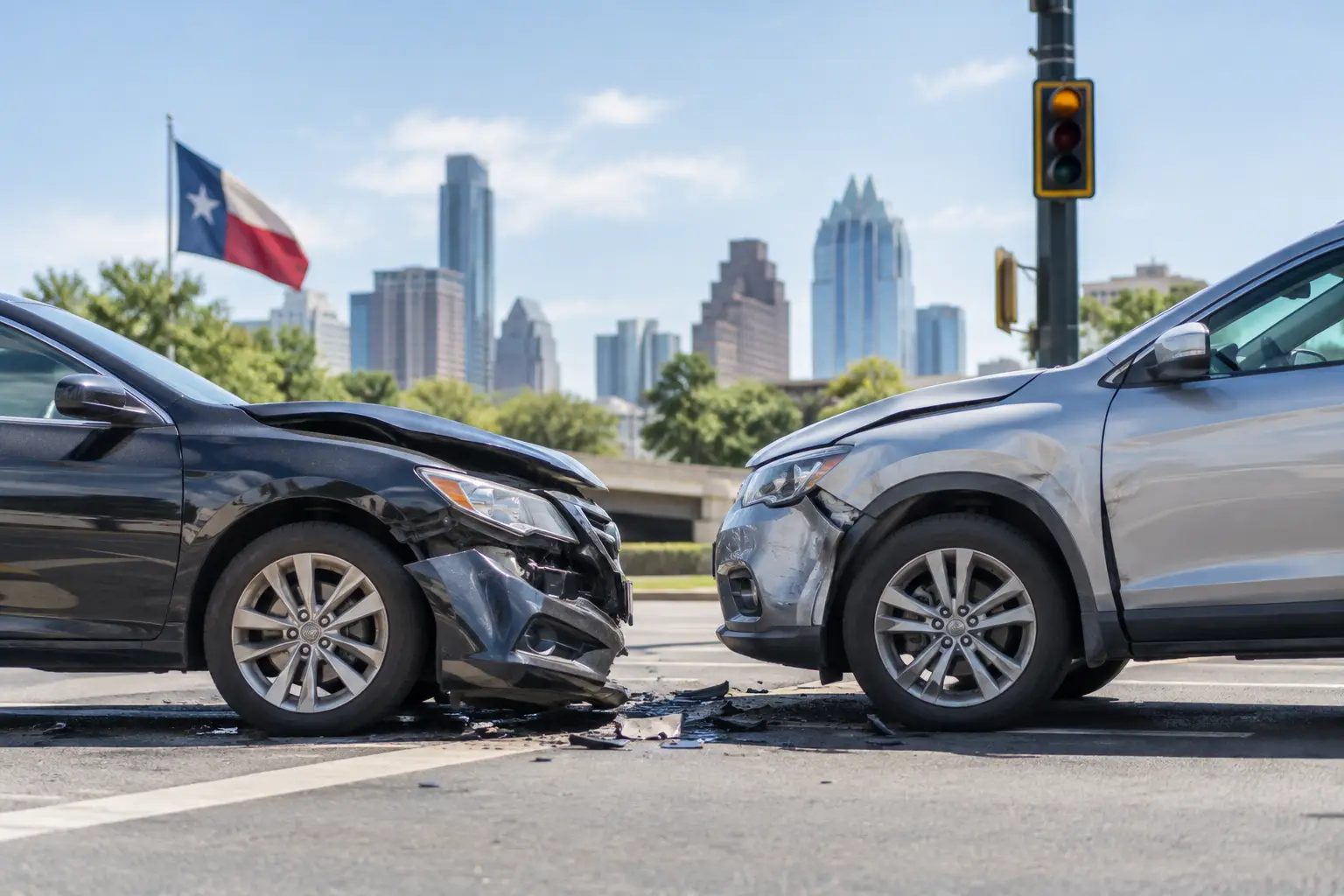
Intersection Crash Liability Guide for Texas Drivers
A collision in an intersection can leave you hurt, shaken, and immediately confronted with competing stories. One driver may insist they had the green light. Another may say the turn was clear. In an intersection crash liability guide, the central question is not simply who was hit first. It is which driver failed to use reasonable care and whether the available evidence supports that conclusion.
For injured Texans, that question can affect who pays for medical care, missed income, vehicle damage, and the personal impact of serious injuries. Insurance companies often move quickly to shape the narrative. You do not have to accept their first version of events.
How Liability Is Decided After an Intersection Crash
Texas drivers have a duty to follow traffic signals, yield when required, keep a proper lookout, and operate their vehicles with reasonable care. Intersection collisions commonly happen when one driver runs a red light or stop sign, turns left without yielding, fails to yield while entering a roadway, or drives too fast for conditions.
Still, an intersection is rarely as simple as one driver saying, “I had the right of way.” A driver with a green light may still share responsibility if they were speeding, distracted, or could have avoided an obvious danger. A driver making a left turn usually must yield to oncoming traffic, but an oncoming driver who enters after the signal changes can change the analysis.
The details matter: signal timing, lane placement, sight lines, weather, traffic volume, and the point of impact. A thorough investigation looks beyond the damage to determine what each person did in the seconds before the collision.
Right of Way Does Not Eliminate the Duty to Drive Safely
Having the right of way is powerful evidence, but it is not a blanket excuse for careless driving. Every driver must remain alert and take reasonable steps to avoid a collision when danger becomes apparent.
For instance, a driver proceeding through a green light may have a strong liability position if another vehicle enters against a red signal. But if evidence shows the first driver was traveling far above the speed limit, the insurer may argue that speed contributed to the severity or occurrence of the crash. These arguments are fact-specific, and they should be tested against reliable evidence rather than accepted at face value.
Common Intersection Crash Scenarios
Certain collision patterns appear repeatedly on roads throughout Dallas-Fort Worth. Understanding the pattern can help identify the evidence that may matter most.
A left-turn collision often involves a driver turning across oncoming traffic. The turning driver may be responsible for failing to yield, unless the oncoming vehicle entered after the light changed or was traveling in a way that made the turn impossible to anticipate.
A broadside collision, sometimes called a T-bone crash, may indicate that one driver ignored a traffic signal or stop sign. These collisions can cause severe harm because the side of a vehicle offers less protection than its front or rear.
Crashes involving a rolling stop, an uncontrolled intersection, or a driver entering from a private driveway can also raise clear yield issues. In each situation, the physical location of the vehicles, nearby signs, and witness observations may reveal more than either driver’s initial statement.
Evidence That Can Strengthen Your Position
The most persuasive evidence is often available only for a limited time. Traffic camera footage may be overwritten. Nearby businesses may record video that disappears quickly. Witnesses may become harder to locate as weeks pass.
If your condition allows, take photos of the intersection, vehicle positions, debris, traffic lights, lane markings, skid marks, and visible injuries. Save the names and contact information of anyone who saw what happened. Do not assume the other driver’s insurer will gather evidence that supports you.
A strong investigation may include the crash report, photographs, video footage, witness accounts, vehicle data, cell phone records when distraction is suspected, and analysis of the damage pattern. Medical records also matter because they connect the collision to the harm you suffered and show the full extent of its consequences.
Be Careful With Early Insurance Conversations
An insurer may contact you shortly after the wreck and ask for a recorded statement or offer a fast settlement. That can feel like progress when bills are arriving, but an early offer may not reflect the full cost of your injuries, future treatment needs, lost earning ability, or pain and emotional distress.
You can provide necessary basic information without guessing about fault, minimizing symptoms, or speculating about details you do not remember. Statements made while you are in pain or still processing the collision can later be used to challenge your claim.
Before agreeing to a settlement, make sure you understand what you are giving up. A settlement generally ends your ability to seek additional compensation for that collision, even if your injuries prove more serious than first expected.
What Happens If Both Drivers Share Fault?
Texas uses a proportionate responsibility system. That means more than one person can be assigned a percentage of fault. Your recovery can be reduced by your share of responsibility, and a finding that you were more than 50 percent responsible can prevent recovery from the other party.
Insurance companies may use this rule to argue that an injured person was partly to blame. They may point to speed, distraction, a delayed reaction, or an alleged failure to yield. Sometimes those arguments have support. Other times, they are based on incomplete facts or an effort to reduce what the insurer must pay.
Do not let a fault allegation end the conversation. A careful review of video, witnesses, traffic signals, and the vehicles’ movements may tell a different story. Even when you may share some responsibility, you may still have a path to compensation depending on the facts.
Steps to Take After an Intersection Collision
Your safety comes first. Call 911, seek medical attention, and follow medical guidance. Serious injuries are not always obvious at the scene, particularly after the shock of impact.
Exchange information with the other driver and cooperate with responding officers, but avoid arguments about blame. If you are able, document the scene and identify witnesses. Preserve damaged personal property, photographs, communications from insurers, and records of expenses or missed work.
Then consider speaking with an experienced personal injury attorney before an insurer pressures you into a decision. A lawyer can take over communications, preserve critical evidence, evaluate all available coverage, and pursue compensation that reflects the real impact of the collision.
When an Attorney Can Make a Difference
Intersection cases often turn on disputed facts. The other driver may deny running a light. A witness may only have seen part of the event. The crash report may contain useful information but may not settle every question. When injuries are substantial, those disputes can carry significant financial consequences.
Feizy Law Office represents injured people across the Dallas-Fort Worth area with direct, determined advocacy. Attorney Nick Feizy and the firm can investigate what happened, deal with insurers, and fight for the compensation you need while you focus on healing.
You should not have to prove your future from a hospital bed or while trying to return to daily life. Preserve what you can, get the care you need, and seek guidance before the evidence and your leverage begin to fade.


About Post Author
