

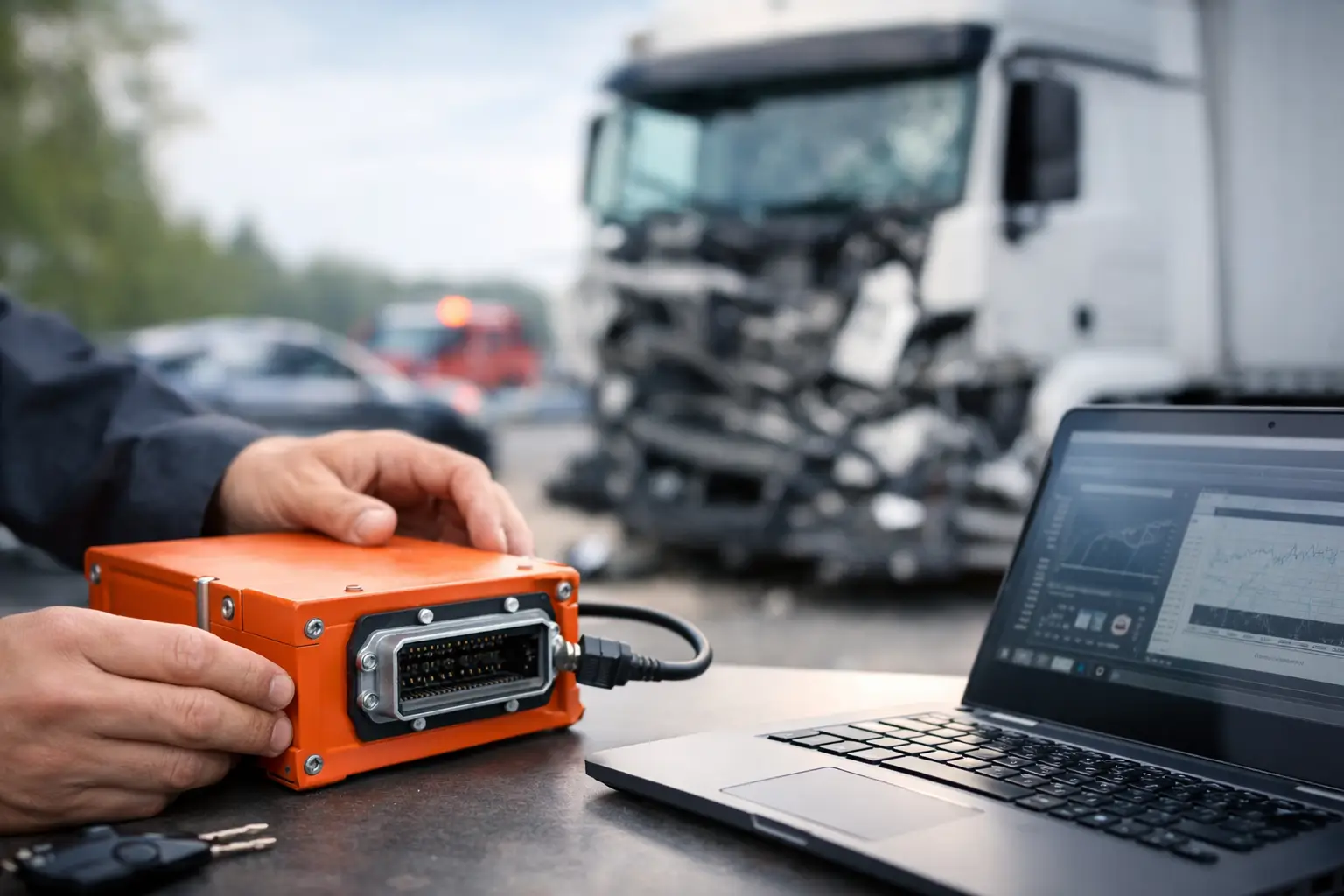
Truck Accident Black Box Evidence Explained
A trucking company may send investigators to a crash scene within hours. While injured victims are still trying to understand what happened, key data inside the truck can already be at risk. That is why truck accident black box evidence matters so much after a serious wreck.
In many commercial truck cases, the black box is one of the clearest sources of information about what the truck was doing right before impact. It can help show speed, braking activity, engine performance, and sometimes how long the driver had been operating the vehicle. When fault is disputed, that data can make the difference between a vague story and a case backed by hard facts.
What truck accident black box evidence can show
A truck’s black box is often part of its electronic control system. In many cases, it stores event data tied to the truck’s operation before, during, and after a collision. The exact information available depends on the truck, the recording system, and how the data was preserved.
Still, truck accident black box evidence often includes details such as vehicle speed, throttle position, brake application, sudden deceleration, engine hours, and other performance data. Some systems may also work alongside onboard communication or fleet monitoring tools that track route history, driver activity, or safety events.
That does not mean every truck has the same setup or that every device records the same amount of information. Some systems capture only limited event data. Others hold much more. This is one reason early action matters. If the vehicle is repaired, returned to service, or its data is overwritten, valuable evidence may disappear.
Why black box data matters in a truck accident claim
After a major truck crash, different parties may give very different accounts. A driver might say traffic stopped suddenly. A company might suggest the injured person cut in front of the truck. Witnesses may remember only fragments. Black box data can help test those claims against what the truck itself recorded.
For example, if a truck was traveling too fast before impact, the data may reflect that. If there was no meaningful braking before the collision, that can raise serious questions about driver attention, reaction time, or fatigue. If a company argues that the truck was being operated safely, the recorded information may support that claim or undermine it.
This evidence is especially important in cases involving catastrophic injuries or wrongful death. When the stakes are high, insurers and trucking companies often fight hard over liability. Objective data can reduce their ability to shift blame onto the injured victim.
Truck accident black box evidence is not the whole case
Black box data can be powerful, but it is not magic. It does not automatically explain why a crash happened. It also does not always tell the full story.
A recording may show the truck’s speed and braking pattern, but it might not show whether the driver was distracted, exhausted, following too closely, or reacting to poor maintenance. It may not reveal what another vehicle did in the seconds before impact. And if the data is incomplete, damaged, or poorly interpreted, it can be misunderstood.
That is why a strong truck accident case usually relies on more than one source of proof. Crash scene photos, vehicle damage, witness statements, electronic records, inspection history, and expert analysis often work together. Black box evidence is often one critical piece, not the entire puzzle.
How this evidence can be lost
One of the biggest problems in truck cases is timing. Data does not always stay available forever. Some systems overwrite older information. In other situations, a truck may be repaired, sold, or put back on the road before a full inspection takes place.
The trucking company also controls access to the vehicle in many cases. That creates a practical problem for injured victims. You know the evidence may exist, but you do not have the truck in your possession. If no prompt action is taken to preserve it, the opportunity to recover that data can narrow fast.
This is one reason many injured people choose to get legal help early. A law firm can move quickly to demand preservation of the truck and its electronic data, while also investigating other sources of evidence before memories fade and records disappear.
What happens when black box evidence helps prove fault
When black box evidence supports your version of events, it can strengthen your position in settlement talks and, if necessary, in litigation. It may help establish that the truck was speeding, that the driver failed to brake in time, or that the vehicle was operated in a way that created an unreasonable danger.
That can matter not only for proving fault, but also for showing the seriousness of the misconduct involved. In some cases, the issue is simple negligence. In others, the broader facts may point to deeper problems such as unsafe scheduling pressure, poor supervision, or a company that put delivery demands ahead of public safety.
The value of this evidence often grows when the defense tries to deny responsibility. If the company says its driver acted reasonably but the recorded data tells a different story, that conflict can become a major turning point in the case.
Why legal teams act fast after a truck crash
Truck accident investigations are not handled the same way as ordinary car crash claims. Commercial carriers and their insurers often have rapid response procedures because they know evidence matters. They may begin building their defense almost immediately.
That means injured victims should not assume the truth will preserve itself. Important records can sit in the hands of the very parties trying to limit what they pay. Getting your own legal team involved early helps level that playing field.
A lawyer handling a truck case can work to identify what electronic systems may exist, push for preservation of truck accident black box evidence, and coordinate a broader investigation into the crash. In serious cases, that early pressure can make a real difference in what evidence is still available weeks later.
What to do if you think black box data may matter
If you were hurt in a commercial truck wreck, do not wait for the trucking company to volunteer everything it has. Preserve what you can on your side, including photos, discharge paperwork, and any information tied to the crash. Then speak with a truck accident lawyer as soon as possible.
The right legal approach depends on the facts. Some cases turn heavily on electronic data. Others involve multiple vehicles, road conditions, or mechanical issues that require a wider investigation. Either way, quick action puts you in a better position to protect critical proof before it is gone.
For injured Texans, this issue comes up often in high-impact highway crashes where liability is contested and the losses are serious. A firm such as Feizy Law Office can step in, deal with the trucking company and insurer, and focus on securing the evidence needed to build a strong claim while you focus on your recovery.
Black box evidence can be one of the clearest voices left after a violent truck crash, but it does not speak for long unless someone moves to protect it.


About Post Author
