

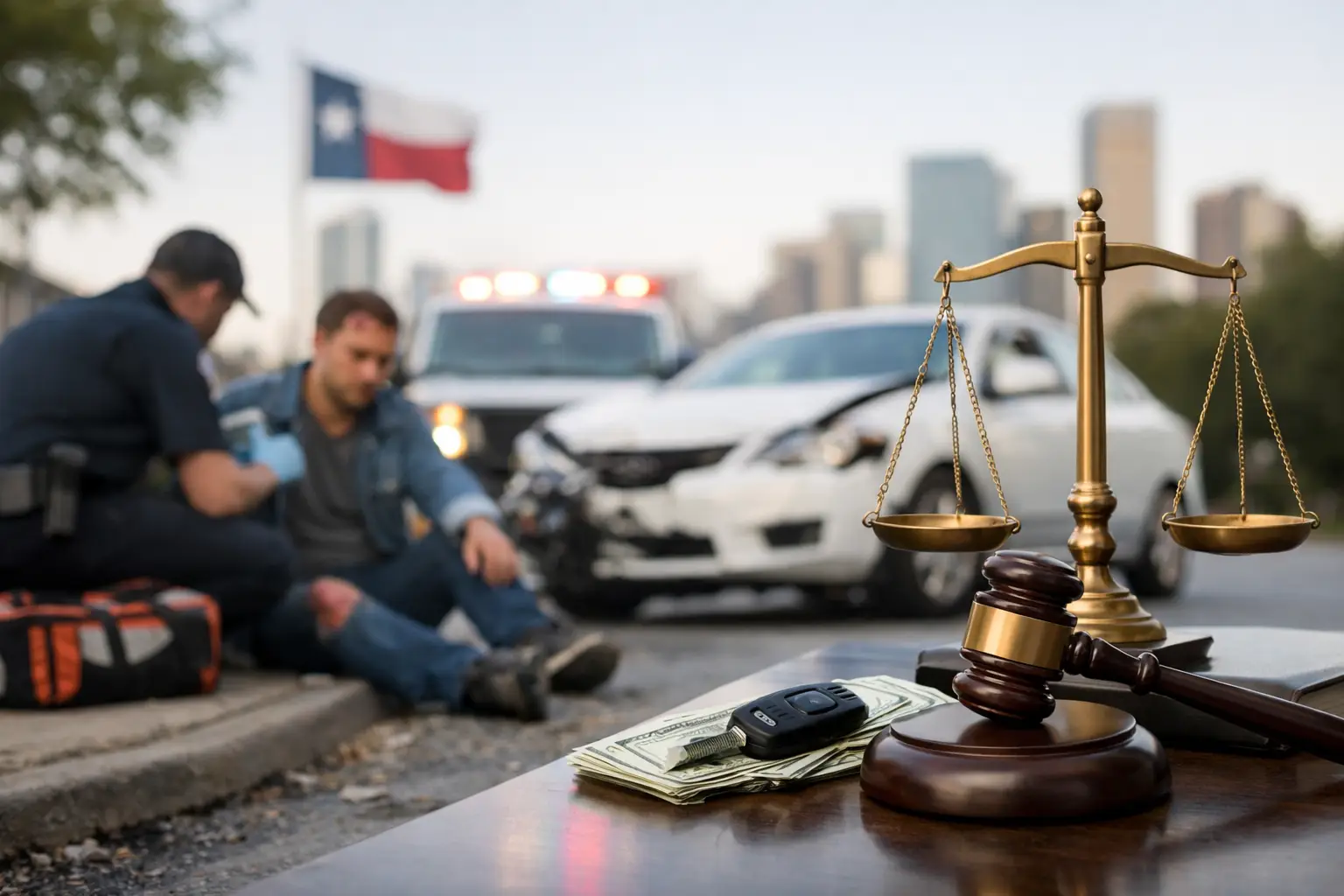
Texas Pedestrian Injury Compensation After a Crash
A pedestrian struck near a busy Dallas-Fort Worth intersection can suffer life-changing harm in seconds. Texas pedestrian injury compensation is intended to address the financial and personal losses that follow, but receiving fair compensation is rarely automatic. Drivers and insurers may point to a crosswalk signal, dark clothing, traffic conditions, or a pedestrian’s actions to reduce what they owe.
The priority after a crash is your safety and medical care. Once immediate needs are addressed, protecting the facts of what happened matters. A strong injury claim connects the driver’s conduct to the harm you suffered and documents how that harm has changed your daily life.
What Texas Pedestrian Injury Compensation Can Cover
A pedestrian injury claim is not limited to the first hospital bill. Serious injuries can create costs and limitations that continue long after the crash scene is cleared. The compensation available depends on the facts, the severity of the injuries, available coverage, and the evidence supporting each loss.
Economic losses are the measurable financial effects of the collision. They can include emergency transportation, hospital treatment, follow-up care, medication, rehabilitation, future treatment needs, lost income, and reduced ability to earn income in the future. Keep records of bills, receipts, missed work, and communications connected to the crash. Even small out-of-pocket expenses can add up over time.
Non-economic losses address the human consequences that do not come with a receipt. Pain, emotional distress, disfigurement, physical limitations, loss of enjoyment of life, and the strain an injury places on family relationships may all be part of a claim. These damages require careful proof. Medical records matter, but so do your own account of what you can no longer do comfortably, safely, or independently.
In limited cases involving especially reckless conduct, additional damages may be available. Whether that is realistic depends on the evidence. It should not be assumed in every pedestrian case.
Fault Can Change the Value of a Pedestrian Claim
Texas uses a modified comparative fault rule. In plain terms, more than one person can be assigned responsibility for a crash. If a pedestrian is found partly at fault, the compensation may be reduced by that percentage. If the pedestrian is found more than 50% responsible, recovery from the other party may be barred.
That rule gives insurers an incentive to look for ways to shift blame. They may argue that a pedestrian crossed outside a marked crosswalk, entered traffic unexpectedly, ignored a signal, or should have seen an approaching vehicle. Those arguments are not the final word. A driver still has a duty to watch the road, follow traffic laws, control speed, and take reasonable steps to avoid a collision.
The details often matter more than broad assumptions about who had the right of way. Was the driver speeding? Looking at a phone? Turning without checking for people in the crosswalk? Did poor lighting, a blocked sign, a defective signal, or a vehicle’s position affect visibility? Video footage, vehicle data, witness accounts, photographs, and scene measurements can all help establish what actually occurred.
A crosswalk is important, but it is not the whole case
Marked crosswalks and pedestrian signals are meaningful evidence, yet they do not erase a driver’s duty of care. Likewise, crossing outside a crosswalk does not automatically mean a pedestrian has no claim. Texas pedestrian injury compensation often turns on a close review of timing, sight lines, traffic flow, and whether the driver had a reasonable opportunity to avoid the impact.
Do not accept an insurer’s early version of events simply because it sounds confident. Early conclusions are often based on incomplete information.
What to Do After a Pedestrian Crash
The steps you take in the days and weeks after a collision can affect your health and your ability to pursue compensation. Seek prompt medical attention and follow through with recommended care. Delays can give an insurer room to argue that your injuries were unrelated, less serious, or made worse by something else.
If you are able, preserve the information surrounding the crash. Save photographs of visible injuries, damaged personal items, the location, traffic controls, and any vehicle involved. Write down what you remember while the details are fresh, including the direction of travel, weather, lighting, statements made at the scene, and names of witnesses.
Be careful when speaking with an insurance representative. A request for a recorded statement may seem routine, but your words can be used to challenge fault or minimize your injuries. You do not need to guess at details, accept blame, or agree to a quick resolution before you understand the full extent of your losses.
It is also wise to avoid posting about the crash or your physical activities on social media. A single image or comment, taken out of context, can be used to dispute the seriousness of your condition.
Why Early Evidence Matters
Pedestrian cases can involve evidence that disappears quickly. Nearby businesses may overwrite security footage. Traffic cameras may not retain recordings for long. Witnesses can become difficult to locate, and memories fade. An attorney can take steps to identify and preserve useful evidence before it is lost.
That process may include reviewing the crash report, locating witnesses, seeking video from nearby properties, examining the intersection, and evaluating whether another party contributed to the danger. In some cases, responsibility may extend beyond the driver. A vehicle owner, a company connected to the vehicle, or a party responsible for unsafe road conditions may be relevant. Each situation requires a fact-specific investigation.
A lawyer can also calculate damages beyond the bills already in hand. Future care, time away from work, permanent impairment, and the day-to-day impact of an injury should be considered before any resolution is discussed. Settling too early can leave an injured person without enough support when the real consequences become clear later.
Deadlines and Insurance Pressure in Texas
Texas generally gives injured people two years from the date of a crash to bring a personal injury lawsuit. Certain circumstances can change that timeline, and waiting is risky even when two years seems like plenty of time. Evidence can vanish well before a deadline arrives.
Insurance companies often move faster than injured people expect. An early offer may be presented as a practical way to put the matter behind you. But an offer made before you know your prognosis, future needs, or total lost income may not reflect the true value of the claim. Once a settlement is accepted, you may give up the ability to seek additional compensation later.
There is no single formula for valuing a pedestrian injury case. Two people with similar diagnoses may face very different recoveries based on fault evidence, available coverage, treatment needs, income loss, and the long-term impact on their lives. Honest legal guidance should account for those differences rather than promise a specific result.
How a Pedestrian Injury Attorney Can Help
After a serious crash, you should be able to focus on healing rather than managing insurer pressure and paperwork. A plaintiff-side injury attorney can investigate the collision, organize evidence, identify responsible parties, document losses, communicate with insurers, and pursue a settlement or lawsuit when needed.
At Feizy Law Office, injured Texans receive direct, hands-on guidance through the process. Attorney Nick Feizy and the firm’s team work to protect clients from avoidable mistakes while building a claim that reflects the full harm caused by another person’s negligence.
If a driver injured you or someone you love while walking, do not let uncertainty or an insurer’s first response decide what happens next. Preserve what you can, get the care you need, and speak with an experienced pedestrian accident attorney about the path forward.


About Post Author
