

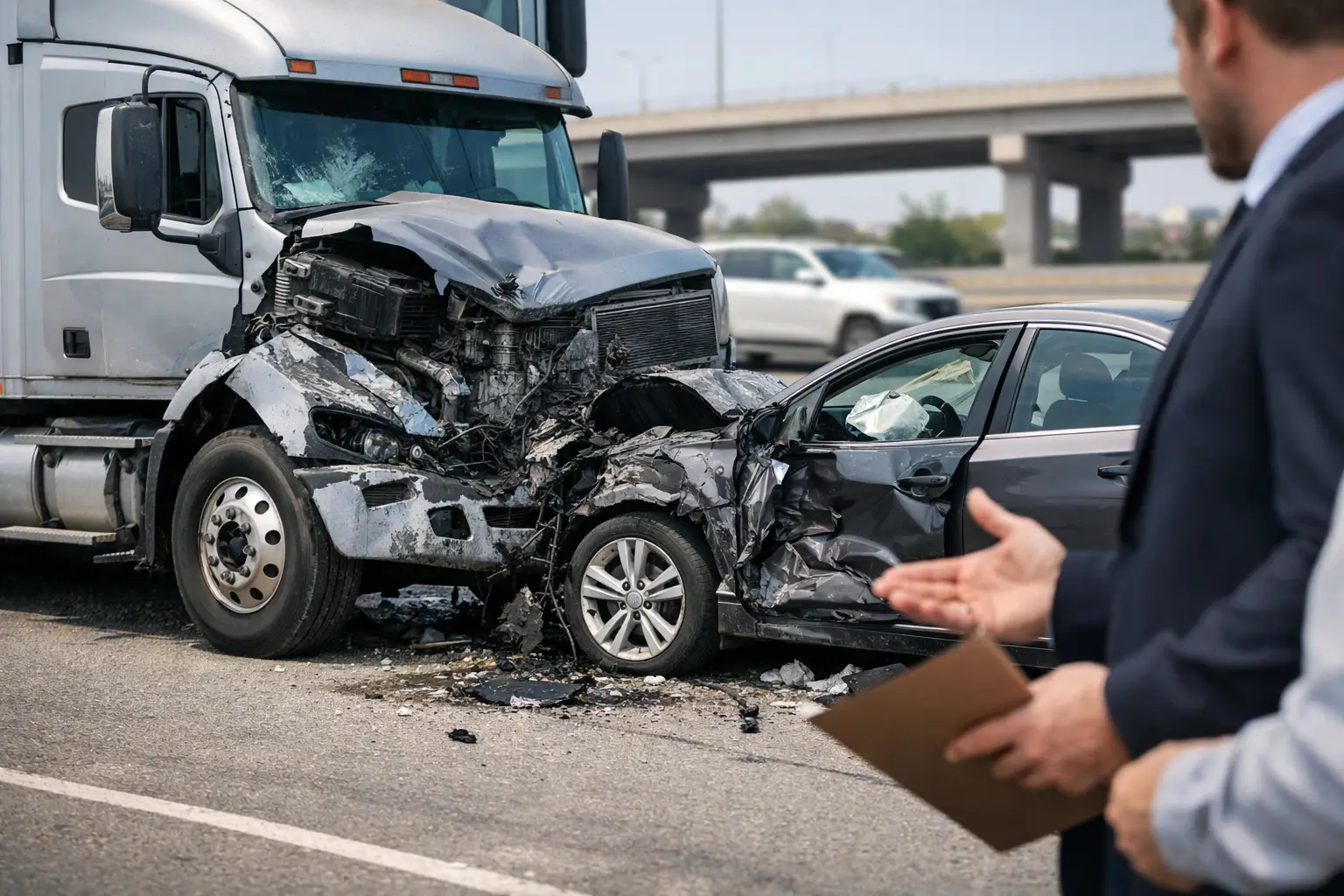
DFW Truck Collision Settlement Examples Explained
A commercial truck can outweigh a passenger vehicle by tens of thousands of pounds. When that weight meets a stopped car, a crowded highway lane, or an intersection, the consequences can change a family’s finances and daily life in seconds. People searching for DFW truck collision settlement examples usually want one clear answer: what might a serious truck crash claim be worth? The honest answer is that the value depends on the harm, the evidence, and the insurance coverage involved.
A settlement is not a preset payment based on the type of collision. It is a negotiated resolution that should reflect what the injured person has lost and what the evidence can prove. Trucking companies and their insurers often move quickly after a serious wreck. Injured Texans deserve a legal advocate who can move just as quickly to protect the evidence and push back against efforts to minimize the claim.
Why Truck Collision Settlements Vary So Widely
Two crashes that look similar in a police report can lead to very different outcomes. One person may recover after a short period of treatment and return to normal activity. Another may face lasting limitations, extended medical care, an inability to return to prior employment, and significant pain that affects every part of life. The financial impact of those injuries is not the same.
Fault also matters. Texas follows a modified comparative responsibility rule. If an injured person is found partly responsible, their recovery can be reduced by their share of responsibility. If they are found more than 50 percent responsible, they may be barred from recovering damages. Truck insurers understand this and may look for ways to shift blame onto the person who was hurt.
The available insurance coverage and the responsible parties can also affect settlement discussions. Depending on the facts, responsibility may extend beyond the person behind the wheel to a trucking company, a cargo-loading company, a maintenance provider, or another party whose conduct contributed to the collision. Identifying every responsible party is not about inflating a claim. It is about pursuing accountability where the evidence supports it.
DFW Truck Collision Settlement Examples and What They Show
The following situations are illustrations, not promises of a particular result. A settlement amount cannot be responsibly estimated from one detail alone, such as the type of truck or the location of the crash. Still, these scenarios show why truck collision claims are evaluated so carefully.
Rear-End Collision With Documented Financial Losses
Consider a driver stopped in highway traffic when a delivery truck strikes the rear of the vehicle. If the driver suffers injuries requiring substantial medical care, misses time from work, and has clear records tying the injuries to the crash, the claim may involve medical expenses, lost income, property damage, and pain and suffering.
In this type of matter, the key questions often include why the truck did not stop, whether the driver was distracted or following too closely, and whether the company had policies designed to prevent unsafe driving. Photos, vehicle data, witness accounts, and company records can make a meaningful difference. A quick offer that covers only immediate bills may fail to account for the full disruption caused by the collision.
Intersection Crash Caused by an Unsafe Turn
Large trucks need more room to turn than passenger vehicles. A truck that turns across a lane without leaving adequate space can trap or strike a smaller vehicle. In a serious intersection collision, evidence may include traffic-camera footage, nearby business footage, vehicle damage patterns, and statements from people who saw the crash.
The value of this type of claim depends heavily on the severity and permanence of the injuries. When injuries affect a person’s ability to care for family, participate in normal activities, or earn income, the non-economic harm may be substantial. Insurers may focus on any disputed detail about lane position or timing, which is why prompt evidence preservation is so important.
Highway Collision Involving Multiple Vehicles
A commercial truck collision can set off a chain reaction, especially on busy Dallas-Fort Worth roads. When several vehicles are involved, insurers may argue over who caused the initial impact and whether later impacts worsened the injuries. These disputes can become more complex because multiple insurance companies may be involved.
A thorough investigation can separate assumption from fact. It may examine vehicle data, dispatch information, roadway conditions, driver records, cargo issues, and the sequence of impacts. The goal is to build a clear account of what happened and show how the negligence caused specific losses.
Collision With Long-Term Consequences
The most significant truck collision settlements often involve catastrophic injuries or a death caused by negligence. In these matters, damages may include extensive past and future medical costs, income the injured person can no longer earn, physical pain, emotional suffering, disability, and loss of enjoyment of life. When a family loses a loved one, the legal claim may also address the profound financial and personal losses left behind.
These claims require care, patience, and a strong evidentiary foundation. The most damaging effects of a collision may not be fully known in the first few weeks. Accepting a settlement before the long-term outlook is understood can leave an injured person without sufficient compensation later.
Evidence That Can Strengthen a Truck Crash Claim
Trucking companies commonly have access to information an injured person does not. Some records can be lost or overwritten if they are not preserved quickly. That is one reason it helps to speak with a truck accident attorney soon after the crash.
Useful evidence may include the crash report, photographs, witness contact information, video footage, vehicle data, inspection records, maintenance history, driver qualification records, dispatch communications, and cargo documentation. Medical records and proof of income losses are also essential because they connect the collision to the harm the victim has suffered.
An experienced attorney can send preservation notices, investigate the collision, communicate with insurers, and organize the evidence before the other side controls the narrative. This work is especially valuable in cases involving disputed fault or a trucking company that denies responsibility.
What a Fair Settlement Should Account For
A fair settlement should do more than reimburse an initial emergency bill. It should address the complete impact of the crash supported by the evidence. That can include past and anticipated medical expenses, lost wages, reduced future earning ability, property losses, physical pain, mental anguish, disfigurement, impairment, and loss of enjoyment of life.
There is a trade-off in every settlement discussion. A prompt resolution may provide needed financial relief, but it can also come before the full extent of an injury is known. Continuing to pursue a claim may take more time, particularly when fault is contested, but it may be necessary when an insurer refuses to make a reasonable offer. The right path depends on the facts, the medical outlook, the available evidence, and the client’s needs.
Protecting Your Rights After a DFW Truck Crash
After a serious collision, preserve what you can. Keep photographs, records of expenses, correspondence from insurers, and notes about how injuries affect your daily life. Be careful with recorded statements or early settlement offers. Insurers are not required to place your interests ahead of their own.
Feizy Law Office represents injured people and families across the Dallas-Fort Worth area with direct, determined advocacy. Attorney Nick Feizy can evaluate the facts, take over insurer communications, and pursue compensation that reflects the real harm caused by a truck collision.
A truck crash can leave you facing pressure when you need time to heal and rebuild. Before you accept an offer that may not protect your future, seek a clear assessment of your rights and the evidence that can support your claim.


About Post Author
