

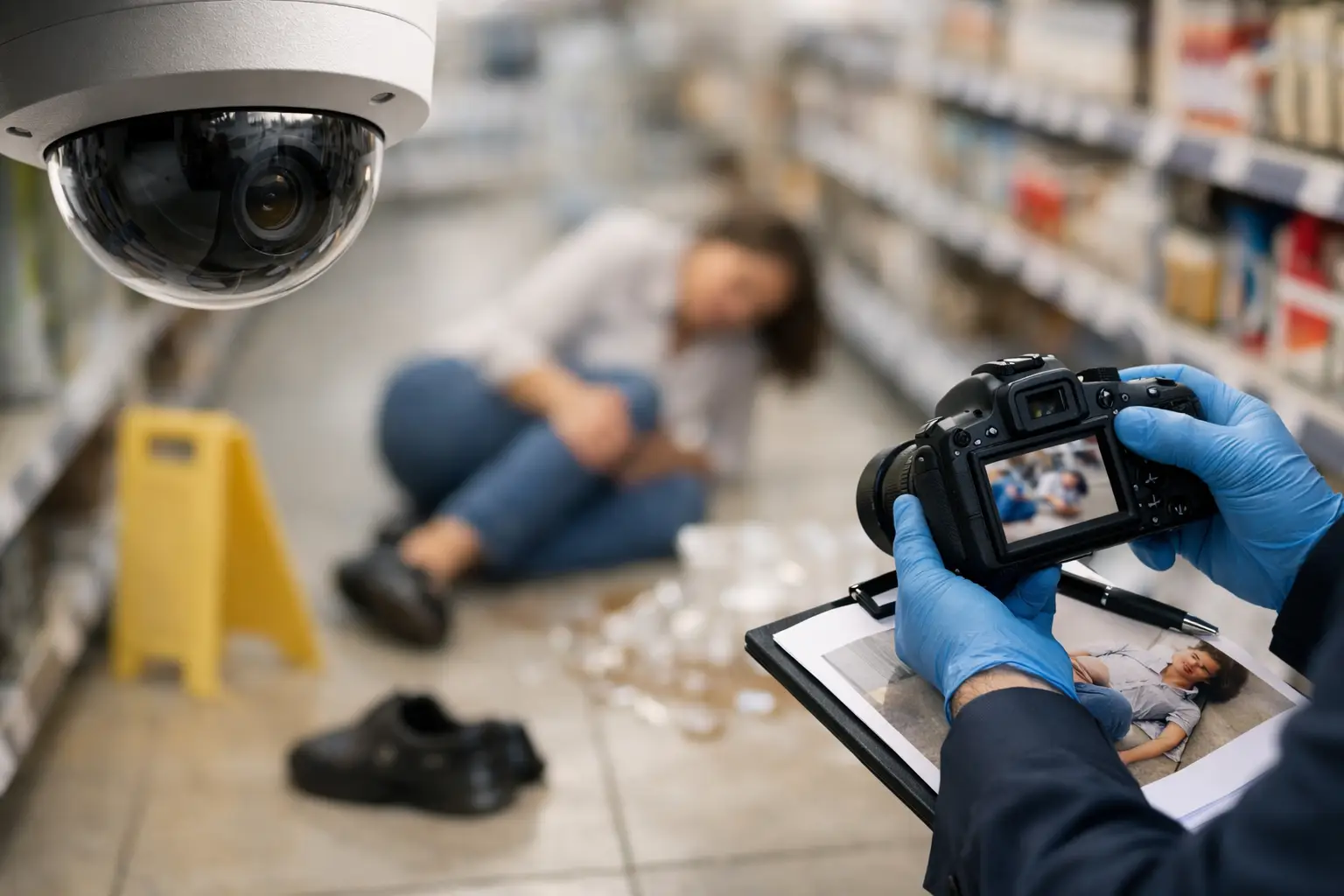
Store Surveillance Injury Evidence That Matters
A fall in a grocery aisle, a trip over merchandise, or an injury near a store entrance can happen in seconds. The camera footage that shows why it happened may be erased just as fast. Store surveillance injury evidence can be one of the clearest ways to show the dangerous condition, how long it existed, and whether the store had an opportunity to prevent someone from getting hurt.
After an injury, people are understandably focused on their pain, medical care, and getting home safely. Meanwhile, the store and its insurer may begin protecting their own interests. Taking prompt action to identify and preserve video footage can make a meaningful difference in a Texas premises liability claim.
Why Store Surveillance Injury Evidence Can Be So Powerful
Surveillance video does more than capture the instant someone falls. Depending on the camera angles and how long footage is retained, it may show what happened in the minutes or hours leading up to the incident.
For instance, footage may reveal a spill in a walkway, a leaking cooler, an uneven floor surface, a mat that had shifted, clutter in an aisle, or merchandise left where customers were expected to walk. It may also show whether store staff walked past the condition, whether anyone tried to clean or block off the area, and whether warning signs were actually present.
This matters because a store is not automatically responsible simply because a customer was injured on the property. The key question is often whether the store knew, or reasonably should have known, about an unsafe condition and failed to take reasonable steps to address it. Video can help establish that timeline in a way that memories and incident reports cannot always do.
Footage can also counter unfair arguments. A business may later contend that the hazard was obvious, that a warning cone was visible, or that the injured person was distracted. A clear recording may support or challenge those claims based on what actually occurred.
Video Footage Is Often Deleted on a Short Schedule
Many stores use surveillance systems that automatically record over older footage. Retention periods vary widely. Some businesses may keep recordings for only days, while others retain them longer. The relevant video also may not be limited to the camera aimed directly at the spot where the injury occurred.
Useful footage can include the entrance, checkout lanes, nearby aisles, adjoining departments, loading areas, and cameras that show who passed through the location before and after the incident. A recording from a wider angle may show a staff member noticing a spill. Another camera may show where the substance came from or how long it was on the floor.
The sooner the business receives a clear request to preserve potentially relevant video, the better. Waiting until an insurer has denied responsibility or until injuries become more serious can create an avoidable problem if the recording has already been overwritten.
What to Do at the Store, If You Are Able
Your health comes first. If you can safely do so after the incident, report what happened to a store manager or staff member. Ask that an incident report be created, but do not assume the report will fully describe the dangerous condition or identify every witness.
Use your phone to photograph the area where you were hurt. Capture the floor or walkway, any liquid or debris, warning signs, shelving, displays, lighting, floor mats, and the surrounding area. Take wider photos as well as close shots. A photograph of a spill is more useful when it also shows where it was located and whether customers had a clear route around it.
If witnesses saw what happened or noticed the condition beforehand, ask for their names and contact information. Independent witnesses can be especially important if the store later disputes what caused the injury. Also write down the approximate time, the department or aisle, what you were doing immediately before the incident, and what store staff said afterward.
Avoid guessing about the cause or minimizing your condition just because you are shaken up. Give an accurate account, keep any receipts from your visit, and preserve the shoes and clothing you were wearing if they may help show the conditions involved.
Requesting Preservation of Store Surveillance Injury Evidence
A verbal request at the store can be helpful, but it may not be enough to ensure footage is retained. The request should clearly identify the business, date, approximate time, precise location, and nature of the incident. It should ask the store to preserve all recordings that may show the incident, the conditions beforehand, and activity afterward.
Specificity is valuable. If you fell near a refrigerated display at about 6:30 p.m., footage from the hour before the fall may be critical. But limiting the request too narrowly may miss video showing how the hazard developed. The right preservation scope depends on the circumstances.
There is also a practical trade-off. Stores have legitimate privacy concerns and may not simply hand footage to a customer immediately, particularly if it captures other shoppers. That does not mean the footage is unimportant or unavailable. It means the evidence must be handled carefully and pursued through the proper process.
An experienced injury attorney can act quickly to put the business and its insurer on notice, request preservation of relevant evidence, and investigate whether other records support the video. Those records may include cleaning logs, inspection records, internal reports, witness accounts, photographs, and communications about the condition.
Do Not Rely Only on the Store’s Incident Report
An incident report confirms that a report was made, but it is not a complete record of what happened. It may contain a brief version prepared by the business, leave out important details, or state that the cause is unknown. It also may not identify which cameras covered the area.
Keep your own account while the details are fresh. Note the weather if the incident occurred near an entryway, whether the floor looked wet or dirty, whether there were footprints or cart tracks through a spill, and whether any warning device was placed after you were hurt. These details can help explain why a condition was present long enough for the store to discover it.
If a manager tells you the store has cameras, write down that statement and identify where the cameras appeared to be located. Do not argue with staff or try to access restricted areas. Your role is to protect your health and preserve what you can. A legal team can take over the evidence process.
When the Footage Is Missing or Incomplete
Missing video does not automatically end a claim. A case can still be supported by photographs, witness statements, store records, the timing of the incident report, and evidence of the injuries caused by the fall or other event.
Still, the reason the video is missing may matter. If a business was promptly told that an injury had occurred and that relevant footage needed to be kept, yet recordings were later erased, that circumstance deserves close examination. The facts, timing, and the store’s preservation practices all matter.
Video can also be incomplete for ordinary reasons. Cameras may not cover every aisle, the recording may be grainy, or an obstruction may block the key moment. That is why a thorough investigation should not depend on one clip alone. Strong claims are built by connecting every available piece of evidence.
Protect Your Claim Before Evidence Disappears
After a serious store injury, you should not have to chase camera footage while dealing with medical bills, lost income, and pressure from an insurance company. Prompt action protects your ability to seek compensation for the harm caused by another party’s negligence.
Feizy Law Office helps injured Texans investigate store injury claims, preserve critical evidence, and deal directly with insurers. A free consultation can help you understand the next steps and put a focused advocate to work protecting the evidence before it disappears.


About Post Author
