

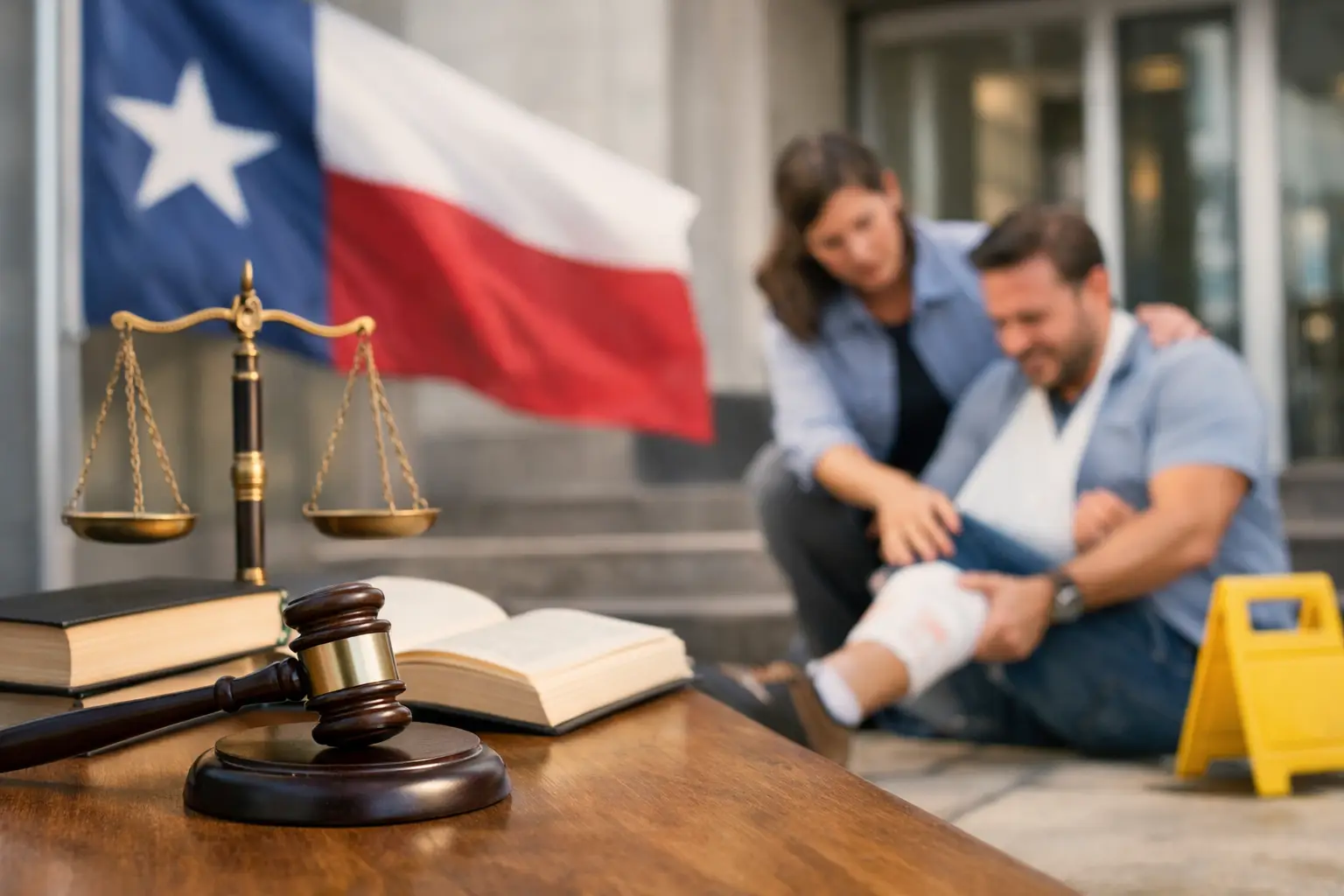
Texas Premises Liability Claim Guide for Injury Victims
A wet floor at a grocery store, a broken handrail in an apartment complex, poor lighting in a parking lot, or uneven pavement outside a business can turn an ordinary day into a painful and expensive crisis. This premises liability claim guide Texas injury victims can use explains what to do after an unsafe property condition causes harm – and why acting promptly can protect your right to compensation.
Property owners and those who control a property have a responsibility to take reasonable steps to keep visitors safe. When they ignore a dangerous condition or fail to correct it within a reasonable time, the consequences can be serious. The injured person may face mounting medical bills, time away from work, and an insurer that is already looking for reasons to minimize the claim.
What Is a Premises Liability Claim in Texas?
A premises liability claim may arise when someone is hurt because a dangerous condition existed on property and the responsible party did not use reasonable care to address it or warn visitors about it. These claims can involve retail stores, restaurants, apartment communities, hotels, parking facilities, office buildings, private homes, and public spaces.
The central issue is not simply whether an injury happened on someone else’s property. A successful claim usually requires evidence that the owner, operator, or occupier knew about the hazard, should have discovered it through reasonable inspections, or created the dangerous condition.
For instance, a spill that occurred moments before a fall may be treated differently from one left on a floor long enough that staff reasonably should have found and cleaned it. Likewise, a clearly marked hazard may raise different questions than a concealed danger in a dark stairwell. Every situation turns on its facts, including the condition itself, how long it existed, and what the property controller did or failed to do.
Premises Liability Claim Guide Texas: The First Steps Matter
The hours and days after an injury often shape the strength of a premises liability claim. Property conditions change quickly. A spill gets cleaned, security footage may be overwritten, and witnesses can become difficult to locate. Taking practical action early can preserve information that may otherwise disappear.
First, get appropriate medical attention and follow through with recommended care. Your health comes first, but medical records also connect the incident to the injuries you suffered. Do not assume pain will fade on its own, especially after a fall or impact. Some injuries are not fully apparent immediately.
Next, report the incident to the property manager, store supervisor, or person in charge. Ask that the report accurately identifies where the incident occurred and what caused it. Stick to the facts. You do not need to speculate about fault or make statements that downplay your pain.
If you can safely do so, photograph or record the dangerous area from several angles. Capture the hazard, nearby lighting, warning signs or their absence, your footwear, and the surrounding area. Save the clothes and shoes you wore without washing or altering them. If anyone saw what happened, obtain their names and contact information.
It is also wise to write down what you remember as soon as possible. Note the time, location, weather if it was outdoors, what you noticed before and after the injury, and who spoke with you. Small details can matter when a business later disputes how the incident occurred.
Proving Responsibility for an Unsafe Condition
Texas premises liability claims commonly focus on notice. In straightforward terms, did the responsible party know, or should it reasonably have known, that a dangerous condition was present? Evidence can come from inspection records, maintenance logs, incident reports, video footage, witness accounts, photographs, and prior reports of the same hazard.
A property owner may argue that it had no notice, that the condition appeared too recently to discover, or that it took reasonable safety measures. An insurer may also contend that the injured person should have seen the danger and avoided it. Those arguments are common, but they are not the final word.
A hazard does not become harmless merely because it was visible. Poor lighting, distractions created by the property, the condition of a walking surface, inadequate warnings, and the reason a visitor was in that area can all affect the analysis. A broken curb near a store entrance, for instance, presents different questions than a hazard in a restricted area with clear warnings.
Texas also considers whether an injured person shares responsibility. If a jury finds that the injured person was partly at fault, compensation may be reduced by that percentage. If the injured person is found more than 50 percent responsible, recovery may be barred. This is one reason insurers often press for quick statements or try to frame an incident as simple carelessness.
You are not required to accept an insurer’s version of events. An experienced injury attorney can investigate the property condition, preserve key evidence, and respond when blame is unfairly shifted to you.
Compensation May Cover More Than the Immediate Bills
A premises liability injury can create losses that extend far beyond the first emergency expense. Depending on the facts, a claim may seek compensation for medical treatment, future care needs, lost income, reduced ability to earn income, physical pain, mental anguish, physical limitations, and damage to personal property.
The value of a claim depends on the severity of the injury, the available evidence, insurance coverage, the impact on daily life, and the degree of responsibility assigned to each party. Serious injuries involving surgery, lasting mobility problems, traumatic brain injuries, or significant scarring may require a more detailed assessment of future losses.
Be cautious about a quick settlement offer. Early offers often arrive before the full extent of an injury and its financial impact is known. Once a settlement is accepted, obtaining additional compensation later can be extremely difficult. A fair evaluation should account for the entire harm, not just the expenses visible in the first few days.
Deadlines Can Limit Your Options
In many Texas personal injury matters, there is generally a two-year deadline to bring a lawsuit. However, the timeline can be shorter when a government entity or public property is involved, and certain circumstances can affect when the clock begins to run. Waiting also creates practical problems even when time remains.
Surveillance video may be erased under routine retention practices. Witness memories may fade. A business may repair the dangerous condition before it can be documented. Speaking with an attorney soon after an incident gives you a better opportunity to protect evidence and understand the timeline that applies to your situation.
How a Premises Liability Attorney Can Protect Your Claim
Premises cases are rarely resolved by simply telling an insurer that you were hurt. The other side may have corporate representatives, investigators, and insurance professionals focused on limiting what they pay. You deserve someone focused on your interests.
A plaintiff-side attorney can take over communications with insurers, request and preserve surveillance footage, investigate whether similar incidents occurred, review property maintenance practices, calculate losses, and prepare a claim for negotiation or litigation when needed. This support allows you to concentrate on healing instead of managing calls, paperwork, and pressure from the insurance company.
At Feizy Law Office, injured Texans receive direct, determined advocacy built around the facts of their situation. If an unsafe property condition disrupted your life, do not let missing evidence or an insurer’s pressure decide what happens next. Seek a prompt evaluation of your claim, protect the details that matter, and give yourself the opportunity to pursue the compensation you need to move forward.


About Post Author
