

How to Preserve Accident Scene Proof After a Crash
The minutes after a serious collision can feel blurred by pain, shock, traffic, and concern for everyone involved. Yet the information available at the scene may become some of the strongest proof of what happened. Knowing how to preserve accident scene proof can protect the facts before vehicles are moved, debris is cleared, witnesses leave, or an insurance company begins questioning your account.
Your safety comes first. Call 911 when anyone may be hurt, move to a safer location if you can do so without creating another danger, and follow instructions from first responders. Once the immediate emergency is addressed, a few careful actions can make a meaningful difference in an injury claim.
How to Preserve Accident Scene Proof Safely
Do not put yourself at risk to gather information. You do not need to stand in moving traffic, approach an aggressive driver, or delay needed medical care for a photograph. Preserve what you reasonably can, then let first responders and a legal team handle the rest.
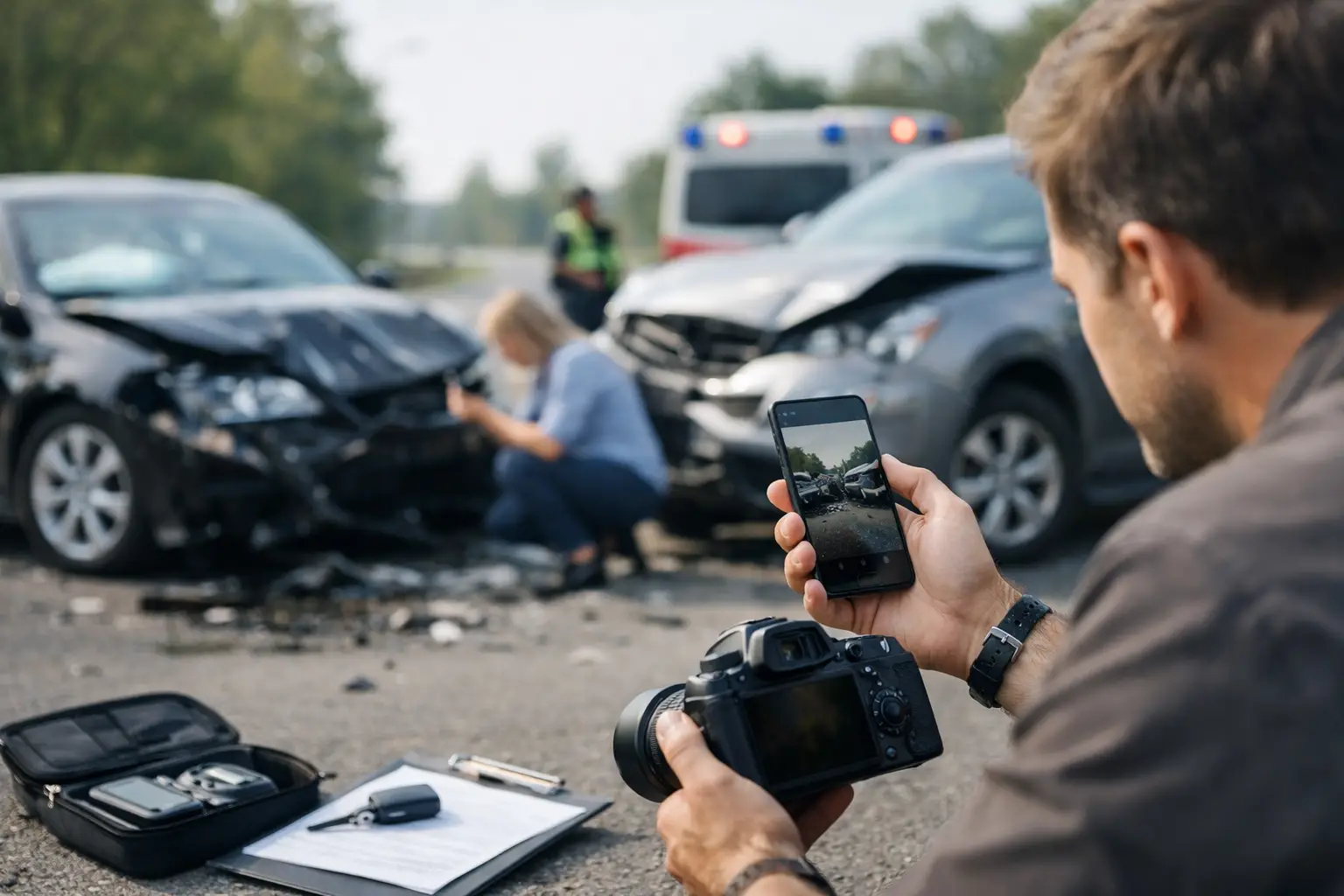
If it is safe, use your phone to photograph and record video of the scene before anything changes. Start wide. Capture the full intersection, traffic lanes, nearby businesses, road markings, traffic signals, weather conditions, and the positions of every vehicle. Then take closer images of vehicle damage, broken glass, debris, skid marks, damaged guardrails, and any visible injuries.
Video can add context that still photos miss. A slow walk-around video may show distance, sightlines, obstructions, lighting, and how the roadway was configured. Narrate only basic facts if you choose to speak, such as the street name, time, weather, or direction of travel. Avoid guessing about speed, fault, or what another person was doing.
Keep the original files. Do not crop, filter, annotate, or repeatedly forward them in ways that could make their source or timing harder to confirm later. Back them up as soon as possible and keep a separate copy available for your legal representative.
Record the Details That Disappear First
Accident scenes change fast. A vehicle may be towed away, a light may change, rain may wash away marks on the road, and a damaged surface may be repaired. Write down what you observed while the details are fresh.
Include the date, approximate time, exact location, weather, lighting, traffic conditions, and sequence of events as you remember them. Note which direction each vehicle was traveling and where the impact occurred. If you noticed a driver looking down, failing to yield, changing lanes abruptly, following too closely, or ignoring a traffic signal, record what you personally saw without filling in gaps.
A simple note on your phone is enough. The goal is not to create a polished statement. It is to preserve your own recollection before stress and time make the scene harder to recall accurately.
Also save paperwork and reference information provided at the scene. If officers respond, ask how to obtain the crash report when it becomes available. The report can identify involved parties, witness information, responding agencies, and initial observations, though it may not tell the entire story.
Get Witness Information Before It Is Lost
Independent witnesses can be especially valuable because they do not have the same direct financial stake in the result. A witness who saw a driver run a red light or watched a truck drift across lanes may help resolve a dispute when the drivers give conflicting accounts.
If a witness is willing to speak with you, ask for their name and a reliable way to reach them. You can also ask whether they saw the collision itself or only what happened afterward. That distinction matters. If they are comfortable doing so, a brief recorded statement in their own words may preserve their first impression of what they observed.
Be respectful and brief. Do not pressure anyone to take sides or argue with a witness about the details. A person who leaves without being identified may be difficult to locate later, even if they saw the most important moment of the crash.
Protect Physical Items From the Scene
Some proof is easy to overlook because it does not look like a document or a photograph. Preserve damaged clothing, shoes, eyeglasses, helmets, child safety seats, personal items, and other objects affected by the impact. Do not wash, repair, throw away, or alter these items without first speaking with your legal team.
For a motorcycle or pedestrian collision, a damaged helmet, torn jacket, scuffed footwear, or broken bicycle component may help show the force and direction of impact. In a premises incident, keep the shoes and clothing you were wearing, especially if they show moisture, debris, or damage connected to the hazardous condition.
The same caution applies to your vehicle. Damage patterns can reveal where contact occurred and how a collision unfolded. Before a vehicle is released, moved, or repaired, make sure thorough photographs have been taken and seek legal guidance about whether an inspection may be necessary.
Act Quickly When Video or Digital Data May Exist
Many serious collisions involve proof that is not visible on the roadway. Nearby stores, apartment buildings, parking areas, homes, intersections, and other properties may have security cameras. Some recordings are automatically overwritten after a short period, so waiting can mean losing footage forever.
Make a note of every camera you see near the scene, including cameras that may have captured the approach to the collision rather than the impact itself. A camera facing a driveway, for instance, may show a vehicle speeding moments before it entered an intersection. Do not assume a business will preserve video simply because you ask. A lawyer can take steps to request that relevant material be retained.
This is particularly urgent after a commercial truck crash. The trucking company may have electronic records, onboard data, inspection information, communications, and other material that can help explain what happened. Those records are controlled by the company, not the injured person. Prompt legal action may be needed to prevent key information from disappearing.
Be Careful With Insurers and Public Posts
You may need to notify an insurer that a crash occurred, but do not let an early conversation turn into an inaccurate or incomplete account of your injuries or the collision. You may still be in pain, confused about the sequence of events, or unaware of evidence that will emerge later. Stick to basic facts and do not speculate.
Avoid posting photos, videos, comments, or opinions about the collision on social media. Even an innocent post can be misunderstood, taken out of context, or used to challenge your account. Preserve your material privately instead of publishing it.
Do not delete anything you have already posted. Deleting material after a claim begins can create avoidable questions. A legal representative can advise you on the best way to protect your information moving forward.
Let an Injury Lawyer Secure the Proof You Cannot Reach
An injured person should not have to investigate a collision while coping with treatment, missed income, and pressure from insurance companies. A personal injury lawyer can work to obtain reports, contact witnesses, identify available video, preserve vehicle information, and build the factual record needed to pursue compensation.
At Feizy Law Office, injured Texans receive direct guidance through the evidence-gathering process and clear answers about what should be protected now. The earlier a legal team can review the facts, the better the chance of securing proof before it is altered, erased, or forgotten.
After a serious accident, do what you can safely at the scene, save every detail you already have, and get experienced legal help before the evidence that could protect your claim is gone.


About Post Author
