

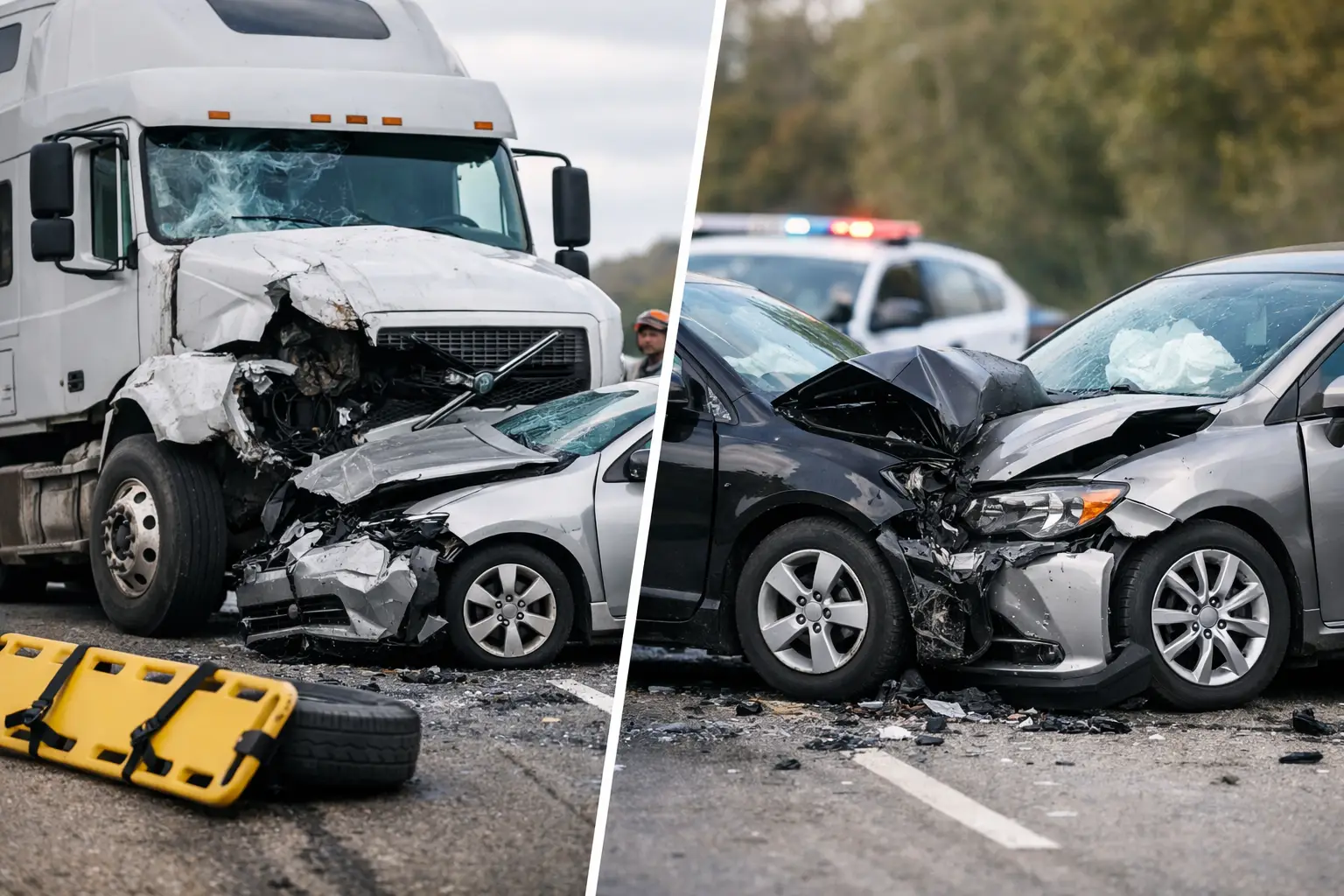
Truck Wreck Versus Car Wreck Injuries Compared
A passenger vehicle can be crushed, pushed into another lane, or forced off the road when it collides with a commercial truck. That difference in force is why truck wreck versus car wreck injuries can look very different, even when both crashes occur at similar speeds. For injured Texans and their families, the physical harm is only part of the problem. The evidence, insurance coverage, and parties responsible may also be far more complicated after a truck collision.
Why Truck Wreck Injuries Can Be More Severe
A fully loaded commercial truck can outweigh a passenger car by many thousands of pounds. When that much weight and momentum meets a smaller vehicle, the people inside the passenger vehicle absorb a disproportionate amount of the impact. A car may be hit from behind, pinned during a lane change, or struck head-on after a truck crosses the center line.
Truck crashes are also more likely to involve underride impacts, rollovers, multi-vehicle collisions, or secondary impacts with barriers and other traffic. These circumstances can increase the chance of life-altering harm, particularly when the smaller vehicle has little room to move away from danger.
Car crashes can certainly cause catastrophic injuries too. A high-speed head-on collision, a T-bone crash at an intersection, or a rollover can leave someone with serious and lasting consequences. The key difference is not that every truck crash produces worse injuries. It is that the size, weight, stopping distance, and configuration of a commercial truck often create a greater potential for severe harm.
Common Truck Wreck Versus Car Wreck Injuries
The same broad types of injuries can occur in either collision. What changes is often the severity, the number of injured people, and the length of recovery. Victims may suffer head injuries, spinal injuries, broken bones, internal injuries, burns, severe cuts, or lasting nerve damage.
A truck collision may place more intense force on the neck, back, chest, abdomen, and lower body. Occupants can also be trapped in a damaged vehicle, which can complicate rescue and add to the trauma. Some injuries are obvious immediately, while others become clearer in the days after the wreck. Pain, numbness, headaches, trouble sleeping, dizziness, or difficulty concentrating should not be brushed aside simply because a person was able to leave the scene on their own.
Emotional injuries matter as well. A serious collision can affect a person’s confidence behind the wheel, sleep, relationships, and ability to manage daily responsibilities. A fair injury claim should account for the full human impact, not only the costs that appear on a statement.
The Recovery May Last Longer
The more serious the injury, the more likely it is to disrupt a person’s ability to return to normal routines. Recovery may involve time away from work, help at home, follow-up care, and uncertainty about whether symptoms will fully improve. For a family already dealing with pain and financial pressure, an insurance company’s early offer may feel tempting. It may also fail to reflect the full scope of the loss.
That is why it is wise to understand the injury before agreeing to close a claim. Once a settlement is accepted, obtaining additional compensation later can be difficult or impossible.
Why Truck Accident Claims Are Often More Complex
A typical car wreck may involve two drivers and their insurance carriers. A truck wreck can involve the truck driver, the trucking company, the owner of the trailer, a cargo-loading company, a maintenance provider, or another motorist whose actions contributed to the collision. Responsibility depends on the facts, and more than one party may have played a role.
Evidence can also disappear quickly. Vehicle damage, roadway conditions, witness accounts, onboard data, inspection records, dispatch communications, cargo records, and company policies may all help show how the crash happened. The trucking company and its insurer may begin protecting their interests immediately. Injured people deserve someone focused on protecting theirs.
An experienced injury attorney can move quickly to preserve key evidence, identify every potentially responsible party, and push back when an insurer tries to shift blame or minimize harm. This is especially important when the trucking company argues that the driver acted alone or when several insurers point fingers at one another.
Insurance Coverage Can Change the Stakes
Commercial trucking policies can involve higher coverage limits than ordinary passenger vehicle policies, but that does not mean recovering fair compensation is easy. Larger insurers often devote substantial resources to reducing what they pay. They may question the severity of injuries, argue that a condition existed before the crash, or suggest the injured person contributed to the wreck.
Texas follows a shared-responsibility approach in many injury claims. If an injured person is found partly responsible, that finding can reduce the compensation available. The facts matter. A careful investigation may reveal that a truck driver was following too closely, failed to yield, made an unsafe lane change, drove too fast for conditions, or ignored signs of fatigue. It may also show that a company failed to address known safety concerns.
What to Do After a Serious Truck or Car Wreck
Your health and safety come first. Get evaluated promptly, follow the care recommendations you receive, and keep track of how the injury affects your daily life. Save any photographs, contact information, receipts, and paperwork connected to the collision. If you can, write down what you remember while the details are still fresh.
Be careful with recorded statements and quick settlement discussions from insurers. You do not have to guess at the value of a claim while you are hurt, overwhelmed, or still learning the extent of your injuries. A conversation with a personal injury attorney can help you understand what information may be needed and what options are available.
For a truck wreck, acting promptly can be particularly important because company records and electronic data may not remain available indefinitely. You do not need to investigate the trucking company on your own. A lawyer can take over communications, gather evidence, and handle the pressure while you focus on your recovery.
Compensation Should Reflect the Real Loss
Whether the collision involved a truck or another car, compensation may include the cost of medical care, lost income, property damage, physical pain, emotional distress, and changes to a person’s ability to enjoy life. In a fatal collision, surviving family members may face losses that no financial recovery can truly replace.
The value of a case depends on the injuries, available evidence, insurance coverage, responsibility for the crash, and the effect the collision has had on the person and family involved. There is no honest one-size-fits-all answer. What matters is building the claim around the actual consequences of the wreck, rather than letting an insurer define them.
Feizy Law Office stands with injured people across the Dallas-Fort Worth area when a collision turns life upside down. If a truck driver, trucking company, or negligent motorist caused your injuries, a free consultation can help you take the next step with clarity and confidence. You should not have to carry the legal burden alone while you are trying to heal.


About Post Author
