

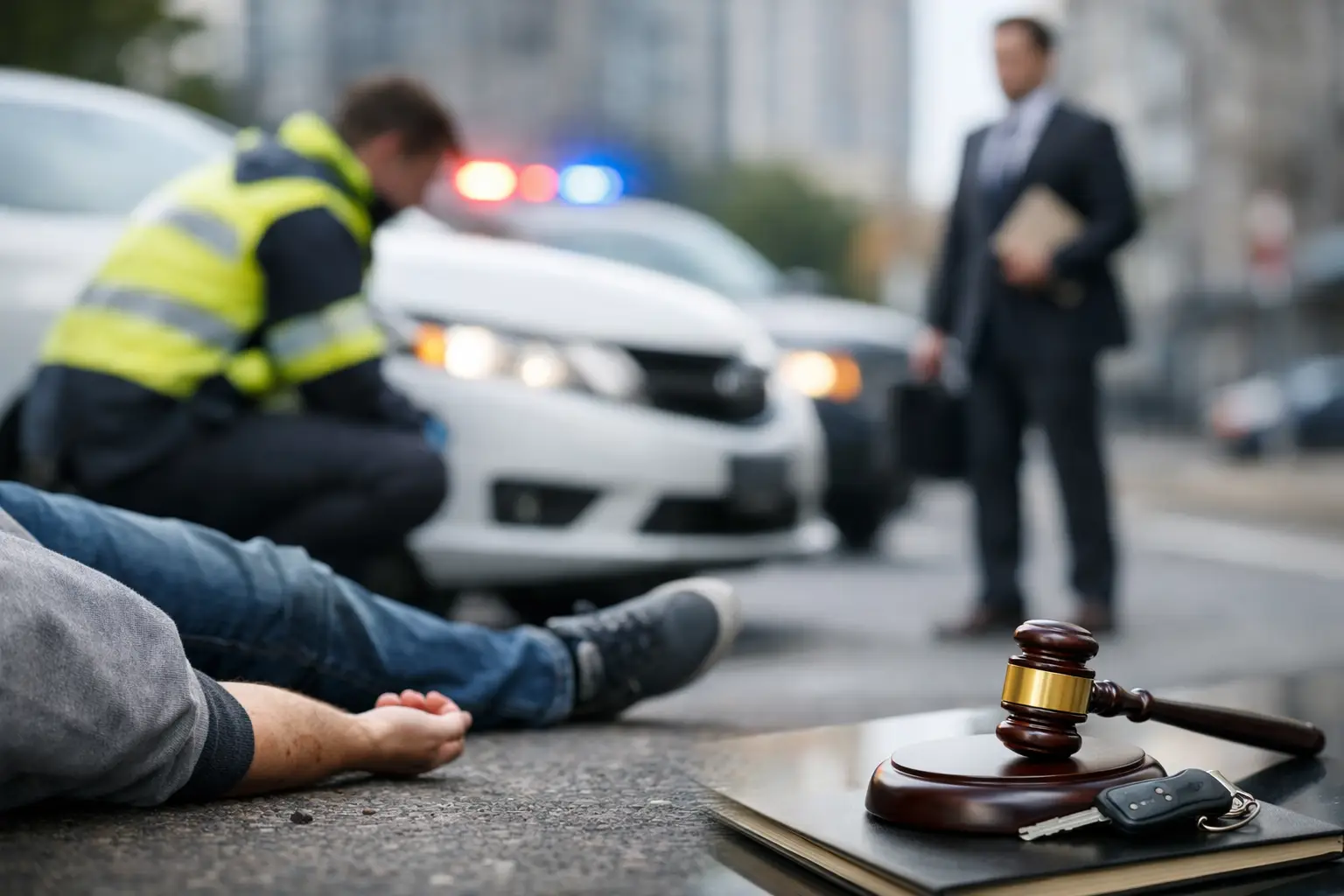
Your Pedestrian Accident Claim or Lawsuit
A pedestrian accident claim or lawsuit is about far more than a damaged vehicle or a difficult insurance conversation. When a driver hits someone walking through a crosswalk, parking area, neighborhood street, or roadside, the person on foot often faces serious injuries, mounting medical bills, time away from work, and a sudden loss of independence. You should not have to carry those consequences alone when another person’s carelessness caused the crash.
The steps you take in the days and weeks after a collision can affect the strength of your case. Prompt action helps preserve evidence, document your losses, and protect you from an insurance company that may be looking for reasons to reduce what it pays.
When a Pedestrian Accident Claim May Be Appropriate
A claim may be available when a driver failed to use reasonable care and that failure caused your injuries. Common situations include drivers who speed through residential areas, turn without checking for people in a crosswalk, run a red light, back up without looking, drive while distracted, or fail to yield at an intersection.
Texas drivers have a duty to pay attention to pedestrians, particularly where people are expected to be walking. That duty does not disappear because it is dark, traffic is heavy, or a driver is in a hurry. A driver who looks down at a phone for only a few seconds can travel a significant distance without seeing what is ahead.
Not every collision is as simple as it first appears. The driver may say you crossed outside a marked crosswalk, wore dark clothing, or entered the roadway unexpectedly. Those allegations do not automatically defeat your right to compensation. The details matter: the traffic signals, visibility, vehicle speed, roadway design, witness accounts, available video, and whether the driver had time to avoid the impact.
Texas follows a shared-fault system. If an injured pedestrian is found partly responsible, compensation can be reduced by that percentage. However, a person who is more than 50 percent responsible generally cannot recover damages from the other party. Insurers know this rule well and may try to shift blame quickly. A careful investigation can make the difference between an unfair accusation and a clear account of what happened.
Claim or Lawsuit: What Is the Difference?
Most pedestrian injury matters begin with an insurance claim. This involves notifying the responsible driver’s insurer, presenting evidence of fault and losses, and negotiating for a fair resolution. Many cases can be resolved during this process, but only when the insurer takes the harm seriously and makes an offer that reflects the full impact of the crash.
A lawsuit may become necessary when the insurer denies responsibility, disputes the severity of injuries, delays the process, or refuses to offer reasonable compensation. Filing a lawsuit does not mean a trial is guaranteed. It creates a formal path for gathering evidence, challenging the other side’s position, and pursuing accountability if negotiations fail.
The right path depends on the facts. An early settlement may be appropriate when liability is clear, injuries and future needs are well understood, and the offer covers the losses involved. Accepting too soon, however, can leave an injured person responsible for costs that were not apparent in the first few weeks. Once a settlement is accepted, seeking additional payment for the same collision is usually not an option.
What Compensation Can Cover
A pedestrian collision can change daily life in ways that do not fit neatly into an insurer’s first offer. Compensation may include medical expenses already incurred, anticipated future care, lost income, and reduced ability to earn income if injuries limit future work.
It may also account for physical pain, emotional distress, disfigurement, physical limitations, and the loss of normal activities that once brought enjoyment or independence. For families who have lost a loved one because of a driver’s negligence, a wrongful death action may provide a way to pursue accountability and financial support for the losses left behind.
The value of a case is never based on a single number or a generic formula. The seriousness of the injuries, the duration of recovery, available insurance coverage, the strength of evidence, and the effect on your everyday life all matter. A fair evaluation requires more than adding up bills. It requires understanding the human cost of the collision.
Evidence That Can Strengthen a Pedestrian Accident Claim or Lawsuit
Evidence can disappear quickly after a crash. Surveillance footage may be overwritten, roadway conditions can change, and memories may fade. Taking action as soon as possible gives your legal team a better opportunity to preserve the facts.
Helpful evidence may include the police report, photographs of the scene, pictures of visible injuries, damage to the vehicle, witness information, traffic-camera or nearby business footage, and records showing the medical and financial consequences of the crash. A vehicle’s event data, phone records, or evidence of impaired driving may also become relevant in certain cases.
Your own account matters, too. Write down what you remember while it is still fresh: where you were walking, whether you had a walk signal, what the driver did before impact, what was said afterward, and how your injuries affect your day-to-day life. Keep copies of bills, receipts, missed-time documentation, and communications from insurers.
Do not assume the police report tells the complete story. Officers often arrive after the collision and must rely on the information available at the scene. If the report contains an error or leaves out important facts, additional evidence may help clarify what actually occurred.
Protecting Yourself After the Collision
Your health comes first. Follow through with the care recommended by your treating providers, and do not minimize symptoms simply because you want life to return to normal. Gaps in care can affect both your recovery and an insurer’s view of the injury.
Be cautious when speaking with the other driver’s insurer. Adjusters may sound concerned, but their role is to protect the insurance company’s financial interests. A recorded statement, broad request for records, or quick settlement offer can be used to limit the value of your claim. You are not required to make decisions before you understand the full consequences of your injuries.
Avoid posting details, photos, or opinions about the collision on social media while the matter is pending. Even an innocent post can be taken out of context. It is also wise to avoid discussing fault with anyone other than those who need to know the facts.
In Texas, deadlines apply to injury lawsuits, and waiting can put your rights at risk. Most injury cases have a two-year filing deadline, but certain circumstances can create a much shorter timeline. Claims involving a city, county, school district, or other government entity may require early notice. Speaking with an attorney promptly helps avoid losing valuable options because time passed.
How a Pedestrian Injury Attorney Can Help
A strong legal advocate takes pressure off you while building the case for compensation. That can include investigating the crash, securing available video, identifying all responsible parties, calculating current and future losses, handling insurance communications, and pushing back when blame is unfairly placed on the pedestrian.
This work is especially important in serious injury cases, where the first insurance offer may fail to recognize long-term consequences. An attorney can assess whether a proposed settlement truly addresses your needs or whether a lawsuit is the better way to pursue justice.
At Feizy Law Office, injured Texans receive direct, focused advocacy from a team committed to handling the critical details while clients focus on healing. If a driver’s negligence left you or a family member injured, a timely conversation can help preserve evidence and bring clarity to the road ahead.
You do not need to face an insurance company alone while recovering from a pedestrian collision. Get informed early, protect the evidence, and seek guidance before accepting less than the harm has cost you.


About Post Author
