

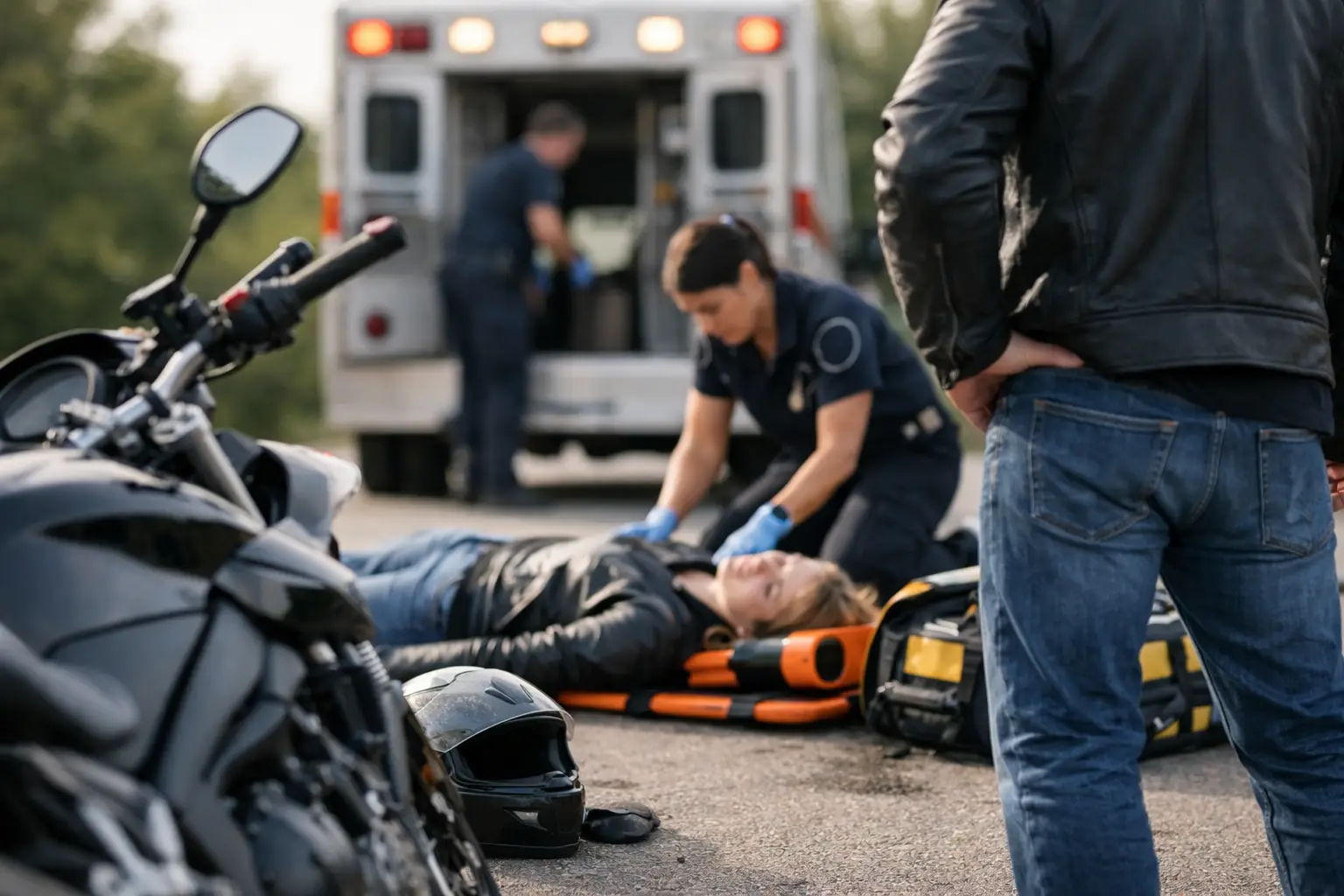
Motorcycle Passenger Injury Rights Guide
A motorcycle passenger can do everything right – wear a helmet, hold on properly, and trust the person operating the bike – yet still suffer life-changing harm when a crash occurs. This motorcycle passenger injury rights guide explains a critical point many injured Texans do not realize at first: passengers often have strong rights to pursue compensation, even when the person operating the motorcycle is a friend, relative, or partner.
The shock after a wreck can make those rights feel distant. You may be focused on healing, missed income, mounting bills, and calls from insurance representatives. But the details collected early can shape whether the responsible parties are held accountable later.
Motorcycle Passenger Injury Rights in Texas
As a passenger, you generally are not the person controlling the motorcycle. That distinction matters. A passenger usually does not cause a collision simply by accepting a ride. If another person or company acted carelessly and caused the crash, you may have a claim for the losses the collision caused.
Responsibility can rest with the motorcycle operator, another driver, or more than one party. For instance, a rider may have been speeding, following traffic too closely, taking a curve too fast, or operating while distracted. In other crashes, a driver turns left into the motorcycle’s path, changes lanes without checking carefully, runs a red light, or fails to yield.
The fact that you know the motorcycle operator does not take away your right to seek financial recovery. In many situations, the claim is handled through available insurance coverage rather than coming personally from someone you care about. The available coverage, the facts of the crash, and the seriousness of your injuries all affect the path forward.
Texas follows a proportionate-responsibility system. An insurance company may try to shift blame to everyone involved, including a passenger, to reduce what it pays. That does not mean its position is accurate. A passenger’s actions matter only in limited circumstances, such as knowingly riding with someone who was clearly unsafe or interfering with the operator. Insurers still need facts to support their allegations.
Who May Be Responsible for a Passenger’s Injuries?
A motorcycle collision is not always a simple two-person dispute. A careful investigation looks beyond the first version of events and identifies every source of responsibility and coverage.
The motorcycle operator may be responsible if unsafe riding led to the crash. Another motorist may be responsible if that driver’s conduct forced the motorcycle down or caused a direct impact. Sometimes both parties share fault. A commercial vehicle operator or company can also be involved when business-related driving, poor vehicle maintenance, or unsafe practices contributed to the collision.
Road conditions can matter too. Loose gravel, dangerous construction zones, obscured traffic controls, or poorly maintained surfaces are especially hazardous for motorcycles. Claims involving a public entity or road contractor can have different notice requirements and tighter deadlines, so prompt legal guidance is particularly valuable.
There are also situations where a vehicle defect or failed safety component may warrant investigation. These cases require a close review of the motorcycle, the damaged vehicles, maintenance history, and collision evidence before conclusions are made. The right answer depends on what the evidence shows, not on an insurer’s quick assumption.
What Compensation Can an Injured Passenger Pursue?
A passenger injury claim should account for the full impact of the crash, not merely the first round of bills. Serious motorcycle injuries can disrupt a person’s ability to work, care for family, sleep, move comfortably, and enjoy daily life.
Depending on the circumstances, compensation may include the cost of medical treatment, income lost while recovering, reduced future earning ability, physical pain, emotional suffering, disfigurement, and physical impairment. Property loss may also be part of the case when the passenger’s personal belongings were damaged in the wreck.
The value of a claim is never determined by a single bill or a standard formula. The nature and duration of injuries, the strength of liability evidence, available insurance coverage, and the effect on your daily life all matter. A quick settlement offer may be tempting when expenses are pressing, but early offers can overlook future needs and may require you to give up the right to seek more later.
Protect Your Claim After a Motorcycle Crash
Your health comes first. Follow through with recommended care and keep records connected to the collision. Gaps in treatment or missing documentation can give an insurer room to argue that injuries were not serious or were caused by something else.
If you are able, preserve the information that can disappear quickly after a wreck. Photos of the scene, vehicles, roadway, visible injuries, damaged clothing, and helmets can help tell the story. Save contact information for witnesses, preserve messages related to the ride or crash, and keep copies of bills, receipts, work-loss information, and communications from insurance companies.
Do not assume a police report resolves every issue. It can be useful evidence, but it may contain incomplete information or a mistaken account of how the crash happened. Video from nearby businesses, vehicle data, photos, witness accounts, and a detailed reconstruction can reveal facts that were not apparent at the scene.
Be cautious when an insurance representative asks for a recorded statement or presses for a rapid settlement. Their goal is often to limit the insurer’s financial exposure. You are not required to accept an unsupported version of events or agree to an amount before you understand the extent of your losses.
Why Timing Matters for Passenger Injury Claims
Evidence does not wait. Security footage can be erased, witnesses can become difficult to reach, and damaged vehicles may be repaired or disposed of before they are inspected. The sooner a legal team can begin preserving evidence, the better positioned an injured passenger may be.
Texas also places deadlines on injury claims, and special rules may apply when a government-related entity is involved. Waiting too long can put a valid claim at risk. It is wise to get clear guidance soon after a collision, even if you are still gathering information or are uncertain who caused the crash.
An experienced motorcycle accident attorney can take over the demanding parts of the process: investigating the wreck, identifying responsible parties, calculating losses, handling insurer communications, and fighting for a fair result. That support allows you to focus on what matters most while someone protects your interests.
Questions Passengers Often Ask
Can I bring a claim if the motorcycle operator was a friend or family member?
Often, yes. The claim may involve insurance coverage available to the operator or another responsible party. Seeking compensation for injuries does not automatically mean you are taking personal action against someone you care about. The specific coverage and facts should be reviewed carefully.
What if I was not wearing a helmet?
Helmet use can become an issue in a case, particularly when head injuries are involved, but it does not automatically erase your right to pursue compensation. Liability for causing the collision still matters. Insurers may raise this issue to reduce their payment, and the actual effect depends on the injuries and evidence.
What if the other driver says they never saw the motorcycle?
Failure to see a motorcycle is not a defense to unsafe driving. Drivers have a duty to watch the road, check mirrors and blind spots, yield when required, and make turns safely. Witness testimony, physical evidence, video, and vehicle damage can help establish what happened.
If you were injured while riding as a passenger, you deserve more than uncertainty and pressure from an insurance company. Feizy Law Office helps injured Texans investigate the facts, protect vital evidence, and pursue the compensation needed to move forward with strength and dignity.


About Post Author
