

Truck Black Box Data After a Texas Crash
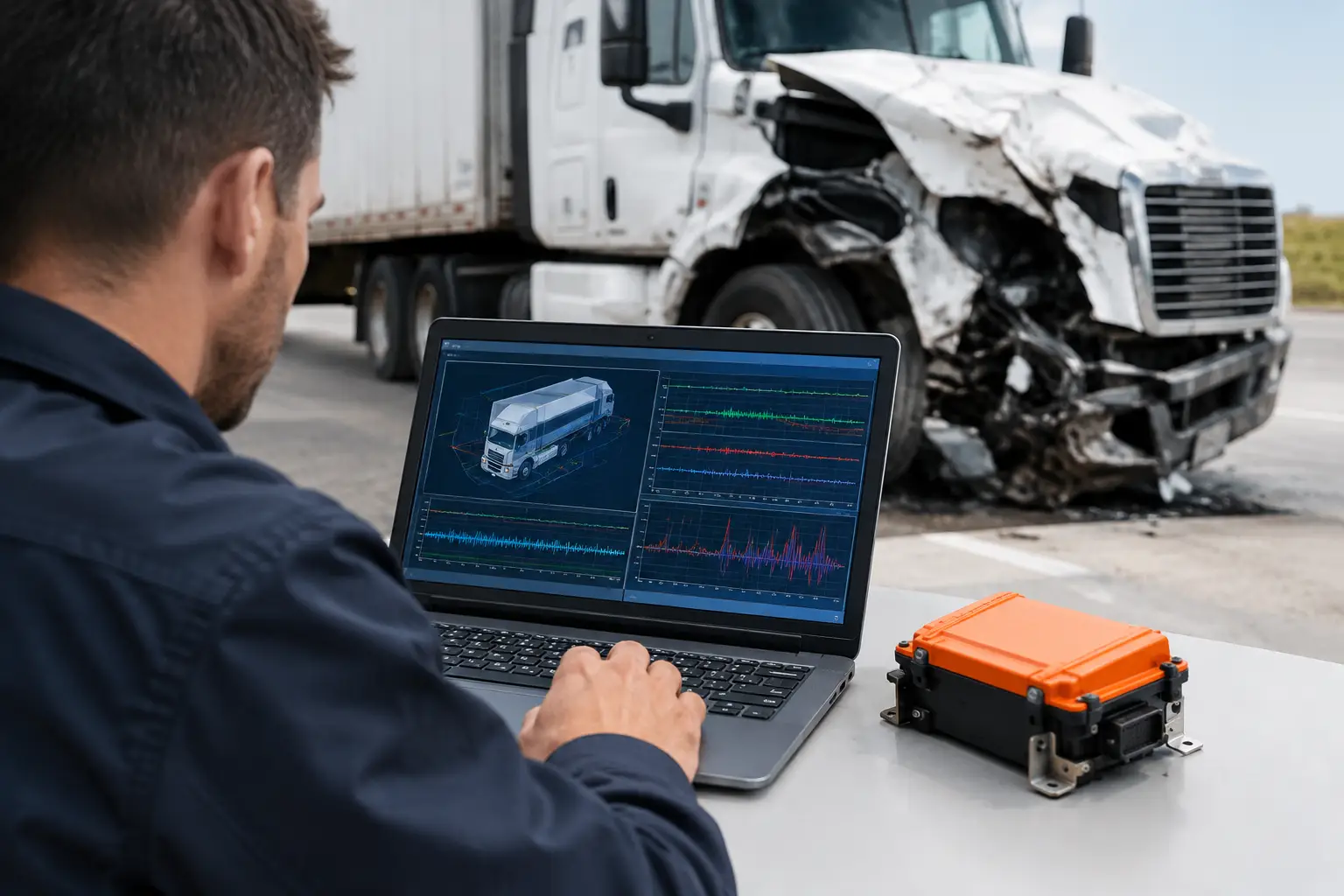
A violent collision with a commercial truck can leave an injured person with urgent questions and very few clear answers. The truck driver may give one account. The trucking company may give another. A truck black box can provide a separate source of evidence: data recorded by the vehicle itself in the moments before, during, and sometimes after a crash.
That information can be highly valuable, but it is not automatically protected. Some data may be overwritten when the truck moves again, altered during vehicle work, or become harder to recover as time passes. If you or someone you love was seriously hurt in a North Texas truck crash, early action can make a meaningful difference.
What Is a Truck Black Box?
“Black box” is the common term for an electronic control module, event data recorder, or similar system installed in a commercial truck. Despite the name, it is not necessarily a single black device. Modern trucks may contain several electronic systems that capture different operating information.
These systems are designed primarily to monitor truck performance and safety-related events. After a serious collision, however, the data may help show what was happening when it mattered most. It can either support or challenge statements made by the driver, the trucking company, and insurance representatives.
Not every truck records the same information, and not every event is stored in the same way. The usefulness of the data depends on the truck’s make, its equipment, the severity of the impact, and whether the information was preserved before it disappeared.
What Truck Black Box Data May Show
A truck black box may record information from seconds before impact through the collision itself. Depending on the vehicle and available systems, investigators may be able to review the truck’s speed, throttle position, brake application, engine activity, and steering input.
The data may also reveal whether a sudden deceleration occurred, whether cruise control was engaged, or whether a safety system detected a critical event. In some cases, electronic records can show a sequence that is difficult to establish through witness memory alone: the truck continued at highway speed, braking began late, or no meaningful braking occurred before impact.
Other electronic sources may matter too. A commercial truck can generate records through onboard communications equipment, GPS tracking, electronic driving logs, dash cameras, and collision-avoidance technology. These records are not all part of the black box, but together they can help build a clearer timeline.
That timeline matters because truck crashes often involve more than a simple question of who hit whom. A loaded tractor-trailer needs far more distance to stop than a passenger vehicle. Visibility limitations, lane changes, traffic congestion, weather, and unsafe following distance can all become central issues. Electronic data can help separate assumptions from facts.
Why This Evidence Can Disappear Quickly
A trucking company may have control over the truck, its electronic records, maintenance information, and driver-related documentation immediately after a collision. That creates an imbalance for an injured person who is focused on treatment, family responsibilities, and financial pressure.
Some recording systems retain data only for a limited period or overwrite it after later events. A truck may be moved, inspected, placed back into service, or dismantled before an injured victim has had a fair opportunity to investigate. Even when a company has no bad intent, delay can make critical evidence more difficult to obtain.
For that reason, a lawyer may send a prompt preservation notice to the parties responsible for the truck and its records. The notice can identify key evidence that should be retained, including the vehicle, electronic modules, onboard data, video footage, communications, inspection records, and maintenance materials. Preserving evidence is not the same as proving fault, but it protects the ability to examine what happened.
Timing is especially important after a fatal crash or a collision involving life-changing injuries. Families should not have to investigate a trucking company while grieving or trying to understand a loved one’s condition. A legal team can take on that work and pursue the information needed to protect the claim.
How Black Box Data Can Affect a Truck Accident Claim
Electronic data is often powerful because it is less dependent on recollection. Still, it is not a complete answer by itself. The information must be collected properly, reviewed by qualified professionals when necessary, and considered alongside physical evidence and witness accounts.
A recorded speed may support the conclusion that the truck was moving too fast for traffic conditions. Brake data could help show whether the driver reacted in time. Location information may help establish how the collision unfolded. On the other hand, a data point that appears favorable at first glance may require context. A recorded brake signal does not always establish effective braking, and a short recording window may not reveal what occurred minutes earlier.
That is why a thorough truck crash investigation usually considers multiple sources of proof. Scene photographs, vehicle damage, roadway markings, surveillance footage, witness statements, dispatch communications, and electronic records can each contribute to the larger picture. The objective is to identify the truth and hold every responsible party accountable.
In Texas, fault can also be disputed aggressively. A trucking company or insurer may argue that another driver caused the crash, that road conditions were to blame, or that the injured person could have avoided the collision. Strong evidence can help address those arguments with facts rather than speculation.
What to Do After a Serious Truck Crash
Your health and safety come first. Follow the guidance of your treating providers, keep records connected to the collision and your injuries, and be careful about discussing fault with insurance representatives before you understand your rights.
If possible, save photographs, names of witnesses, the crash report information, and any messages or paperwork connected to the collision. Do not assume that the police report tells the entire story. A report can be important, yet it may be prepared before black box data, video, and other evidence are fully reviewed.
Avoid posting details about the crash, your injuries, or your activities on social media while a claim is pending. Insurers often look for statements they can use to minimize the harm you have suffered. You deserve space to focus on recovery without creating unnecessary complications.
It is also wise to speak with an attorney promptly when a commercial truck is involved. Trucking cases can involve large companies, multiple insurance policies, and evidence that is controlled by parties with immediate access to it. The sooner your interests are represented, the sooner someone can work to protect critical information.
A Legal Team Can Protect the Evidence
A truck accident claim is about more than repairing a damaged vehicle. Serious injuries can bring hospital expenses, ongoing care needs, lost income, pain, emotional distress, and disruption to every part of family life. When negligence caused that harm, the responsible parties should be held accountable.
Feizy Law Office helps injured Texans investigate serious truck collisions, pursue evidence, and stand up to insurance companies. Our team can evaluate the circumstances of the crash, seek preservation of truck black box data and related records, and explain the next steps in straightforward terms.
You do not need to have every answer before seeking help. If a truck crash has turned your life upside down, acting quickly can help protect the evidence that may tell your side of the story.


About Post Author
