

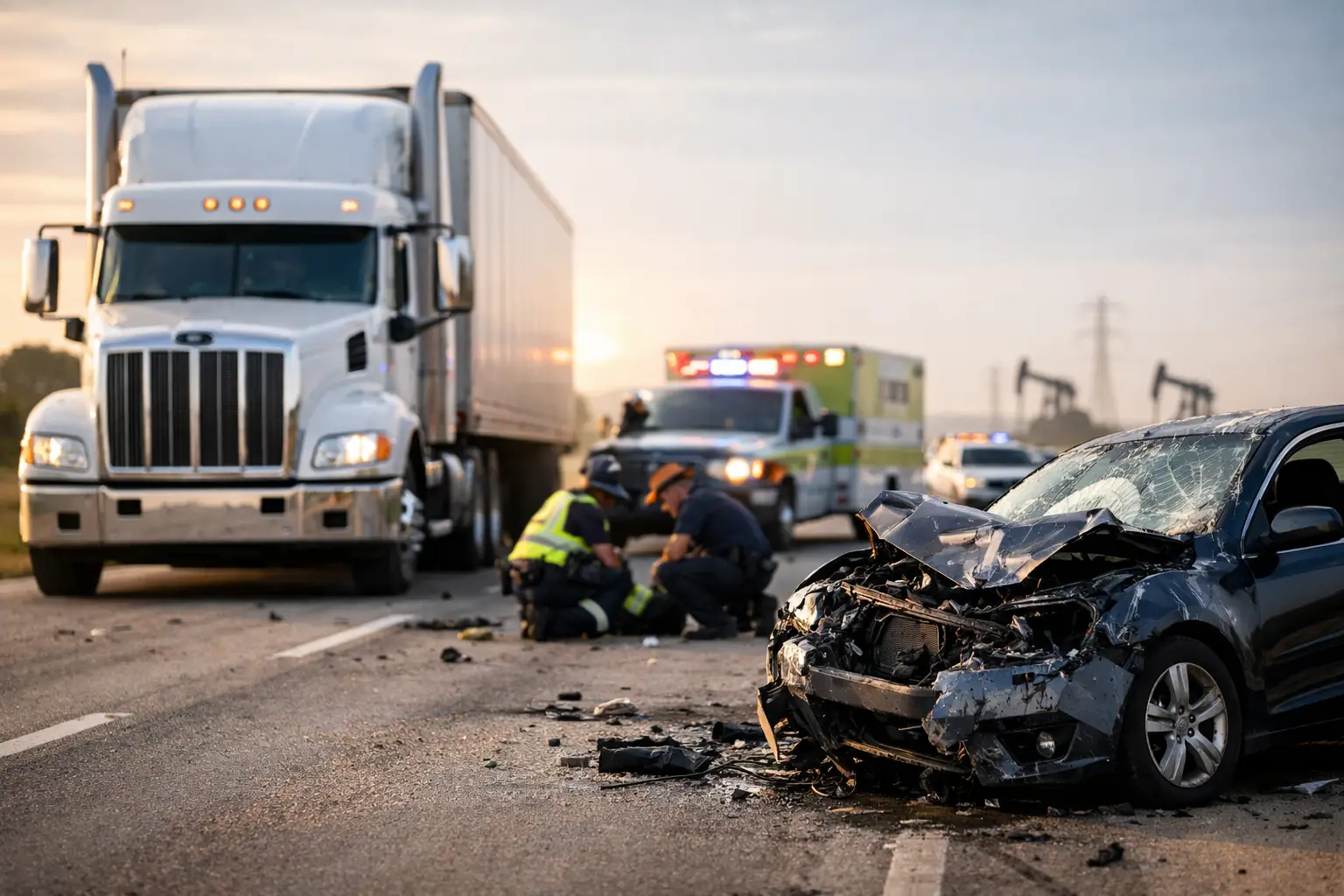
A Guide to Truck Injury Liability in Texas
A crash involving a commercial truck can change a family’s life in seconds. The force of an 18-wheeler, delivery vehicle, or other large commercial vehicle often leaves people facing serious injuries, mounting medical expenses, missed income, and pressure from insurance representatives. This guide to truck injury liability explains how fault is evaluated in Texas and why acting early can protect your ability to pursue fair compensation.
Truck crash cases are rarely as simple as one driver blaming another. A commercial vehicle may be owned by one company, operated for another, loaded by a third party, and maintained by yet another business. Identifying every party whose carelessness contributed to the collision is a critical part of building a strong claim.
Why Truck Injury Liability Is Different
A passenger vehicle collision may involve two drivers and two insurance policies. A truck crash can involve a commercial carrier, the person operating the truck, a vehicle owner, a cargo company, a maintenance provider, and manufacturers in limited circumstances. Each party may have records that tell a different part of the story.
The truck’s size also matters. Large trucks require more distance to stop, create substantial blind spots, and can cause devastating harm when they drift from a lane, turn improperly, follow too closely, or strike stopped traffic. The greater danger does not automatically make a trucking company responsible, but it makes a careful investigation essential.
Texas injury claims generally turn on whether someone failed to use reasonable care and caused harm as a result. Evidence, not assumptions, determines what happened. That is why injured people should be cautious about accepting an insurer’s early version of events before the full record is available.
Who May Be Responsible After a Truck Crash?
The Truck Operator
The person behind the wheel may be responsible for conduct such as speeding, distracted driving, unsafe lane changes, tailgating, fatigue, or ignoring traffic conditions. A single unsafe decision can lead to a serious collision, particularly on crowded North Texas highways where traffic can slow without much warning.
But the operator’s actions are only the starting point. A commercial carrier may share responsibility when its own choices created or allowed the danger.
The Trucking Company
A trucking company may be accountable if it pushed unrealistic schedules, failed to enforce safety rules, allowed an unsafe vehicle on the road, or retained someone it knew or should have known posed a safety risk. The company’s records can reveal whether safety practices matched what it now says after the collision.
The relationship between the company and the truck operator can be complicated. Some carriers attempt to characterize drivers as independent contractors. That label is not always the end of the inquiry. The level of control a company exercised over routes, equipment, schedules, safety procedures, and operations can matter.
Cargo and Maintenance Companies
Improperly loaded or secured cargo can shift during travel, affect braking and steering, or fall into traffic. In those cases, the party that loaded, inspected, or secured the cargo may need to be investigated.
Mechanical problems can also contribute to a crash. Brake failures, worn tires, lighting problems, and steering defects may point to inadequate inspection or maintenance. Liability depends on the facts, including who owned the truck, who was responsible for upkeep, and whether a defect should have been discovered before the vehicle was driven.
Other Drivers and Road Conditions
Not every truck crash is caused solely by the truck operator or a commercial company. Another motorist may cut off the truck, ignore a signal, or create a chain-reaction collision. Hazardous road conditions may also play a role. Texas allows responsibility to be divided among multiple parties when the evidence supports it.
This matters because insurers often look for ways to shift blame onto the injured person. A careful review of the evidence can challenge unfair allegations and clarify who truly caused the crash.
Evidence That Can Establish Truck Injury Liability
The strongest truck cases are built before key information disappears. Commercial vehicles can generate a substantial amount of data, and companies often possess documents an injured person cannot access alone. Some electronic data may be overwritten quickly if it is not preserved.
Important evidence may include the crash report, photographs, witness accounts, video footage, vehicle inspection records, maintenance records, cargo documents, dispatch communications, and electronic driving data. Depending on the vehicle, a recording device may show speed, braking, steering activity, and other information from the moments before impact.
Phone records and camera footage from nearby businesses or roadway systems may also help establish a timeline. Medical records are equally important because they connect the collision to the physical harm it caused and document the care required during recovery.
A truck accident attorney can send a prompt preservation notice to the relevant companies and pursue the records needed to evaluate the case. The purpose is not to make accusations before the facts are known. It is to prevent critical evidence from being lost while the investigation is still possible.
How Texas Shared-Fault Rules Can Affect Recovery
Insurance companies may argue that an injured driver was speeding, distracted, following too closely, or otherwise partly at fault. Under Texas shared-responsibility rules, compensation can be reduced by the percentage of responsibility assigned to the injured person. If that person is found more than 50 percent responsible, recovery may be barred.
These rules make early statements especially significant. After a traumatic crash, people may be in pain, confused, or unsure exactly what occurred. A casual remark to an insurer can later be used to support a blame-shifting argument. You can report the basic facts of the collision, but you do not need to guess about fault or minimize your injuries.
It also depends on the available evidence. A witness, a camera recording, or truck data can contradict an insurer’s account. That is one reason a fast, independent investigation can make a meaningful difference.
Compensation in a Serious Truck Injury Claim
The value of a claim depends on the specific losses caused by the crash. Economic losses can include medical bills, future care needs, lost income, and damage to a vehicle or other property. Non-economic losses address the human impact of an injury, including physical pain, emotional distress, and the loss of normal daily activities.
For families grieving a fatal truck collision, a wrongful death claim may provide a path to seek accountability and compensation for losses caused by another party’s negligence. No legal action can erase that loss. It can, however, help a family confront the financial consequences and demand answers from those responsible.
A quick settlement offer may be tempting when bills are arriving and income has stopped. Yet early offers frequently arrive before the full medical picture and long-term impact are known. Accepting one can end your right to seek additional compensation later. The right approach depends on your condition, the available coverage, the evidence, and whether the proposed amount addresses the actual harm.
Steps to Take After a Truck Collision
Your immediate priority is your health and safety. Follow the care recommendations you receive, keep copies of medical bills and other crash-related expenses, and save any photographs, videos, or messages connected to the collision. Avoid posting details about the crash or your condition on social media while a claim is pending.
You should also be careful when contacted by a trucking company’s insurer. Their representatives may sound concerned, but their role is to protect the company’s financial interests. Before providing a recorded statement or accepting a settlement, consider speaking with a lawyer who represents injured people.
At Feizy Law Office, injured Texans receive direct, focused guidance through the investigation, insurance negotiations, and legal process. An attorney can assess the facts, identify potentially responsible parties, preserve evidence, and fight for compensation that reflects the full impact of the collision.
A serious truck crash can leave you feeling outmatched by large companies and insurers. You do not have to carry that burden alone. Getting clear answers early gives you room to focus on healing while someone protects your rights and pursues the accountability you deserve.


About Post Author
