

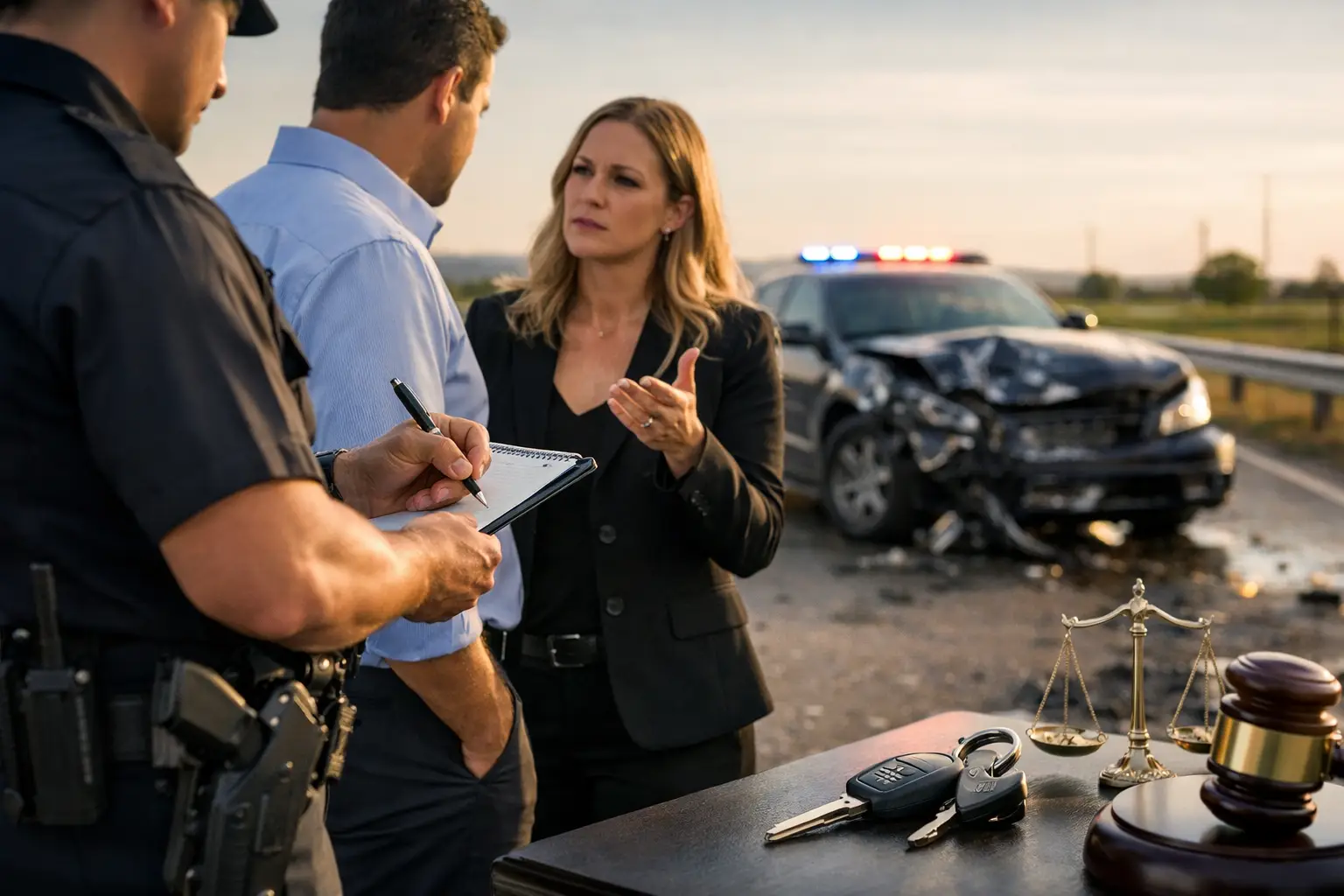
Best Questions After a Fatal Crash in Texas
A fatal collision leaves families facing shock, grief, and urgent uncertainty at the same time. The best questions after a fatal crash are not about finding perfect answers in the first few days. They are about protecting your family from avoidable mistakes while the facts are still being gathered and critical evidence may disappear.
In Texas, a deadly crash can involve more than one responsible party, multiple insurance policies, and evidence that must be preserved quickly. Asking focused questions can help surviving family members understand what happened, what rights may be available, and when it is time to put a legal advocate between the family and insurance representatives.
Best Questions After a Fatal Crash: Start With the Facts
The first question is often the hardest: What do we actually know, and what is still uncertain? Early reports may contain incomplete information. Witness accounts can conflict. A driver who caused the collision may deny fault, and an initial determination does not always tell the whole story.
Ask whether a full crash investigation is underway and what records may help establish the sequence of events. This may include the responding officers’ report, scene photographs, nearby video footage, witness information, vehicle data, roadway conditions, and phone records when distraction is suspected.
A second essential question is: Has anyone taken steps to preserve the evidence? Video from nearby businesses or residences can be overwritten quickly. A commercial vehicle may hold electronic data that reveals speed, braking, steering, or hours on the road. Damaged vehicles can also provide important evidence before they are moved, altered, or destroyed.
Families should not have to conduct this work alone while grieving. A wrongful death attorney can move quickly to identify and seek preservation of evidence that may be central to the claim.
Who May Be Responsible for the Fatal Collision?
It is natural to focus on the driver involved in the crash. But the right question is broader: Was another person, company, or unsafe condition a contributing cause? The answer depends on the details.
A fatal wreck may involve a distracted, speeding, impaired, or reckless driver. In a truck collision, the responsible parties may extend beyond the person behind the wheel. A company’s safety practices, vehicle ownership, cargo handling, or maintenance decisions may need close review. In other situations, a dangerous road condition, poor visibility, or a defective vehicle component may be relevant.
Do not assume responsibility is simple because an insurance representative says it is. Insurers often begin their own investigation immediately, with the goal of limiting what they pay. Your family deserves an independent review focused on the full picture, not a rushed version of events.
Was the Person Who Died Blamed for the Crash?
This question can carry an unfair emotional weight. Insurance companies may try to shift blame toward the person who died because doing so can reduce the amount they owe. That does not make the accusation accurate.
Texas law can take shared responsibility into account, which makes a careful investigation especially important. Photographs, physical evidence, video, witness statements, and accident reconstruction can challenge assumptions about speed, lane position, visibility, or the moments before impact. Do not accept blame without understanding the evidence behind it.
What Insurance Coverage Could Apply?
Another of the best questions after a fatal crash is: Which insurance policies may provide coverage? A fatal collision can involve the at-fault driver’s policy, a commercial policy, coverage connected to the vehicle, and potentially other sources depending on the circumstances.
The existence of a policy does not guarantee a fair outcome. Insurers may request recorded statements, seek broad access to personal information, or offer an early settlement before the family understands the extent of the loss. A quick offer may sound helpful during a financial crisis, but accepting it can end the family’s ability to pursue additional compensation later.
Before signing documents, giving a recorded statement, or agreeing to a settlement, ask: What rights could we be giving up? A lawyer can review communications from insurers, handle negotiations, and keep pressure off the family while the claim is evaluated.
Who Can Bring a Wrongful Death Claim in Texas?
Families frequently ask who has the right to seek accountability after a loved one’s death. In Texas, a wrongful death claim is generally available to certain close family members, including a surviving spouse, children, and parents. The circumstances of each family matter, and the available path can differ when those relatives do not bring a claim.
The more useful question is: What options are available to our family specifically? An attorney can explain the process in plain language and identify the damages that may be available without treating your family like a file number.
Compensation in a wrongful death matter may address losses that are both financial and deeply personal. Depending on the facts, this can include lost income and support, loss of companionship, loss of guidance, funeral expenses, and the emotional harm caused by the death. No legal claim can replace a person. It can, however, provide a way to hold negligent parties accountable and protect a family’s financial future.
What Should We Do With Calls From Insurance Companies?
You do not need to make major decisions during the first call. A simple, careful response is often enough: tell the caller that the family is gathering information and will respond after speaking with counsel.
Ask yourself: Why is this insurer contacting us now, and what do they want us to say or sign? Their representative may sound compassionate, but the insurer’s interests are not necessarily aligned with yours. Casual remarks about the crash, the deceased person’s health, or family finances can later be taken out of context.
Keep copies of letters, messages, policy information, and any settlement paperwork. Write down the date, name, and purpose of each conversation. Then let an experienced attorney take over direct communications when possible. That step can give a grieving family breathing room and reduce the risk of an insurer controlling the narrative.
How Long Do We Have to Act?
This is one question that should be raised early, even when a family is not ready to make every decision. Texas places deadlines on wrongful death and related claims, and waiting can make a case harder to prove. Witnesses move, memories fade, video is erased, and physical evidence changes.
The goal is not to pressure a family into a rushed choice. It is to protect the ability to investigate and pursue a claim before key opportunities are lost. Speaking with a lawyer early can preserve options while allowing the family to move at a pace that respects the reality of grief.
What Will a Lawyer Actually Handle?
A dependable attorney should be able to explain the work clearly. Ask: Will you investigate the crash, collect evidence, identify responsible parties, handle insurance communications, and keep us informed? You deserve a direct answer.
At Feizy Law Office, families dealing with catastrophic losses receive hands-on guidance through the legal process. That includes building the evidence, valuing the full impact of the loss, and pursuing accountability from negligent drivers, companies, and insurers. The right legal team should make the process less isolating, not add to the burden.
A fatal crash changes a family’s life without warning. Asking the right questions early can protect the facts, preserve your rights, and create space to focus on the people who matter most. When you are ready, a confidential conversation with a wrongful death attorney can help turn uncertainty into a clear next step.


About Post Author
