

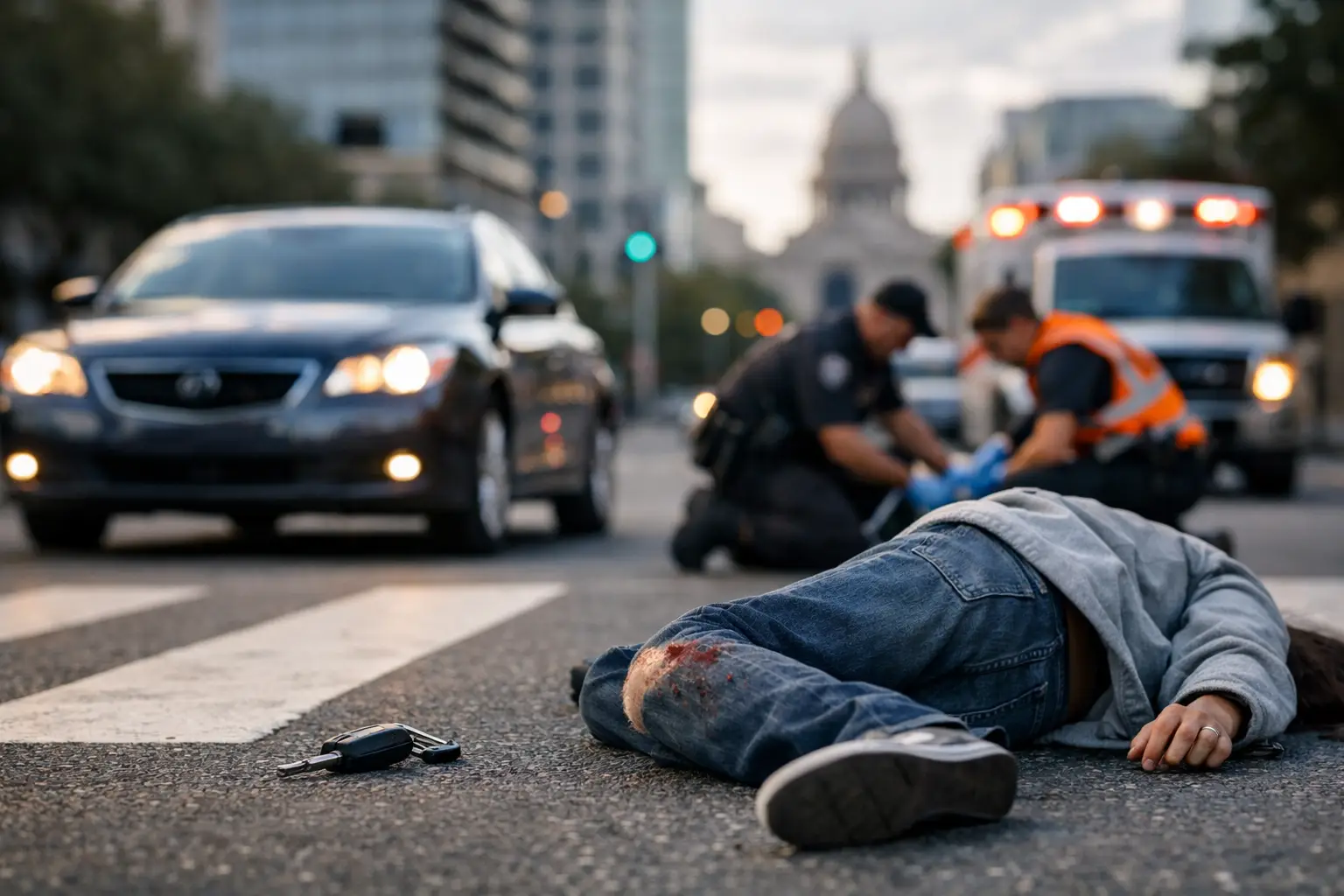
A Guide to Pedestrian Injury Rights in Texas
A pedestrian can do everything right – use a marked crossing, wait for the signal, look for traffic – and still be hit by a driver who was distracted, speeding, turning carelessly, or failing to yield. In the aftermath, the physical pain is only part of the crisis. Medical bills arrive, income may stop, and an insurance company may push for a quick statement before you know the full extent of your injuries. This guide to pedestrian injury rights explains the practical steps that can protect your health, your claim, and your ability to pursue fair compensation in Texas.
Guide to Pedestrian Injury Rights After a Crash
Your first priority is getting medical attention and following through with the care your condition requires. Pedestrian crashes can cause serious harm even when injuries are not immediately obvious. Adrenaline can mask pain, and symptoms involving the head, neck, back, or internal injuries may appear or worsen later.
If you are able, call 911 and ask for law enforcement to come to the scene. A crash report can preserve key details, including the driver’s identity, vehicle information, witness names, the location, and early observations about what happened. Do not assume the driver will accurately describe the collision later, particularly if there is a dispute about the signal, crosswalk, or right of way.
Take photographs of the intersection, traffic controls, vehicle damage, your visible injuries, clothing, shoes, and any personal property damaged in the collision. If you cannot do so, ask a trusted person to help. Nearby businesses, homes, or traffic systems may have video footage, but that footage can be overwritten quickly. Acting promptly matters.
You should also keep records of every expense and disruption connected to the crash. This includes medical bills, prescription costs, transportation expenses, missed income, and written communication from insurers. A short daily record of pain, limitations, sleep problems, and missed family activities can help show how the injuries changed your life beyond the numbers on a bill.
Who May Be Responsible for a Pedestrian Collision?
Many pedestrian crashes happen because a driver fails to follow basic safety rules. A driver may be responsible for turning through a crosswalk without looking, rolling through a stop sign, ignoring a red light, backing up without checking surroundings, speeding through a neighborhood, or looking at a phone instead of the road.
Responsibility is not limited to collisions that occur inside a marked crosswalk. Drivers still have a duty to use reasonable care and keep a proper lookout. A pedestrian walking near a roadway, crossing outside an intersection, or moving through a parking area does not lose all rights simply because the setting was not ideal.
At the same time, insurance companies often look for ways to place blame on the injured pedestrian. They may argue that the pedestrian crossed against a signal, wore dark clothing, entered the roadway suddenly, or was not paying attention. Those claims are not the final word. The available evidence – video, witness accounts, vehicle data, roadway layout, scene photographs, and the driver’s own statements – can tell a more complete story.
Texas uses a shared-fault system. That means compensation can be reduced if an injured person is found partly responsible. However, partial blame does not automatically prevent recovery. The percentage assigned to each party can make a major difference, which is why accepting an insurer’s version of events without a careful investigation can be costly.
Crosswalks and Signals Matter, But So Does the Full Picture
A marked crosswalk, walk signal, stop sign, or red light can be powerful evidence. So can a driver’s failure to yield while turning. Yet liability decisions often depend on more than one fact. Visibility, lighting, vehicle speed, the timing of traffic signals, road design, and witness credibility can all affect the outcome.
This is particularly true in busy parts of Dallas-Fort Worth, where wide roads, multiple turning lanes, fast-moving traffic, and crowded intersections create dangerous conditions for people on foot. A thorough review should focus on what the driver had time and ability to see and do before impact.
Compensation Available in a Pedestrian Injury Claim
A pedestrian injury claim may seek compensation for both financial losses and the personal consequences of being hurt. The value of a claim depends on the severity of injuries, the care required, the recovery outlook, available insurance coverage, and the evidence of fault.
Financial losses can include past and future medical expenses, lost income, reduced ability to earn income, and out-of-pocket costs caused by the collision. These losses should be supported by organized records whenever possible.
Non-financial losses can be just as significant. Texas law may allow recovery for physical pain, mental anguish, physical limitations, disfigurement, and the loss of normal daily activities. For someone who can no longer pick up a child, take part in hobbies, sleep comfortably, or move through their community without fear, the harm is real even when it does not come with a receipt.
When a pedestrian dies from crash injuries, surviving family members may have rights to pursue compensation related to the loss. These matters are deeply personal and require careful handling, particularly when families are already facing grief and financial uncertainty.
Be Careful When an Insurance Company Calls
A driver’s insurer may contact you soon after the crash. The representative may sound sympathetic, but the company’s goal is to limit what it pays. You are not required to give a recorded statement, speculate about fault, or accept an early settlement before you understand your injuries and losses.
Be truthful, but keep conversations limited. Do not guess about your condition, minimize your pain, or say you are “fine” simply because you are trying to stay composed. Avoid posting details, photos, or opinions about the collision on social media. Insurers may review public posts and take statements out of context.
An early offer can be tempting when bills are mounting. But a settlement generally ends the claim. If your condition becomes more serious, or if future care and lost income become clearer later, you may not be able to return for additional compensation. The right decision depends on the facts, not on the pressure of a fast offer.
Time Limits Can Affect Your Rights
Texas generally places a limited time window on injury lawsuits, and waiting too long can put a claim at risk. The deadline may be different when a government entity or public agency is involved, and notice requirements in those situations can arise much sooner.
Evidence also gets harder to find with time. Witnesses move or forget details. Camera footage disappears. Vehicles are repaired or sold. The strongest time to investigate is usually soon after the collision, while the scene and records are still accessible.
How a Pedestrian Injury Attorney Can Help
A serious pedestrian injury case is not just about sending bills to an insurer. It may require preserving video, speaking with witnesses, reviewing crash records, assessing all available coverage, documenting the full impact of injuries, and challenging efforts to shift blame onto the person who was hit.
An attorney can take over communications with insurers so you can focus on recovery. They can also evaluate whether a proposed settlement accounts for current losses and the future consequences of the crash. If the insurer refuses to treat the claim fairly, legal representation provides a path to pursue accountability.
Feizy Law Office represents injured Texans with direct, focused advocacy and guidance through the difficult details that follow a serious collision. A consultation can help clarify what happened, what evidence should be protected, and what options may be available to you.
You do not need to have every answer before seeking help. Preserve what you can, protect your health, and speak with an experienced pedestrian injury attorney before an insurance company’s timeline becomes your timeline.


About Post Author
