

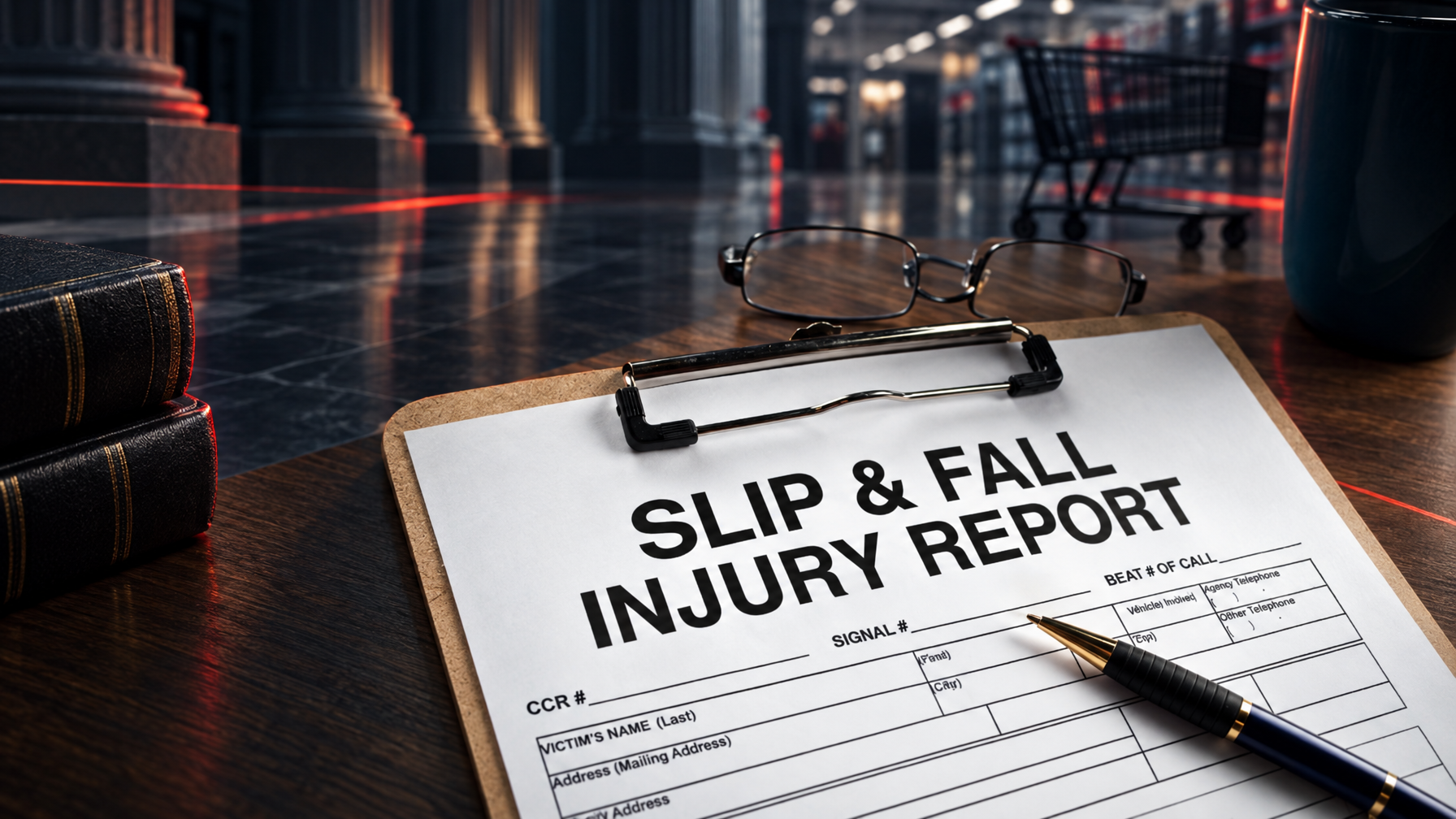
Walmart Customer Injury Policy: What Texas Shoppers Should Know After a Store Injury
Description
Searching for the Walmart customer injury policy after a fall or other store injury in Texas? Learn how claims are handled, what CMI does, what to document, and how Feizy Law Office can help with a free consultation at (214) 651-8686.
Walmart Customer Injury Policy: What Texas Shoppers Should Know After a Store Injury
#TLDR
- A Walmart customer injury policy is not a single public handbook. In practice it means store reporting, video retention, and claims handled through Walmart Claims Services (also known as Claims Management, Inc. in some locations).
- Report the injury to a manager, ask for an incident report, photograph the hazard, and get same-day medical care.
- You do not have to give a recorded statement to Walmart’s claims team.
- Texas personal injury suits generally must be filed within two years under Civil Practice and Remedies Code § 16.003.
- Comparative fault above 50% can bar recovery under Chapter 33.
- Call Feizy Law Office at (214) 651-8686 for a free consultation if you were hurt at a Walmart in Frisco, Plano, Dallas, or elsewhere in DFW.
Table of Contents
- What is the Walmart customer injury policy?
- What should you do right after a customer injury at Walmart?
- Who handles the claim after you report it?
- Do you have to give a recorded statement?
- How does Texas premises liability fit a Walmart injury?
- What evidence disappears the fastest?
- How long do you have to act in Texas?
- What if the claim is denied or you are blamed?
- When to call Feizy Law Office
A wet grocery aisle, a loose pallet, falling merchandise, or a dark parking-lot pothole can put a North Texas shopper on the floor in seconds. The next search is often the same: what is the Walmart customer injury policy, and what does the company actually do when a customer is hurt?
People expect a clear public rulebook. What they get is a store process, an internal report, and later a call from a claims unit. That sequence can protect you if you use it correctly. It can also shrink a claim if you treat every friendly call as help.
Feizy Law Office represents injured people across Frisco, Plano, McKinney, Allen, Prosper, Dallas, and the wider DFW area. Attorney Nick Feizy has practiced personal injury law in North Texas since 2000. Call (214) 651-8686 for a free consultation before you sign a release or record a long statement.
What is the Walmart customer injury policy?
There is no single customer-facing pamphlet labeled “Walmart Customer Injury Policy” that answers every claim question. In everyday terms, shoppers mean the company’s practical approach after a customer injury on store property:
- On-site reporting. Managers and supervisors document the event in an incident report.
- Evidence control. The store and company control camera systems, sweep logs, and employee statements.
- Centralized claims handling. Liability and related claims are administered through Walmart Claims Services, Inc., which does business as Claims Management, Inc. in some locations. Walmart’s own Claims Services privacy notice describes that entity as the casualty claims administrator for Walmart and its insurance carriers.
- Investigation before payment. The file is built to test liability, medical causation, and damages, not to write a blank check at the service desk.
That structure is why a polite manager and a later claims call feel like two different companies. One works the floor. The other works the claim.
A Walmart customer injury policy in this sense is a claims workflow. It is not proof that the store admits fault. It is also not a substitute for Texas premises liability law. Your rights come from the facts and from Texas statutes, not from a corporate form.
Common customer-injury scenarios at large retailers include:
- Spills, melted ice, or wet floors without a timely warning cone
- Merchandise that falls from a shelf or pallet
- Trip hazards from mats, clutter, or stock left in the aisle
- Parking-lot holes, uneven pavement, cart corrals, or poor lighting
- Cart defects that cause a fall or strain
If you already completed a report and still feel lost, our guide on the Walmart incident report after an injury in Texas explains what that paper does and does not prove.
What should you do right after a customer injury at Walmart?
Health comes first. If you cannot stand, stay put and get emergency help. If you can move safely, treat the next hour as evidence time.
1. Tell a manager and request an incident report. Ask for the store number, the manager’s full name, and confirmation that the injury was logged. If they refuse a copy, write the details yourself before you leave.
2. Photograph the hazard and the area. Capture the spill, debris, missing warning, aisle markers, nearby cameras, your shoes, and visible injuries. Conditions change as soon as someone mops or restocks.
3. Collect independent witnesses. Other shoppers matter more than a brief employee summary later. Get names and phone numbers.
4. Seek same-day medical care. Tell the provider the injury happened at Walmart. Delayed care gives claims handlers an easy argument that the harm came from somewhere else.
5. Keep your story short on site. Stick to what you saw and felt. Do not guess speeds, prior conditions, or whether you will “be fine tomorrow.”
6. Do not sign a broad release for a small check. An early payment that covers one ER visit can close the door on later therapy, imaging, or wage loss.
These steps mirror any serious premises liability situation. National retailers simply move faster on cleanup and video cycles, so delay hurts more.
If you already left without a report, call the store, ask for the manager on duty, and follow with a short written note that states the date, time, aisle or lot location, and that you were injured. Keep a copy.
Call Feizy Law Office at (214) 651-8686 if claims staff are already pressing for records or a statement.
Who handles the claim after you report it?
After the store creates a file, many customer claims move to Walmart Claims Services / Claims Management, Inc. (CMI). According to Walmart’s privacy notice for Claims Services, that unit administers workers’ compensation and liability claims involving Walmart and its carriers. It collects personal information for claim processing, reporting to Walmart and insurers, fraud detection, Medicare reporting, and related legal duties.
That is a claims administration role. It is not a court. It is not a neutral public agency.
In practice, injured shoppers often report that a representative:
- Calls quickly after the incident
- Asks for a detailed or recorded account
- Requests medical bills and records
- Sounds sympathetic at first
- Later disputes fault, minimizes injuries, or slows contact
None of those steps automatically means the company will pay full value. Sending records without counsel can give the other side a “free look” at prior conditions, gaps in care, and inconsistent language. A denial letter that cites lack of liability or pre-existing problems is common after that exchange.
Large retailers often self-manage or tightly control liability claims rather than handing every file to a distant third-party carrier with no corporate connection. The practical point for a Texas customer is simple: the person on the phone works the company’s risk file. Their job is to resolve claims on terms that protect the company.
Do you have to give a recorded statement?
No. A customer injured at Walmart generally has no contract that forces a recorded interview with the store’s claims unit.
A recorded statement freezes your words while you are still in pain, still short on medical records, and still unsure how the injury will develop. Questions about footwear, phone use, lighting, weather, prior back pain, or “are you okay to walk” can later appear as arguments that you were careless or already hurt.
You can decline the recording, decline broad medical authorizations until reviewed, and ask that communications go through a lawyer. Polite firmness is enough. You do not need to argue law on the phone.
If you already gave a statement, do not panic. Get your medical course documented, preserve your photos, and get a file review. Early words matter. They are not always the end of the case.
How does Texas premises liability fit a Walmart injury?
A Walmart customer injury policy sits on top of Texas premises liability rules. A typical shopping customer is an invitee. The store generally owes a duty of reasonable care to keep the premises reasonably safe, including inspection for hazards and warnings when dangers are known or should be known.
A viable claim usually needs proof of:
- A dangerous condition
- The store’s actual or constructive knowledge of that condition
- A failure to fix or warn within a reasonable time
- Injury caused by that condition
- Damages (medical care, wage loss, pain, limits on daily life)
Actual knowledge means staff knew about the hazard. Constructive knowledge means the hazard existed long enough that reasonable inspection should have found it. Sweep logs, prior complaints, employee testimony, and video often decide that fight.
Texas also applies proportionate responsibility. Under Civil Practice and Remedies Code § 33.001, a claimant may not recover if that person’s percentage of responsibility is greater than 50 percent. If you are 50 percent or less at fault, recovery can still exist, reduced by your share. Retail defense files lean hard into open-and-obvious arguments, distraction, footwear, and “you should have seen it.” Photos of the aisle and independent witnesses push back on those themes.
Damages can include emergency care, imaging, therapy, future treatment, lost wages, reduced earning capacity, pain, and scarring. An early offer that only refunds a cart of groceries or one copay rarely matches that full picture.
What evidence disappears the fastest?
Store video loops overwrite. Floors get cleaned. Pallets move. Employees change shifts. Witnesses leave the parking lot and never return.
Priority evidence after a customer injury:
- Your photographs and short videos of the hazard
- The incident report and claim number
- Names of managers and responding employees
- Independent witness contacts
- Medical records that tie symptoms to the event
- Clothing or shoes if relevant to the fall
- Nearby business or vehicle cameras if the injury happened outside
A lawyer can send a preservation letter that asks the company to hold footage, the incident report, sweep logs, and related statements. Waiting weeks makes that request harder. Our page on store surveillance as injury evidence explains why the clock on footage is short.
Do not return to the store to stage a recreation video for social media. Do not post a play-by-play online. Claims teams review public posts.
How long do you have to act in Texas?
Most Texas personal injury suits must be filed not later than two years after the day the cause of action accrues. Civil Practice and Remedies Code § 16.003 sets that two-year limitations period for personal injury. TexasLawHelp summarizes the same personal injury deadline under § 16.003.
Two years is the outer lawsuit deadline. It is not a reason to wait. Video and witness proof can disappear in days. Medical documentation works best when care starts early and stays consistent.
Claims against a city or other government entity can involve shorter notice rules. A private Walmart store is not a city, but if the injury involved a public sidewalk or government property next to the store, get advice promptly.
What if the claim is denied or you are blamed?
Denial is a common opening position. Letters may say there was no hazard, staff had no time to clean, you were careless, or there is “insufficient evidence of negligence.” That is a starting claim, not a final verdict on the facts.
If the file is denied:
- Keep treating and keep every bill and record
- Save the denial letter and claim number
- Stop informal chats with the adjuster
- Compare the denial language to your photos and medical notes
- Get counsel before you argue the file alone
If Walmart argues shared fault, the comparative-responsibility rules above still control. Pushing your percentage over 50 percent is a standard defense goal. Clear photos of an unmarked spill, a missing cone, or falling stock change that conversation.
Our related guide on what if Walmart denies liability covers next moves after a denial letter.
When to call Feizy Law Office
Call if you were hurt as a customer at a Walmart in Frisco, Plano, McKinney, Allen, Prosper, Dallas, or elsewhere in DFW and you now face medical bills, missed work, a claims number, or pressure for a recorded statement.
Feizy Law Office can:
- Request preservation of video, the incident report, and sweep logs
- Handle communications so you are not negotiating alone
- Connect medical proof to the store event
- Push back when the company blames you for a hazard left in the aisle
- Evaluate settlement offers against the full course of care
Phone: (214) 651-8686. Consultations are free. You do not pay attorney fees unless the firm recovers money for you.
Bottom line on the Walmart customer injury policy
The phrase Walmart customer injury policy points to a corporate claims system: report on site, document the hazard, then face a centralized investigation that protects the company first. Your protection is different. Same-day medical care, photos, witnesses, careful statements, and early legal guidance keep the claim tied to the real aisle conditions and the real injury, not to a short manager note or a rushed phone narrative.
If you are still sorting the paperwork tonight, start with care and documentation, then call Feizy Law Office at (214) 651-8686 for a free consultation. A free consultation can clarify deadlines, evidence still available, and whether the firm is the right fit for your facts.


About Post Author
