

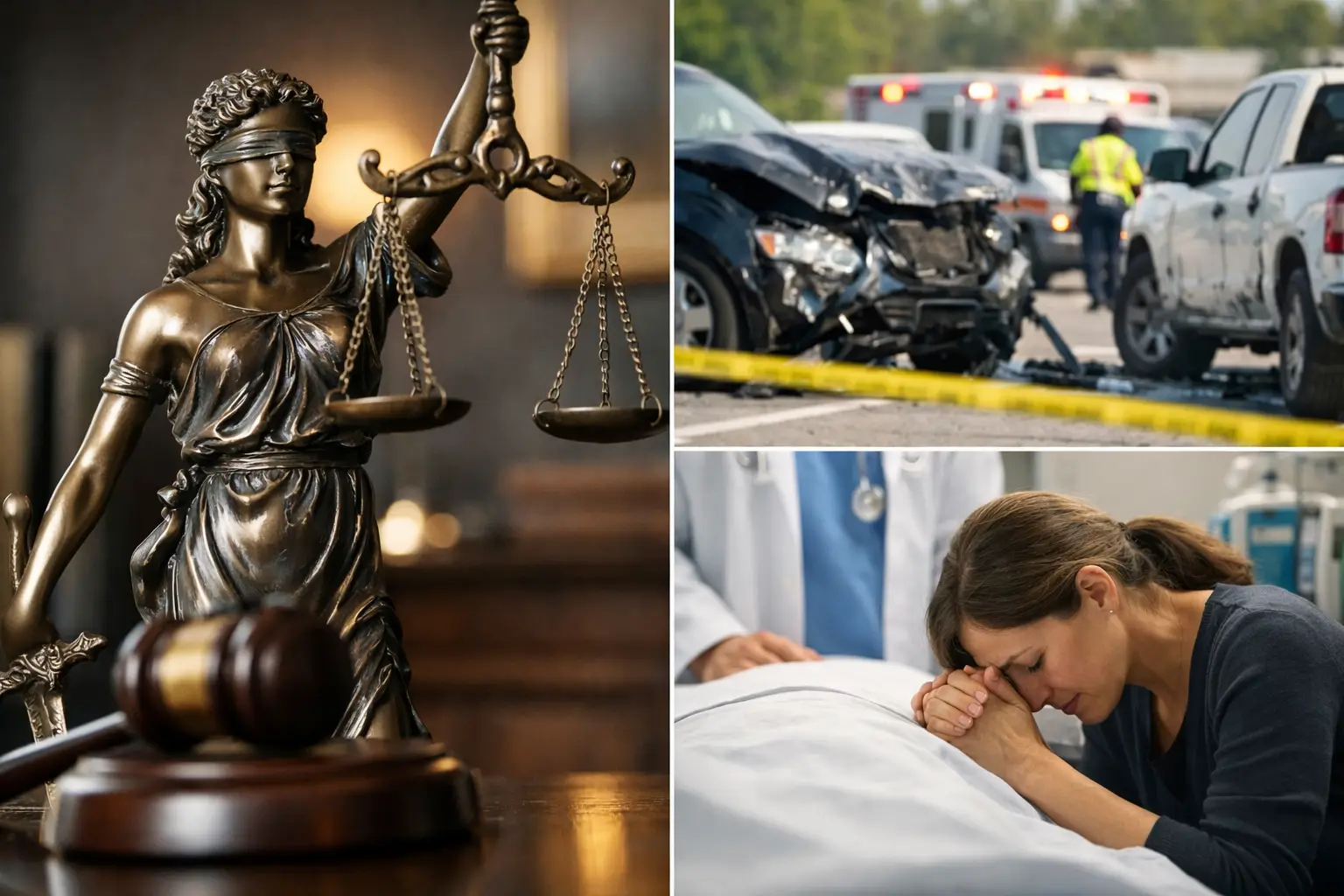
Wrongful Death Lawsuit Scenarios in Texas
A fatal accident changes a family’s life in seconds. In the days that follow, surviving relatives may face hospital bills, funeral costs, lost household income, and pressure from insurance representatives before they have had time to process their loss. Wrongful death lawsuit scenarios can help families see why the facts behind an accident matter and what a claim may seek to address.
No two losses are alike, and no responsible attorney should promise a particular result. Still, certain patterns appear again and again after fatal crashes and dangerous property incidents. Understanding those patterns can help a grieving family recognize when another person or company may need to be held accountable.
Wrongful Death Lawsuit Scenarios: What They Can Reveal
A wrongful death claim may arise when someone’s careless, reckless, or unsafe conduct causes a fatal injury. In Texas, a surviving spouse, child, or parent may have the right to pursue compensation. The details matter: who caused the incident, what evidence exists, how the death has affected the family, and whether more than one party shares responsibility.
These claims are not only about a collision report or an insurer’s first offer. They are about the full human and financial loss left behind. A thorough investigation can identify facts that are not immediately obvious, preserve critical proof, and push back when an insurer attempts to minimize the harm.
Fatal distracted-driving collision
Consider a driver who looks down at a phone while approaching stopped traffic on a Dallas-area highway. The driver fails to brake in time and causes a violent chain-reaction collision that takes another motorist’s life.
The initial issue may seem straightforward, but proving distraction often requires more than a statement from the at-fault driver. Relevant evidence might include phone activity, traffic camera footage, vehicle data, witness accounts, and the physical damage pattern. A legal team may also examine whether speeding, following too closely, fatigue, or impairment contributed to the crash.
For the family, damages may include final medical expenses, funeral and burial costs, lost income and benefits, lost household support, and the loss of companionship, care, and guidance. The value of a claim depends on the family’s specific circumstances, not a formula used by an insurance company.
Commercial truck crash caused by unsafe conduct
A passenger vehicle may be crushed when a commercial truck changes lanes without adequate clearance, follows too closely, or travels too fast for traffic conditions. Truck collisions often cause catastrophic harm because of the vehicle’s size and weight.
These matters can involve more evidence and more potential responsibility than an ordinary car crash. The truck operator’s conduct is central, but investigators may also review electronic driving data, inspection records, maintenance history, cargo issues, and the trucking company’s safety practices. Evidence can disappear quickly if it is not preserved.
The insurance coverage involved in a truck crash may be substantial, but that does not mean the insurer will make the process easy for a family. Large carriers and their insurers often begin protecting their own interests immediately. Prompt action helps level the field and gives the family a clearer path toward accountability.
Fatal motorcycle collision at an intersection
A driver turning left across traffic may claim not to have seen an approaching motorcyclist. That statement does not excuse a failure to yield. Motorcyclists have the same right to use Texas roads as anyone else, yet unfair assumptions about speed, visibility, or risk-taking can influence how insurers initially view a claim.
An investigation may focus on the traffic signal, sight lines, vehicle positions, impact points, road conditions, and available video. Witness statements can be valuable, particularly when the other driver changes their account after the crash.
In a fatal motorcycle collision, the defense may try to shift blame to the rider. Families need advocates who will examine the evidence carefully rather than accept an insurer’s version of events. Even when questions exist about shared fault, a claim may still be available. The answer depends on the evidence and the degree of responsibility assigned to each party.
Pedestrian struck in a crosswalk or parking area
Pedestrians are especially vulnerable when drivers fail to pay attention in crosswalks, neighborhoods, parking lots, and near retail centers. A driver backing out without checking surroundings or rushing through a turn can cause irreversible harm.
These incidents often require a close look at lighting, crosswalk markings, vehicle speed, security video, and the driver’s actions in the moments before impact. A property owner’s role may also need review if poor lighting, obstructed views, or dangerous traffic flow created an unsafe condition.
A family should not assume that a pedestrian claim is simple because the person was on foot. Insurers may argue that the pedestrian was difficult to see or stepped into the roadway unexpectedly. Strong evidence can answer those arguments and establish what actually occurred.
Dangerous property conditions leading to a fatal fall
Wrongful death claims are not limited to motor vehicle accidents. A fatal fall may occur when a property owner ignores a dangerous stairway, broken handrail, poor lighting, slick surface, or other hazard that should have been corrected or clearly addressed.
The central question is often whether the owner or responsible party knew, or reasonably should have known, about the danger and failed to take appropriate action. Photos, maintenance records, incident reports, video, and witness accounts may become critical. Conditions at a property can be repaired quickly after an incident, so documenting the scene matters.
These matters can be challenging because responsibility may be disputed among a property owner, manager, contractor, or another party. A careful review helps identify who controlled the area and who had the duty to keep it reasonably safe.
What Compensation May Address After a Fatal Accident
No financial recovery can replace a loved one. A wrongful death claim is a legal tool for pursuing accountability and easing the financial burdens created by another party’s conduct.
Depending on the circumstances, compensation may address lost income, lost benefits, funeral expenses, final medical costs, loss of household services, and the emotional loss of a loved one’s companionship, support, and guidance. A related claim may also be available for certain losses and suffering experienced by the person before death.
Insurance companies may focus on immediate expenses while giving too little weight to the long-term impact on a household. For a parent, spouse, or child, the loss can reach far beyond a stack of bills. It can affect financial stability, daily care, future plans, and the support a family expected to receive for years.
Why Early Action Can Protect a Family’s Claim
After a fatal accident, families should not have to manage investigators, insurers, and paperwork alone. Yet waiting too long can make a claim harder to prove. Video may be overwritten, witnesses may become difficult to locate, damaged vehicles may be moved, and crucial records may be lost.
An attorney can take over communications with insurance companies, investigate the incident, identify responsible parties, calculate the family’s losses, and pursue a claim from a position of strength. That allows the family to focus on one another while someone protects their legal interests.
If your family lost someone because of a dangerous driver, unsafe property condition, or another preventable act, Feizy Law Office can help you understand your options. A conversation with a wrongful death attorney can provide clarity, preserve important evidence, and help your family take the next step when the time feels right.


About Post Author
