

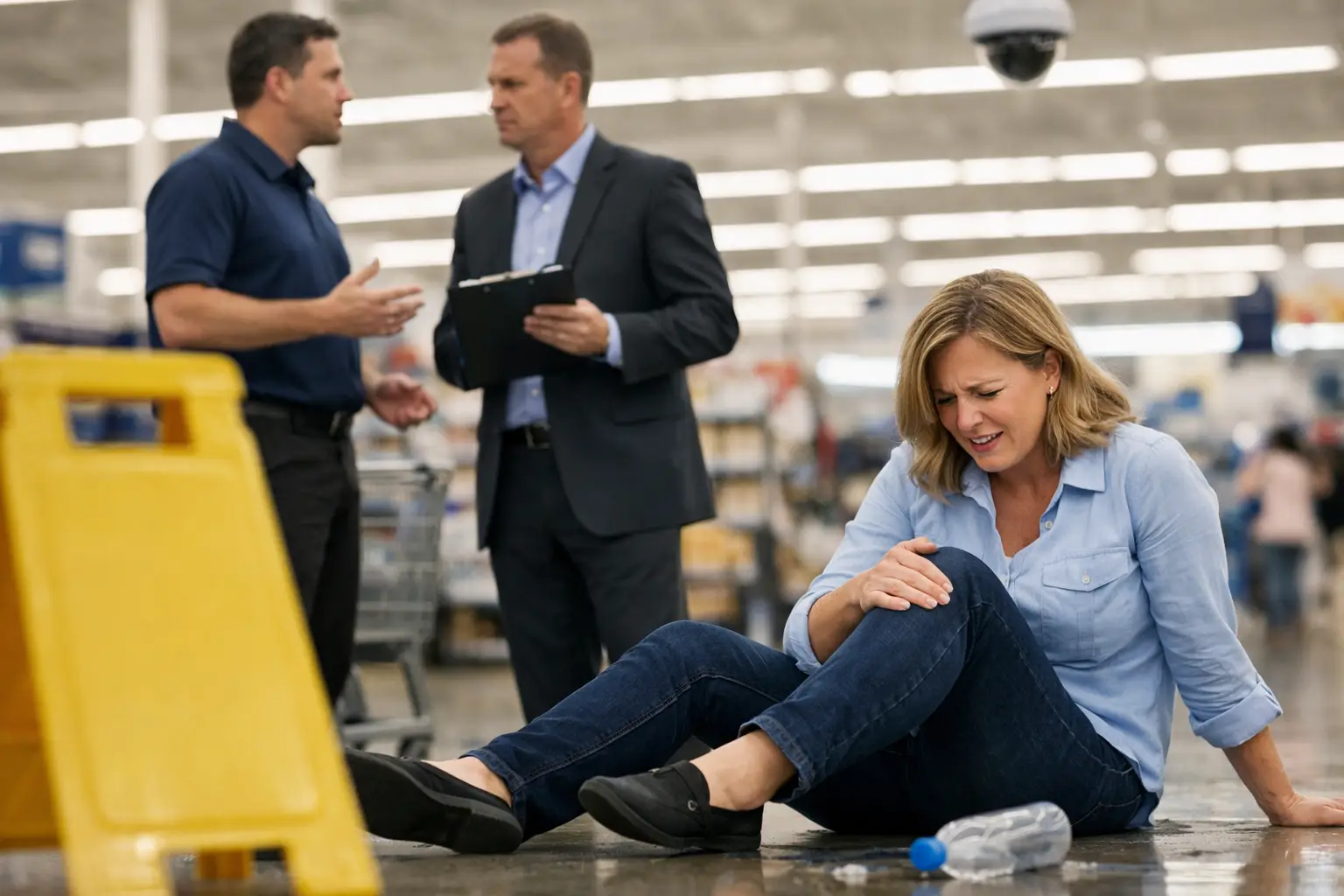
What If Walmart Denies Liability After a Fall?
A painful fall in a Walmart can leave you facing medical bills, time away from work, and a store representative who seems more focused on protecting the company than helping you. If you are asking, “what if walmart denies liability,” understand that a denial is not the end of your claim. It is often the beginning of a fight over what happened, what the store knew, and whether reasonable steps could have prevented your injury.
Large retailers have procedures designed to document incidents and limit financial exposure. You deserve someone focused on protecting your interests with the same urgency. The steps you take after a denial can make a meaningful difference in your ability to pursue compensation.
Why Walmart May Deny Liability
Walmart is not automatically responsible just because an injury happened in one of its stores or on its property. Under Texas premises liability rules, the central question is whether the store failed to use reasonable care to address a dangerous condition it knew about, or reasonably should have discovered.
The company or its insurer may claim there was no hazardous condition at all. They may say the floor was dry, the display was stable, the walkway was clear, or the condition was too open and obvious to create responsibility. In a slip and fall case, they may argue that a spill occurred only moments before the fall, leaving no reasonable opportunity for store personnel to find and clean it.
They may also try to shift blame to you. A denial might allege that you were distracted, ignored a warning sign, wore unsuitable footwear, or failed to watch where you were walking. These arguments are common because Texas follows a proportionate-responsibility system. If an injured person is found more than 50 percent responsible, they may be barred from recovering damages. A lower percentage of responsibility can still reduce compensation.
That does not mean Walmart’s version is correct. It means the evidence matters from the start.
What If Walmart Denies Liability? Protect the Evidence
A store’s denial should prompt careful action, not panic. The strongest cases are usually built on facts collected before video is overwritten, conditions change, or witness memories fade.
If you have not already done so, preserve photographs and videos of the area where you were hurt. Images may show a liquid spill, damaged flooring, loose merchandise, poor lighting, blocked aisle, missing warning cone, or other unsafe condition. Take pictures of your shoes, clothing, visible injuries, and anything that may help show the seriousness of the incident.
Report the injury to store management and ask that an incident report be created. Be accurate and concise about what happened, but do not guess about details you do not know. If you received a report number or any paperwork, keep it in a safe place. A report alone does not prove fault, but it can establish that the store received notice of the incident.
Witnesses can be especially valuable when Walmart disputes the condition that caused the fall. If another shopper saw the incident, saw the dangerous condition earlier, or heard store personnel acknowledge a problem, their account may help support your claim. Names and contact information can become difficult to obtain once people leave the store.
Surveillance footage can also be critical. Video may show how long a spill was present, whether store personnel walked past it, whether warning signs were available, or whether an employee created the dangerous condition. It may also reveal activity in the area before and after the fall. Retail video is not always kept indefinitely, so prompt action to request preservation is essential.
The Store’s Inspection Records Can Tell a Different Story
Walmart may maintain cleaning logs, safety check records, inspection schedules, and internal incident documentation. These materials can help answer the questions a denial often avoids: When was the aisle last inspected? Was the inspection actually completed? Did an employee identify the hazard? Did anyone attempt to clean it or place a warning sign?
For instance, a store might contend that it had no notice of a spill. But records or video could indicate that the area had not been inspected for an unreasonable period, or that employees were nearby without addressing the condition. The facts can also show whether a store policy was followed in practice rather than merely existing on paper.
A premises liability investigation may involve reviewing store surveillance, maintenance records, witness statements, photographs, and communications regarding the incident. This is one reason it is risky to accept a denial at face value before the available evidence has been evaluated.
Do Not Let an Insurance Conversation Define Your Case
After a serious injury, an insurer may contact you quickly for a recorded statement or seek a broad authorization to obtain information. You are not required to accept the insurer’s framing of the event or agree with a conclusion that the store bears no responsibility.
Be truthful if you speak with an insurance representative, but avoid speculation. Do not minimize your pain simply because you are trying to be polite, and do not estimate fault before the evidence has been reviewed. A simple statement such as, “I am still evaluating the incident and my injuries,” can be appropriate when you do not have enough information.
Keep records of all injury-related expenses, missed income, and communications connected to the incident. Your claim may involve more than immediate medical costs. Depending on the circumstances, compensation can account for future care needs, lost earning capacity, physical pain, mental anguish, and the ways an injury has affected your everyday life.
When a Walmart Denial May Be Challenged
Not every denial can be overcome, and an honest assessment of the facts matters. A claim may be more difficult if a hazard appeared seconds before a fall, if there is no evidence the store had a reasonable chance to discover it, or if a clear warning was present and visible. Even then, the full circumstances should be reviewed rather than assumed.
A denial may be worth challenging when evidence suggests that Walmart created the hazard, received notice of it, or failed to conduct reasonable inspections. The same can be true when a foreseeable danger resulted from unsafe displays, loose mats, leaking equipment, damaged pavement, poor lighting, or an improperly maintained entrance.
The severity of the injury also matters. A serious injury can affect mobility, family responsibilities, income, and long-term financial stability. The company evaluating the claim may focus on limiting payment. An injured person needs a clear picture of the harm suffered and the proof required to support it.
How a Texas Injury Attorney Can Help
When Walmart denies responsibility, legal representation can move the conversation from a general denial to an evidence-based demand for accountability. An attorney can investigate the incident, pursue preservation of relevant footage and records, identify witnesses, and evaluate the arguments being used against you.
Just as importantly, an attorney can handle communications with the company and its insurer while you focus on your health and family. This helps prevent pressure tactics from pushing you toward a statement or settlement that does not reflect the true impact of your injuries.
Feizy Law Office represents injured Texans in premises liability matters and understands that a major retailer’s denial can feel intimidating. You do not have to take on a corporation and its insurance team alone.
Take Action Before Key Proof Disappears
A liability denial is a position, not a final verdict. Preserve what you can, keep careful records, and get a clear assessment of the facts before deciding that Walmart’s answer is the last word. Prompt action can protect the evidence that gives your claim its strongest voice and helps you pursue the compensation your injuries may warrant.


About Post Author
