

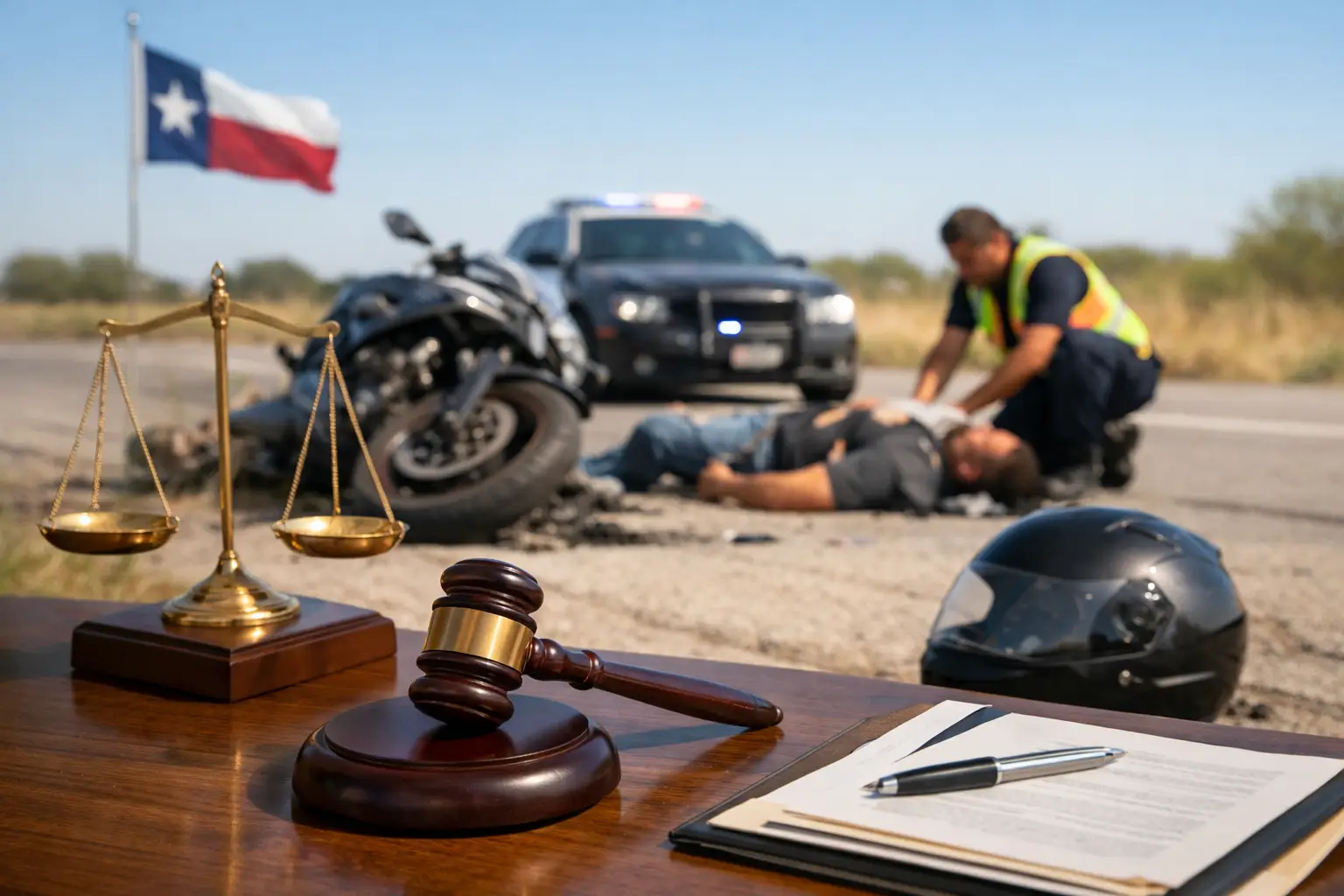
Texas Motorcycle Injury Claim Guide
A motorcycle crash can turn a normal ride into months of pain, missed work, and pressure from insurance companies that want a quick answer before you know the full cost of your injuries. This Texas motorcycle injury claim guide explains what matters after a wreck, what can affect your compensation, and where riders often lose ground without realizing it.
Motorcycle claims are rarely treated the same way as other traffic injury cases. Riders often face unfair assumptions from the start. An insurer may hint that the motorcycle itself was the problem, or suggest the rider accepted extra risk simply by being on the road. That bias matters because it can shape how fault is argued, how injuries are valued, and how aggressively the other side tries to limit payment.
What makes a motorcycle injury claim different
Motorcyclists do not have the physical protection that people in passenger vehicles do. Even at lower speeds, a crash can lead to broken bones, road rash, head trauma, internal injuries, spinal damage, or permanent limitations. The medical picture is often more serious, and the financial fallout can grow quickly.
There is also a visibility issue in many motorcycle wrecks. Drivers say they did not see the rider before turning left, changing lanes, or pulling into traffic. That does not excuse the collision, but it does mean liability disputes are common. In a strong claim, the evidence has to do more than show a crash happened. It needs to show how the other driver failed to operate safely and how that failure caused specific losses.
The first days after the crash can shape the claim
The strongest cases are usually built early. If you are able, getting medical attention right away helps protect both your health and your legal position. Gaps in treatment give insurers room to argue that your injuries were minor, unrelated, or made worse by delay.
Photos, witness names, damage to the motorcycle, and the officer’s crash report can all become important. So can the details you might forget later, like the lane positions, road conditions, weather, traffic flow, and anything the other driver said at the scene. Small facts often become big issues once fault is disputed.
If the insurer calls quickly, be careful. Early calls are not always about helping you move forward. They are often about gathering statements before the full extent of injury is known. A casual comment like “I’m okay” can be pulled out later to challenge a serious injury claim.
Texas fault rules and why they matter
Texas injury claims depend heavily on fault. To recover compensation, you generally need to show that another party’s negligence caused the crash. In motorcycle cases, that may involve a driver who turned in front of you, followed too closely, changed lanes without checking, opened a door into traffic, or failed to yield.
But Texas also looks at whether the injured rider shares blame. If the other side can push part of the fault onto you, it can reduce what you recover. That is why these claims are rarely just about medical bills. They become a battle over the story of the crash.
This is one area where details matter. Speed, lane position, lighting, helmet use, visibility gear, and even damage patterns may be used to argue over percentages of fault. Some of those points are fair topics for investigation. Others are used more as leverage than truth. A rider should not assume the insurance company’s version is neutral just because it sounds confident.
Texas motorcycle injury claim guide to useful evidence
A good Texas motorcycle injury claim guide has to focus on proof, because proof is what moves a claim from suspicion to value. Insurance companies pay attention when the evidence is organized, consistent, and tied directly to the injuries and losses.
The most helpful evidence often includes the crash report, photographs from the scene, vehicle damage, helmet and gear damage, witness statements, medical records, wage loss information, and video from traffic cameras or nearby businesses if it exists. In some cases, phone records, onboard data, or reconstruction analysis may also become relevant.
Medical evidence deserves special attention. It is not enough to say you were hurt. The records should tell a clear story about what symptoms began after the crash, what treatment was required, how recovery has gone, and whether there are lasting effects. When the injuries interfere with work, sleep, daily activity, or family life, that should be documented too.
What compensation may be available
A motorcycle injury claim can include more than immediate medical costs. Many riders are dealing with a longer timeline than they first expected. Recovery may involve surgery, mobility limits, future care needs, and time away from work that puts real pressure on the household.
Compensation may include medical expenses, lost income, reduced future earning ability, pain and suffering, physical impairment, disfigurement, and damage to the motorcycle or other property. In the most severe cases, the claim may need to account for permanent disability or life changes that affect independence and quality of life.
The value of a claim depends on more than the diagnosis. It also depends on how clearly the injuries are connected to the crash, how strong liability evidence is, how consistent treatment has been, and whether the long-term impact can be shown in a believable, documented way.
Common insurer tactics after a motorcycle crash
Insurers do not need to deny every claim to save money. Often, they just need to narrow the claim enough that an injured rider settles before the real cost becomes clear. That can happen in subtle ways.
One common tactic is to dispute fault even when the other driver received a citation. Another is to focus on anything they can frame as rider error, even if it had little to do with causing the wreck. They may also argue that some injuries were preexisting, that treatment was excessive, or that recovery should have happened faster.
Quick settlement offers can be especially risky in serious motorcycle cases. A fast offer may feel like relief when bills are piling up, but once a claim is resolved, you usually do not get to reopen it because symptoms worsened or future costs turned out to be higher than expected.
Why timing still matters in a strong case
Even when liability seems obvious, waiting too long can weaken a claim. Witness memories fade. Video footage may be erased. The motorcycle may be repaired, sold, or lost before it is properly documented. Medical records become less persuasive if treatment starts late or stops without explanation.
There is also a practical side to timing. The earlier a case is built, the harder it is for the other side to shape the narrative first. That does not mean every claim should be rushed. It means the investigation should start before key evidence disappears.
When legal help becomes especially important
Some motorcycle claims are straightforward at first and become complicated once the insurer starts pushing back. Others are serious from day one because the injuries are severe, fault is disputed, or multiple policies may be involved.
Legal help matters most when the stakes are high and the other side is already trying to minimize what happened. A lawyer can handle evidence collection, communication with insurers, damage analysis, and negotiation while you focus on recovery. That support also helps prevent mistakes that can quietly reduce the value of a case.
For injured riders in North Texas, working with a firm that understands local roads, local insurers, and the way motorcycle cases are defended can make a real difference. Feizy Law Office has represented injured Texans for decades and approaches these cases the way they should be approached – as serious claims that deserve serious advocacy.
A Texas motorcycle injury claim guide for real-world decisions
The hardest part after a wreck is that you are expected to make important decisions while hurt, stressed, and unsure what comes next. That is exactly when bad advice and quick pressure can do the most damage.
A reliable Texas motorcycle injury claim guide should leave you with one clear idea: do not let the insurance company define your case before the facts are fully known. The right claim is built on evidence, timing, and a full understanding of what the crash has taken from you, not just what the insurer is willing to mention in the first conversation.
If you were hurt in a motorcycle crash, give yourself room to treat your injuries, protect the evidence, and get informed before making decisions that cannot be undone.


About Post Author
