

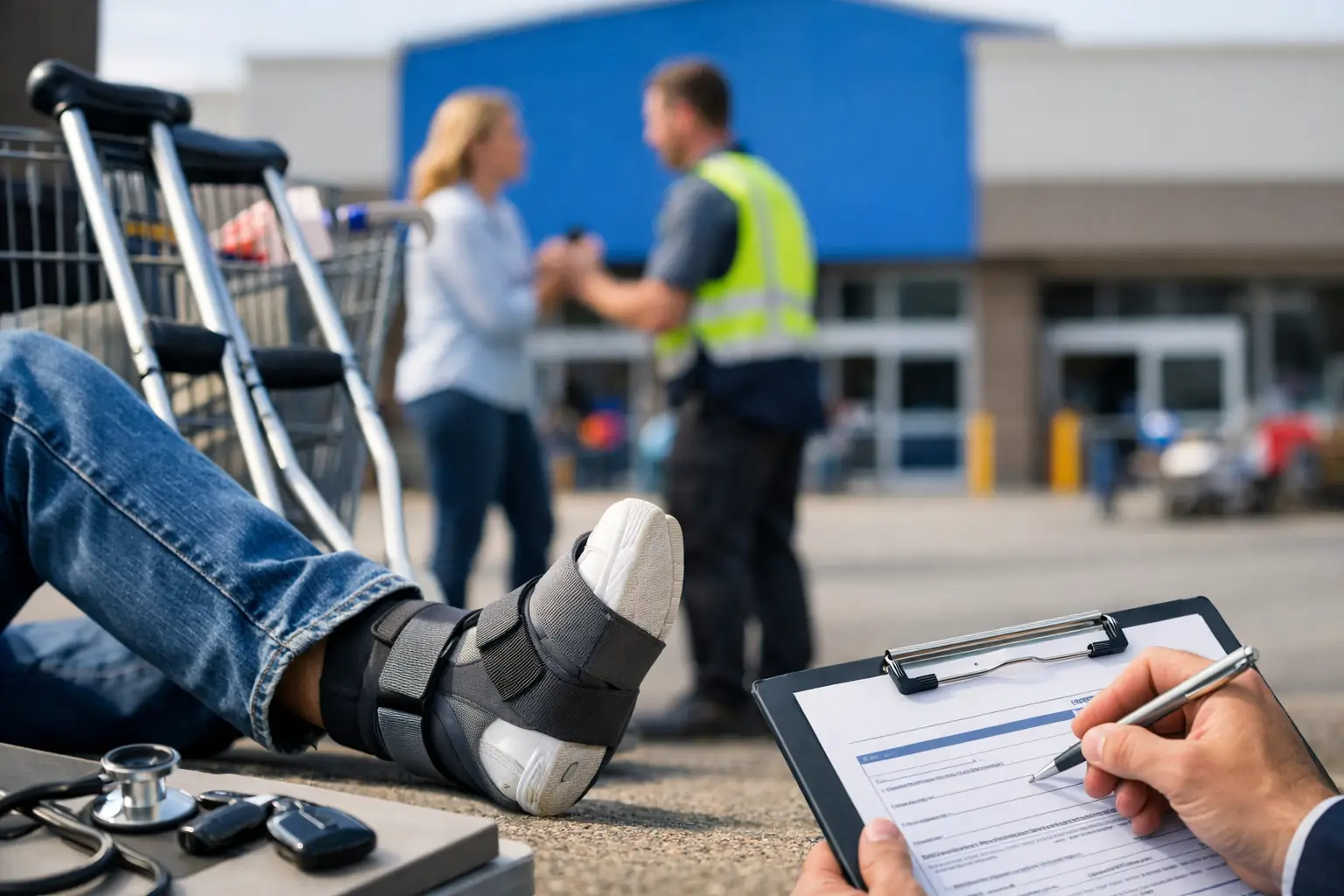
A Clear Guide to Walmart Injury Claims
A fall in a Walmart aisle can turn an ordinary errand into weeks or months of pain, missed work, and uncertainty. This guide to Walmart injury claims is here to make the process clearer if you were hurt on store property and now need answers about your rights, evidence, and next steps.
Large retail stores are busy, fast-moving places. Spills happen. Merchandise gets stacked. Floors are cleaned while customers are still shopping. Shopping carts, displays, loose mats, and poorly maintained walkways can all create hazards. When a store fails to keep the property reasonably safe and a customer gets hurt, the injured person may have the right to pursue compensation.
What a guide to Walmart injury claims should cover
Most people do not plan for a premises injury claim. They are focused on getting home, getting checked out, and figuring out how serious the injury really is. The problem is that what you do in the first hours and days after the incident can shape the entire case.
A useful guide to Walmart injury claims starts with one simple point – do not assume the store will automatically do the right thing just because the incident happened in a major national chain. Big companies and their insurers often move quickly to protect their own position. That means you should move quickly to protect yours.
Common ways injuries happen in Walmart stores
Slip and fall accidents are the most common, but they are far from the only kind of case. Wet floors, recently mopped areas without clear warning signs, leaking refrigeration units, and spilled liquids can all create dangerous walking conditions. In other situations, a person may trip over torn flooring, unsecured mats, pallets, cords, or clutter left in an aisle.
Some injuries happen because merchandise falls from shelves or overhead storage. Others happen in parking lots, at entrances and exits, or in restrooms where water and soap create slick surfaces. The location matters, but the bigger issue is whether the danger should have been discovered and corrected before someone got hurt.
That is where these cases often become more complicated than they first appear. It is not enough to show that you were injured at Walmart. You generally need to show that a dangerous condition existed and that the store knew, or reasonably should have known, about it and failed to address it.
What to do right after the accident
Your health comes first. If you are seriously injured, call for emergency help or get immediate medical care. Even if you think the injury will pass, do not brush it off too quickly. Falls and impact injuries can lead to head trauma, back injuries, joint damage, and soft tissue injuries that worsen over time.
If you are able, report the incident to store management right away. Make sure the event is documented. Ask for the name of the manager or employee who took the report. Be truthful and direct about what happened, but avoid guessing about details you do not know yet.
Photos can make a major difference. Take pictures of the scene, the hazard, your visible injuries, your shoes, and anything nearby that helps show what caused the incident. If there were witnesses, get their names and contact information. Memories fade quickly, and stores may clean up the area soon after the accident.
Keep the clothing and shoes you were wearing. Do not repair, wash, or throw anything away if it could help show what happened. Then keep records of everything that follows, including medical visits, symptoms, missed work, and out-of-pocket losses.
Why evidence matters so much in Walmart injury claims
Store injury cases are often won or lost on evidence, not emotion. A person can be genuinely hurt and still struggle with a claim if key proof disappears. Surveillance footage may exist, but you may not have direct access to it. Incident reports may be created, but they may not tell the full story. Witnesses may leave before anyone speaks with them.
That is why timing matters. The sooner evidence is identified and preserved, the stronger your claim may be. In many premises cases, lawyers move quickly to seek store records, maintenance information, internal reports, and video that may show how long a hazard was present or whether employees were aware of it.
There is also a practical issue many people do not expect. Stores and insurers may argue that the condition was open and obvious, that the customer was distracted, or that the hazard appeared only moments before the fall. Those arguments are easier to challenge when the injured person has clear photos, witness accounts, and prompt documentation.
What compensation may be available
A Walmart injury claim is not just about the moment of the accident. It is about what the injury costs you afterward. Depending on the facts, compensation may include medical expenses, lost income, reduced ability to work, pain and suffering, and the ways the injury disrupted daily life.
The value of a claim depends on several factors. The severity of the injury matters. So does the length of recovery, whether you have lasting limitations, and how clearly the evidence shows store negligence. Cases involving serious fractures, head injuries, or lasting mobility problems are usually treated very differently from cases where symptoms improve quickly.
There is no honest one-size-fits-all number. Anyone who gives you a fast value without learning the facts is probably telling you what you want to hear rather than what you need to know.
Dealing with Walmart and its insurance side
After an incident, you may be contacted for a statement or asked to discuss what happened. Be careful. Early conversations can feel routine, but they can affect your case. If you are still in pain, still being evaluated, or still trying to understand how the injury will affect your work and life, you may not be in a position to fully describe your damages.
You should also be cautious about quick settlement discussions. A fast offer can be tempting when bills are coming in and your routine has been thrown off. But once a claim is resolved, you usually do not get a second chance to ask for more because the injury turned out to be worse than expected.
This is one reason many injured people decide to speak with an attorney before going too far into the claims process. Legal representation can help level the field when the other side has a system designed to limit payouts and control information.
When legal help makes the biggest difference
Not every incident leads to a strong claim, and not every claim needs the same level of legal work. But certain situations deserve immediate legal attention. If your injuries are serious, if liability is being denied, if there were no witnesses, if video may exist, or if the store is disputing what caused the accident, you should not wait too long to get guidance.
An attorney can investigate what happened, identify what evidence should be preserved, calculate damages more fully, and handle communication with the insurance side. That matters because injured people are often trying to recover while also dealing with stress, paperwork, and financial pressure.
For Texas injury victims, local representation can also help because premises cases are shaped by state rules and practical realities that affect how claims are built and negotiated. A firm like Feizy Law Office focuses on helping injured people take control of the process instead of letting the process control them.
Mistakes that can weaken a claim
Some mistakes are easy to avoid once you know what to watch for. Waiting too long to report the accident can raise questions. Failing to get medical attention can allow the other side to argue you were not badly hurt. Posting too much online about your activities or recovery can create misleading impressions.
Another common problem is assuming the incident report alone is enough. It is not. An internal report is only one piece of the story. Your claim is usually stronger when it is backed by independent evidence, consistent medical documentation, and a clear explanation of how the injury affected your life.
It is also a mistake to assume a painful injury will automatically lead to fair compensation. These claims often require pressure, documentation, and persistence.
A practical way to think about your next step
If you were hurt at Walmart, the key question is not just whether you fell or got injured on the property. The real question is whether the store failed to keep the premises reasonably safe and whether that failure caused measurable harm in your life. That takes proof, and proof gets harder to gather with time.
So take the injury seriously. Protect your health. Protect the evidence. And if the situation is more than minor soreness that fades in a day or two, talk with a personal injury lawyer who can evaluate what happened and help you understand what a fair claim should actually look like.
When a retailer’s negligence leaves you dealing with pain, lost time, and financial pressure, you should not be left guessing your way through the process. The right guidance can give you something valuable at a stressful moment – a clear path forward.


About Post Author
