

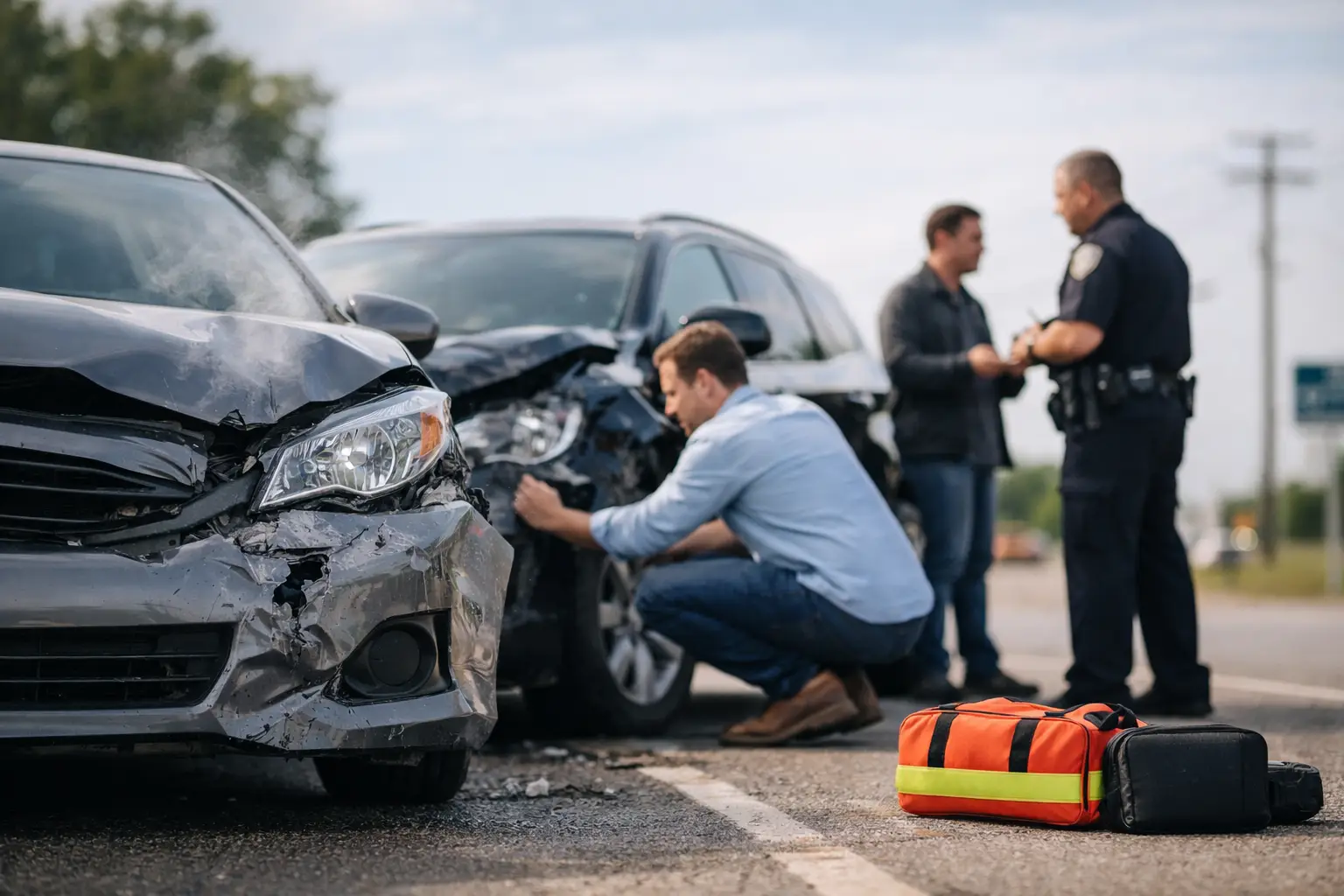
8 Steps After a Car Wreck in Texas
The moments after a crash rarely feel orderly. Your heart is racing, traffic is moving around you, and someone is already asking what happened. In that kind of chaos, knowing the right steps after a car wreck can protect both your health and your claim.
What you do in the first hour matters. What you do in the next few days can matter just as much. A serious collision can leave you dealing with pain, lost income, vehicle damage, and insurance company pressure all at once. A clear plan helps you avoid mistakes that can cost you later.
1. Get to safety and call for help
If you can move safely, get out of the flow of traffic and check on others involved. Do not stay in a dangerous position in the roadway if there is a safer place nearby. Turn on hazard lights if possible and wait for emergency responders.
Call 911 after a wreck involving injuries, significant damage, or a blocked roadway. Even when a crash seems straightforward, an official response can create important documentation. If you are injured, ask for medical help at the scene. Trying to tough it out is common, but pain and symptoms often show up after the adrenaline fades.
If you cannot move, stay where you are and wait for help. Your safety comes first.
2. Accept medical evaluation, even if you think you are okay
One of the most overlooked steps after a car wreck is getting checked promptly. People often say they feel fine at the scene, then wake up the next day with neck pain, back pain, headaches, or dizziness. Some injuries are not obvious right away.
Getting medical attention does two things. First, it protects your health. Second, it creates a record connecting the collision to your injuries. That record can become very important if the insurance company later questions whether the crash caused your condition.
There is a practical balance here. Not every ache means the same thing, and not every person will need the same level of care. But delaying evaluation for too long gives the insurer room to argue that something else caused your injuries or that they were not serious.
3. Report the crash and be careful with what you say
When law enforcement arrives, answer questions honestly and stick to the facts. Tell them what you observed, where you were, and what happened. Avoid guessing about speed, distances, or injuries if you are not sure. Also avoid statements that sound like accepting blame, such as saying the wreck was your fault.
A lot of people say sorry automatically after a collision. That is human, but it can be used against you later. It is better to stay calm, cooperate, and let the investigation do its job.
You should also exchange basic information with the other driver. Keep the conversation short and civil. A roadside debate about fault will not help you, and it may create confusion that follows the claim.
4. Document the scene before it changes
Crash scenes disappear fast. Vehicles get moved, debris is cleared, weather changes, and memories start to blur. If you are physically able, use your phone to take wide and close-up photos of the vehicles, damage, license plates, skid marks, traffic signs, lane positions, debris, and visible injuries.
If there are witnesses, ask for their names and contact information. Independent witnesses can be very important when drivers tell different stories later. If a nearby business or home may have captured the collision on camera, make a note of that right away. Video footage does not stay available forever.
This is one place where details matter. A few clear photos taken within minutes of the wreck can carry more weight than a long explanation weeks later.
5. Notify your insurance company, but do not rush into a recorded statement
Most policies require prompt notice of a collision, so report the crash to your insurer. Keep it factual. Give the basic details of when and where it happened and who was involved.
At the same time, be careful. Insurance companies often move quickly after a wreck, especially when injuries are involved. You may be asked for a recorded statement before you fully understand your condition, before you have seen all the evidence, or before you know how the crash will affect your work and daily life.
That can be risky. A statement given too early may leave out important facts or lock you into details that turn out to be incomplete. The same goes for quick settlement offers. What looks helpful on day three can be far too little if your medical issues continue for months.
Steps after a car wreck: protect the evidence
Evidence is not just the police report and a few photos. It can include your medical records, billing records, wage loss information, witness statements, video footage, phone records, and proof of how the injury affected your routine. In some cases, the damage pattern on the vehicles also matters.
Start a file and keep everything in one place. Save discharge papers, prescriptions, receipts, towing information, repair estimates, and any communication related to the crash. Keep a simple journal of your symptoms and limitations. If pain is disrupting sleep, making it hard to drive, or stopping you from working, write that down.
This may feel tedious, but it builds the story of what the wreck actually cost you. Without that record, the insurance company has more room to minimize the claim.
6. Follow through with medical care and do not create gaps
A claim is not built only on the day of the collision. It is built on what happens after. If you start treatment and then stop without explanation, the insurer may argue that you recovered quickly or were never badly hurt.
That does not mean every case looks the same. Some people improve steadily. Others need longer recovery. The key is consistency. Follow medical advice, attend appointments, and be honest about your symptoms and limitations.
Social media is another issue many people underestimate. Photos, check-ins, or casual posts can be taken out of context and used to suggest you are less injured than you say. The safest approach is to stay quiet online while the claim is active.
7. Understand that the insurance company is not there to protect your claim
This is where people often lose ground. The insurer may sound helpful, organized, and concerned. But its financial interest is not the same as yours. It is looking for ways to limit what it pays.
That can show up in different ways. Maybe fault is disputed even when liability seems clear. Maybe your injuries are blamed on a prior condition. Maybe your treatment is described as excessive. Maybe you are pushed to settle before the full picture is known.
Texas claims can also involve complications with multiple vehicles, uninsured drivers, commercial vehicles, or conflicting witness accounts. What seems simple at first can become contested quickly. The stronger the evidence and the earlier it is preserved, the better positioned you are.
8. Talk with a car accident lawyer before the claim gets away from you
Some crashes are straightforward. Others are not. If you suffered meaningful injuries, missed work, or are getting pressure from an insurance company, speaking with an attorney early can make a real difference.
A lawyer can step in to preserve evidence, handle insurer communication, evaluate the full value of your losses, and keep the claim from being framed on the insurance company’s terms. That matters because once key evidence is lost or damaging statements are made, fixing the problem is harder.
For injured people in Frisco, Dallas, and across North Texas, having an advocate can also reduce the stress of trying to manage everything while recovering. Feizy Law Office helps accident victims take control of the process and pursue compensation with a strategy built around the facts of the case, not the insurer’s version of them.
When these steps after a car wreck matter most
The most critical cases are usually the ones with serious injuries, disputed fault, or unclear insurance issues. But even a crash that looks manageable at first can become financially disruptive if symptoms worsen or time away from work adds up.
That is why early decisions matter. Waiting too long to get care, failing to document the scene, or trusting the insurance company to sort it out fairly can weaken your position. Acting promptly does not mean acting recklessly. It means protecting yourself before the pressure starts.
A car wreck can disrupt your health, your income, and your peace of mind in a single afternoon. The right next steps give you something solid to hold onto while everything else feels uncertain.


About Post Author
