

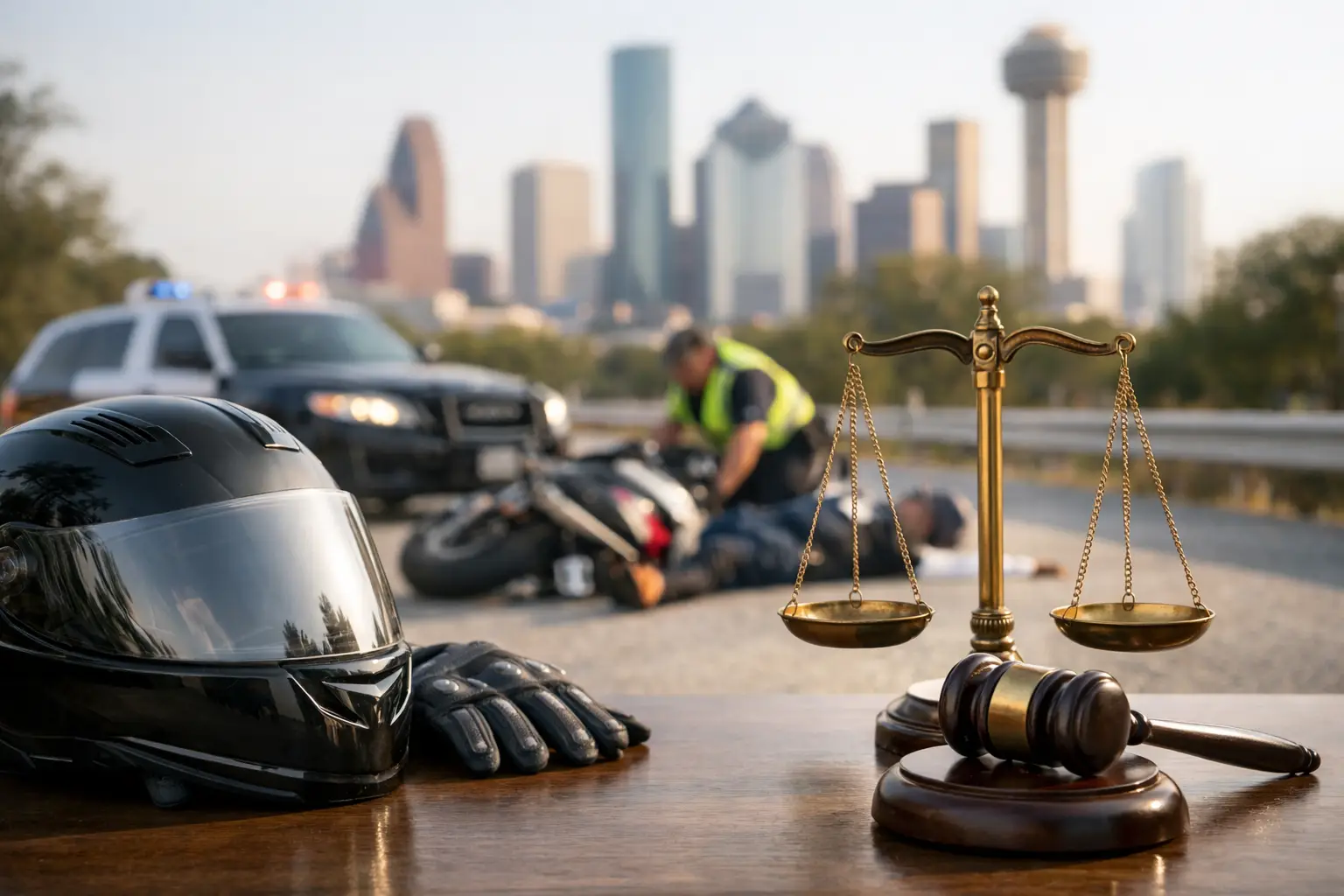
A Guide to Motorcycle Injury Claims in Texas
A motorcycle crash can leave you dealing with far more than damage at the scene. One careless lane change or left turn can lead to major injuries, missed work, mounting medical bills, and a long fight with the insurance company. This guide to motorcycle injury claims explains what usually happens after a crash, what can strengthen your case, and where injured riders often get pushed into unfair outcomes.
Motorcycle claims are rarely treated as straightforward matters. Riders are often blamed before the facts are fully reviewed. Insurance companies may suggest the motorcyclist was speeding, weaving, or taking unreasonable risks even when the other driver clearly caused the collision. That bias matters because it can affect settlement talks from the very beginning.
Why motorcycle injury claims are often harder than car accident claims
Motorcycle crashes tend to involve more serious injuries, which means the value of the claim is often higher. Higher exposure usually leads to tougher resistance from insurers. They may question the severity of the injuries, argue that a preexisting condition is responsible for ongoing symptoms, or claim the rider could have avoided the impact.
There is also a visibility problem in many motorcycle wrecks. Drivers say they never saw the motorcycle. That statement does not excuse careless driving, but it becomes part of the dispute over fault. A proper claim has to address not just what happened, but how to prove it clearly through physical evidence, records, witness statements, and the timeline of events.
What you need to prove in a motorcycle injury claim
At its core, a claim usually comes down to showing that another party acted carelessly and that their conduct caused your injuries. In a traffic collision, that may involve a driver who turned left in front of a motorcycle, followed too closely, drifted into another lane, ran a light, or opened a vehicle door into the rider’s path.
But proving fault is only part of the case. You also need to show the extent of your losses. That includes obvious financial harm like medical expenses and lost income, but it can also include the day-to-day impact of pain, physical limitations, emotional distress, and disruption to your life. Serious motorcycle injuries often affect much more than a few weeks of recovery.
In some cases, more than one party may share responsibility. A driver may be the primary cause, but another vehicle, a commercial company, or a dangerous road condition could also play a role. These cases require a careful review because identifying every responsible party can directly affect the compensation available.
The evidence that can make or break a claim
Strong evidence gives your claim leverage. Weak or delayed evidence gives the insurance company room to argue. That is why the early stages matter so much.
Photos from the scene can help show vehicle positions, road markings, debris, skid marks, weather conditions, and visible injuries. Witnesses can support your version of events before memories fade. The crash report can provide important details, even though it is not always the final word on fault. Medical records help connect the collision to the injuries and document the seriousness of your condition over time.
Helmet damage, riding gear, and damage patterns on the motorcycle may also matter. In some cases, electronic data, traffic camera footage, nearby surveillance video, and phone records become important. A claim is stronger when the story is backed by objective proof instead of competing opinions.
That is one reason many injured riders benefit from legal help early. Once evidence disappears, it can be difficult to rebuild the same case later.
A guide to motorcycle injury claims and common insurer tactics
Insurance companies are not neutral participants. Their goal is to limit what they pay. Sometimes that looks obvious, and sometimes it shows up in more subtle ways.
One common tactic is early pressure. An insurer may contact you quickly, sound helpful, and push for a recorded statement before the full medical picture is clear. Another is minimizing the injury by focusing on a gap in treatment or suggesting you were improving faster than you really were. Some insurers rely heavily on the stereotype that motorcyclists are inherently reckless and try to frame the entire crash around that assumption.
They may also offer a settlement before you know whether you will need future care or more time away from work. Quick money can feel tempting when bills are arriving, but a fast offer often benefits the insurer far more than the injured rider. Once a claim is settled, there is usually no second chance to ask for more if the recovery turns out to be longer, more painful, or more expensive than expected.
What compensation may be available
Every case is different, and the value of a claim depends on the facts. Still, most motorcycle injury claims involve both economic and non-economic losses.
Economic losses can include medical bills, future medical needs, lost wages, and reduced earning ability. Non-economic losses often involve pain, suffering, mental anguish, physical impairment, and the loss of normal daily activities. In the most severe crashes, the harm may include permanent disability, scarring, or life-altering trauma.
The biggest mistake many people make is assuming compensation is limited to bills they have already received. A serious motorcycle crash can affect your health, work, mobility, and relationships long after the initial treatment period. A proper evaluation should account for the full impact, not just the first wave of expenses.
How fault affects recovery in Texas
Texas fault rules matter in any injury claim because the insurance company may argue that you were partly responsible. Maybe they say you were traveling too fast for conditions or failed to react in time. Even when those claims are exaggerated, they can influence what the insurer offers.
That makes investigation critical. The issue is not simply whether the other driver made a mistake. The issue is whether the available evidence shows that mistake caused the crash and whether the defense arguments hold up under scrutiny. A strong case confronts fault arguments directly rather than hoping they go away.
Motorcycle cases often depend on details such as sight lines, lane position, vehicle speed, impact points, and driver attention. Those details can support the rider, but only if they are preserved and explained well.
When to talk to a lawyer
If you suffered serious injuries, if fault is being disputed, or if the insurance company is already trying to control the narrative, speaking with a lawyer sooner is usually the safer move. Waiting can make it harder to gather evidence, identify witnesses, and protect the value of the claim.
A lawyer can handle communication with insurers, investigate the crash, organize the evidence, assess the real scope of damages, and push back against blame-shifting tactics. That matters when you are trying to recover and do not have the time or energy to manage a legal fight on your own.
For injured riders in North Texas, Feizy Law Office represents people facing exactly these pressures after serious collisions. The goal is not just to file paperwork. It is to protect your claim, tell the full story of what happened, and pursue compensation that reflects the real losses involved.
Mistakes that can weaken your motorcycle injury claim
Some problems arise before a case even gets moving. Delaying medical care can create questions about whether the crash truly caused the injury. Posting publicly about the wreck or your physical condition can give the insurer selective statements to use against you. Accepting a quick settlement before understanding your prognosis can leave you paying the price later.
Another mistake is assuming the facts will speak for themselves. They do not always. Motorcycle claims often require active proof and a clear strategy. If your case involves severe injuries, long-term limitations, or a family struggling with the financial fallout, the stakes are too high to treat the process casually.
A strong claim is built early, documented carefully, and valued realistically. If you were hurt in a motorcycle crash, the right legal support can make the difference between being pushed into a low settlement and pursuing the compensation your recovery truly requires. The sooner you protect the facts, the stronger your position will be when it is time to demand accountability.


About Post Author
